Multi-Agent AI Frameworks for Small Business
What Are Multi-Agent AI Frameworks?
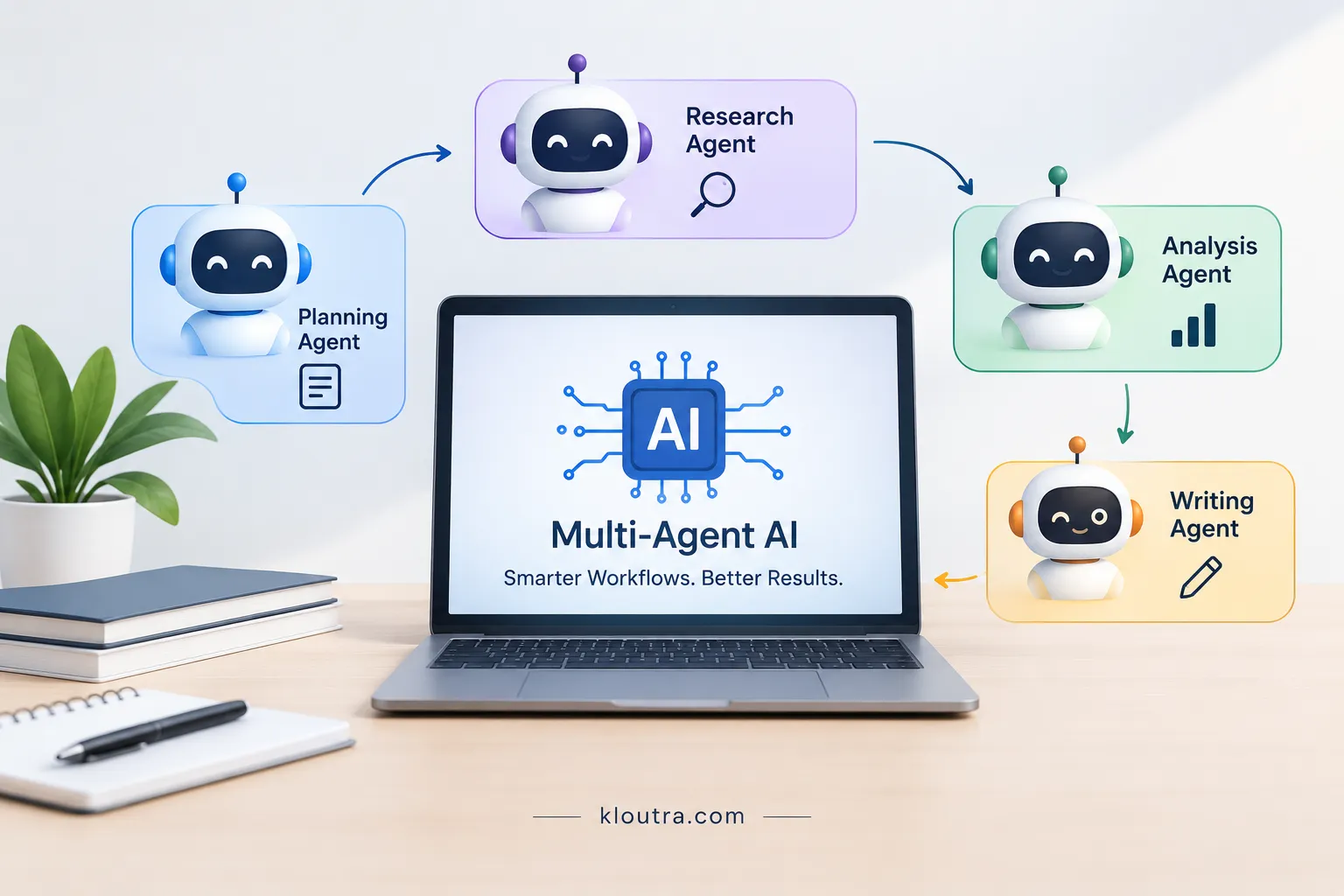
Multi-agent AI frameworks help businesses build systems with multiple AI agents. Each agent handles a specific task within a larger workflow. The framework manages how these agents communicate and share results.
For example, one agent can research information while another reviews it. A third agent can organize the final result. This approach helps divide complex tasks into smaller responsibilities.
How Multi-Agent AI Systems Work
A multi-agent system breaks a larger task into separate jobs. Each agent receives instructions based on its role. Agents can use tools, exchange information, or hand tasks to other agents.
For example, a customer support system could use one agent for questions. Another agent could check order information or company data. A final agent could prepare the response.
Some systems run independent tasks at the same time. Others follow a fixed order controlled by a coordinator.
Multi-Agent AI vs. Single AI Agents
A single AI agent handles a task within one workflow. It works well for simple processes with fewer steps. Multi-agent systems divide work between several specialized agents. Each agent can have different instructions and tools.
Small businesses can start with one agent for straightforward tasks. Multiple agents become useful when a workflow needs different roles or capabilities.
Why Small Businesses Are Using Multi-Agent AI
Small businesses are exploring multi-agent AI for complex, repetitive work. Multiple agents can divide tasks and handle different parts of a process. This can help teams manage work that needs several steps.
Automating Multi-Step Business Tasks
Multi-agent systems can break larger tasks into smaller jobs. Different agents can handle research, checking, writing, or data processing. Independent tasks can also run at the same time.
For example, one agent can qualify a lead first. Another can research the company and prepare useful details. A final agent can organize the information for the sales team.
Improving Business Workflows
Multi-agent AI can connect several steps into one organized workflow. Agents can pass results between stages and follow defined processes.
This can help with customer support, sales, research, and document processing. Businesses can also add human approval when important decisions need review.
Key Features to Look for in a Multi-Agent AI Framework
A good framework should make agents easier to connect, control, and monitor. It should also support the tools and data your business already uses.
Agent Coordination and Communication
Agents need a clear way to share information and delegate tasks. Some frameworks support sequential, parallel, and coordinator-based workflows.
Look for clear controls over agent roles and task handoffs. This helps prevent confusion between different agents.
Tool and API Integration
Business agents often need access to external tools and services. Frameworks can connect agents with functions, APIs, databases, and other services.
Check whether the framework supports the tools your business already uses. Easy integration can reduce extra development work.
Memory and Context Management
Agents need useful context to handle tasks correctly. Frameworks may support sessions, stored context, and external knowledge sources.
Good context management also helps agents avoid losing important information. Small businesses should check how the framework stores and retrieves this data.
Security and Monitoring
Security should cover data, tools, permissions, and agent activity. Frameworks should support input validation, access controls, and safe tool usage.
Monitoring helps teams track errors, usage, performance, and workflow problems. These features make it easier to find issues before they affect business operations.
Best Multi-Agent AI Frameworks for Small Business
Several frameworks can help small businesses build multi-agent workflows. Each framework takes a different approach to agent coordination and workflow control.
Microsoft AutoGen
AutoGen is an open-source framework for building multi-agent AI applications. It supports conversational agents and event-driven workflows. Microsoft now describes its newer Agent Framework as AutoGen’s direct successor.
Businesses starting new Microsoft-based projects should consider this newer direction.
CrewAI
CrewAI lets developers create teams of specialized AI agents. Each agent can have its own role, tools, and goals. Its Flows feature provides more structured control over workflows.
This makes CrewAI useful for research, content, and business automation tasks.
LangGraph
LangGraph helps developers build controlled workflows for AI agents. It uses graphs to manage steps, states, and agent interactions.
It suits businesses that need more control over complex agent workflows.
OpenAI Agents SDK
The OpenAI Agents SDK provides tools for building agent-based applications. It supports tools, handoffs, guardrails, sessions, and agent orchestration.
It works well for developers building custom agent workflows with Python or JavaScript.
Google Agent Development Kit
Google’s Agent Development Kit, or ADK, helps developers build and manage AI agents. It supports multi-agent systems, tools, workflows, memory, and different programming languages.
It can suit businesses already working with Google Cloud or Gemini.
How to Choose the Right Framework for Your Business
The right framework depends on your business needs, budget, and technical setup. Avoid choosing a framework only because it offers many features.
Match the Framework to Your Use Case
Start by defining the task you want AI agents to handle. A simple workflow may only need one agent. Complex tasks may benefit from several specialized agents.
Check whether the framework supports your required tools and workflow style. This can prevent unnecessary development work later.
Consider Cost and Technical Requirements
Multi-agent systems can increase costs because several agents may process information. Compare model usage, API costs, hosting needs, and development requirements.
Also check the programming languages and tools supported by the framework. Choose an option your team can maintain comfortably.
Check Scalability and Security
Think about how the system will handle more users and tasks later. The framework should support suitable workflows, monitoring, and reliable agent coordination.
Security also matters when agents access business data or external tools. Check permissions, data handling, input validation, and monitoring features before deployment.
Multi-Agent AI Use Cases for Small Businesses
Multi-agent AI can help small businesses manage tasks across different teams. Each agent can handle a specific part of the workflow.
Customer Support
Multi-agent systems can help manage common customer support tasks. One agent can understand the customer’s question and collect details. Another agent can search a knowledge base for useful information. A third agent can prepare a response or suggest the next step. Complex issues can then move to a human support worker.
This setup can reduce repetitive work for small support teams. It can also keep customer information organized during support conversations.
Sales and Lead Management
Sales teams can use agents to research and qualify new leads. One agent can collect basic information about a potential customer. Another can compare the lead with the company’s target customer profile. A sales agent can then prepare follow-up messages or update CRM records. Human staff can review important leads before taking further action.
This approach can help small teams manage more leads. It also reduces manual work across different sales steps.
Marketing and Content
Marketing teams can use agents for research, content, and campaign tasks. One agent can research a topic and gather useful information. Agents can also help analyze campaign results and audience data.
People should still review important content before publishing it. Human review helps maintain brand voice, accuracy, and quality.
Business Research and Operations
Multi-agent AI can support research and everyday business operations. One agent can gather information from approved business sources. Another can organize the findings into a useful summary. An operations agent can track tasks, updates, and workflow steps. Agents can also help move information between connected business systems.
Small businesses can use these workflows for reports and routine processes. Human workers can handle decisions that need judgment or approval.
Common Challenges With Multi-Agent AI
Multi-agent AI can improve workflows, but it also creates new challenges. Small businesses should understand these issues before using multiple agents.
Complexity and Reliability
Multiple agents make workflows harder to design, test, and manage. Each agent needs clear instructions, tools, and access permissions. Agents also need reliable ways to share information with each other. One failed agent can affect the rest of the workflow.
Errors can also pass from one agent to another. Testing and monitoring can help find these problems early.
Data Privacy and Security
Multi-agent systems may handle customer, business, or financial information. Each agent should only access the data it actually needs. Businesses should also protect data moving between different agents. Untrusted inputs can sometimes affect agent actions or tool calls.
Cost and Maintenance
Multi-agent systems can cost more than simpler AI setups. Each agent may make separate model calls during one workflow. More agents can also increase token use and processing costs. Businesses need to monitor usage and control unnecessary agent activity.
Best Practices for Using Multi-Agent AI
Small businesses should start simple when using multi-agent AI systems. Clear goals can make these systems easier to manage and test. Businesses should also define what each agent can and cannot do. This helps prevent unnecessary actions and reduces workflow problems.
Start With a Focused Workflow
Start with one clear task instead of building a large system. Choose a workflow that has several steps or repeated tasks.
Give each agent a specific role within that workflow. Clear roles help agents work together without unnecessary confusion. Businesses can expand the workflow after the system proves reliable.
Keep Human Oversight
People should review important actions before agents complete them. This matters most when actions affect money, customers, or sensitive information. Businesses should set clear points where human approval becomes necessary.
People should also handle unclear cases that agents cannot resolve safely. This keeps humans responsible for important business decisions.
Monitor and Test Agent Performance
Businesses should test agents before putting them into regular use. Testing should cover normal tasks, unusual inputs, and possible errors. Each agent should be tested separately and within the complete workflow. Teams should also monitor accuracy, errors, performance, and resource usage.
Regular testing can catch problems after updates or workflow changes. Monitoring helps businesses notice performance issues before they grow.
The Future of Multi-Agent AI for Small Businesses
Multi-agent AI is likely to become more useful for everyday business workflows. Businesses can connect agents with tools, data, and existing software. This can help automate more steps within regular business processes. New frameworks are also making multi-agent workflows easier to build.
Small businesses may use agents for more complex tasks over time. These tasks could include research, customer service, sales, and operations. Agents can also work together across different steps of one workflow. However, businesses will still need clear rules and human oversight.
The goal should not be using more agents than necessary. Simple tasks may still work better with one agent. Businesses should add multiple agents when workflows truly need them. This approach can keep systems easier to manage and control.
Final Thoughts
Multi-agent AI can help small businesses handle complex, multi-step workflows. Different agents can manage research, support, sales, and operations tasks. However, more agents can also increase complexity, costs, and security risks.
Businesses should start small and choose workflows that need multiple agents. They should also set clear permissions and human review points. Regular testing and monitoring can help keep workflows reliable. The right approach depends on each business’s needs and resources.
Disclaimer:
This article is for general informational purposes only. AI frameworks, features, pricing, and capabilities can change over time. Always check the official documentation before choosing or implementing an AI framework for your business. Results may vary depending on your workflow, tools, data, and technical setup.