Inbound Marketing for Financial Services
What Is Inbound Marketing?
Inbound marketing attracts people through useful content and helpful experiences. Instead of interrupting people, it gives them reasons to engage.
Businesses use content, SEO, social media, email, and other digital channels. These channels help people find answers to their questions.
For financial services, this approach can help build trust before contact. Potential customers can research services before speaking with an advisor or provider. The goal is not simply to attract more website visitors. It is to attract people who have a genuine need.
How Inbound Marketing Works
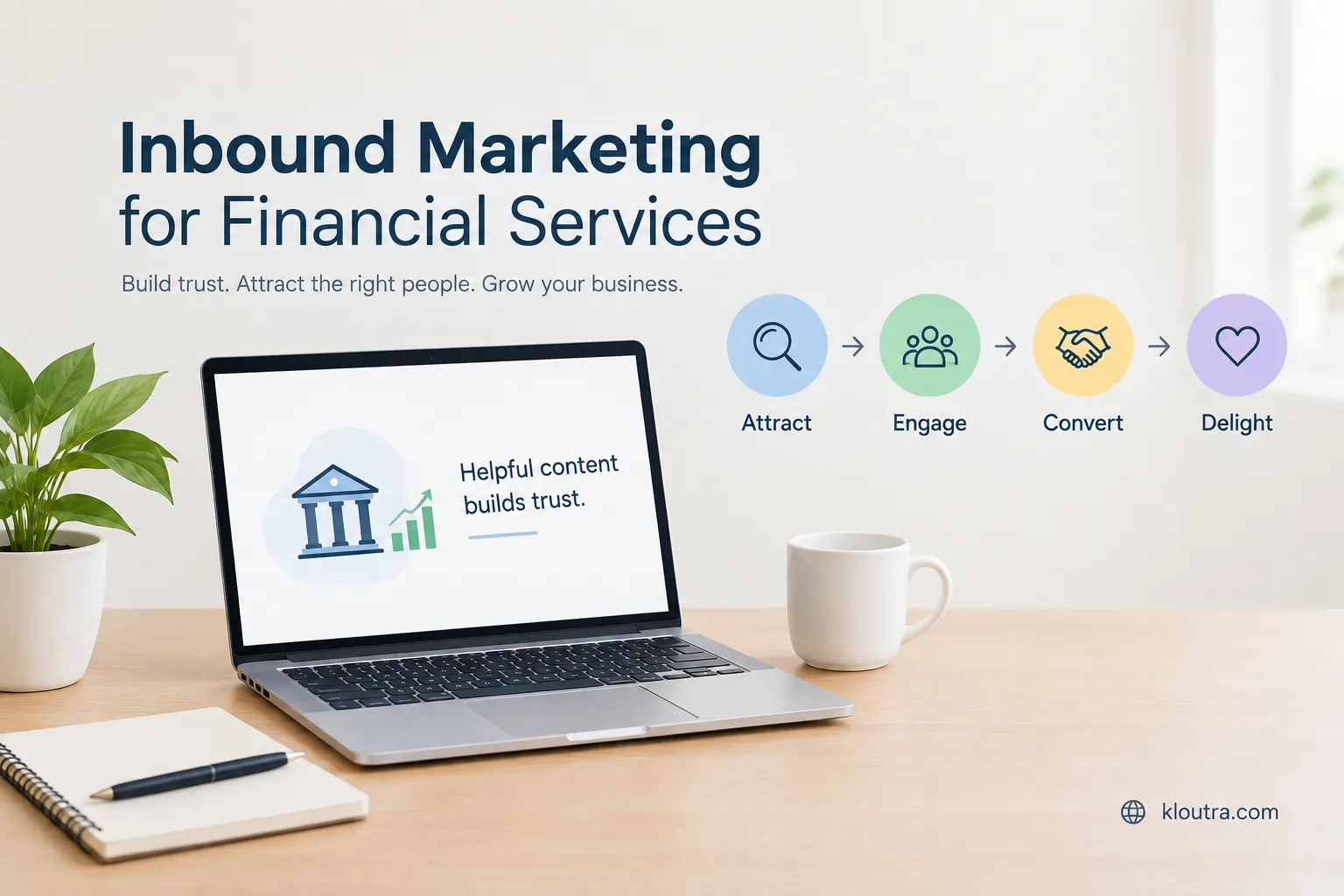
Inbound marketing follows a customer-focused approach across several stages. It starts by attracting people with useful and relevant information.
For example, a financial company might publish an article answering common customer questions. Someone searching for that information can discover the company’s website. The next step is engaging interested visitors with relevant resources. These can include guides, newsletters, calculators, or service pages.
When visitors show stronger interest, businesses can encourage them to take action. They might request a consultation, download a guide, or complete a contact form.
Marketing automation can then support follow-ups based on customer actions. CRM systems can help teams organize interactions and manage potential leads. The process continues by providing useful support after someone becomes a customer. This helps maintain relationships and encourage long-term engagement.
Inbound vs. Traditional Marketing
| Factor | Inbound Marketing | Traditional Marketing |
|---|---|---|
| Main approach | Attracts people with useful and relevant content | Reaches audiences through promotional messages |
| Customer intent | Often reaches people actively researching a need | Can reach people before they show clear interest |
| Common channels | SEO, content, social media, and email | TV, radio, print, direct mail, and advertising |
| Communication | Encourages people to discover and engage with content | Often delivers messages directly to the audience |
| Lead generation | Uses content and digital experiences to attract leads | Often uses advertising and direct outreach |
| Measurement | Tracks traffic, engagement, leads, and conversions | Often focuses on reach, impressions, and responses |
| Best use | Builds long-term visibility and customer relationships | Can create faster awareness and reach |
Why Inbound Marketing Matters for Financial Services
Financial services depend heavily on trust and clear communication. Customers want reliable information before choosing a financial provider. Inbound marketing helps businesses build trust by answering real customer questions. Useful content can explain financial products without relying on aggressive sales messages.
Reaching Customers During Their Research
Customers increasingly use search engines and AI tools for financial research. They use these tools to understand options, compare products, and evaluate providers. Inbound marketing helps brands appear during these research moments.
Key Inbound Marketing Strategies
Financial brands can use inbound marketing to attract, capture, and nurture potential customers. The strongest strategies focus on useful content and clear customer intent.
Create Educational Financial Content
Create content that answers the financial questions customers already ask. Guides, FAQs, and explainers can make complex topics easier to understand. Financial content should remain accurate, clear, and properly reviewed.
Target High-Intent Search Queries
Focus on searches that show a clear need or buying intention. Specific queries can attract people closer to making a decision.
Use Landing Pages and Lead Magnets
Landing pages can turn interested visitors into identifiable leads. Offer useful resources in exchange for contact information. The offer should directly match the visitor’s search intent.
Nurture Leads With Email Marketing
Not every visitor becomes ready to buy immediately. Email nurturing keeps the conversation going with relevant information. Businesses can tailor emails based on interests and customer journey stages. This makes follow-up more useful than sending the same message to everyone.
How AI and Automation Support Inbound Marketing
AI and automation are becoming practical tools in financial services marketing. They help teams personalize communication, automate routine follow-ups, and manage customer data.
Personalize Customer Experiences
AI can help financial brands personalize content for different customers. It can use customer interests, actions, and previous interactions for this purpose. For example, a visitor can receive content related to their recent interests.
This makes marketing messages more relevant than sending identical content to everyone. Financial brands still need proper privacy controls and human oversight.
Automate Lead Nurturing
Automation helps businesses follow up with potential customers at the right time. A system can also move leads through different stages of the customer journey.AI can help prioritize leads and personalize follow-up messages. This reduces repetitive work while keeping communication consistent.
Connect Marketing With CRM Systems
A CRM brings customer information and marketing activity into one system. This helps teams understand interactions across different customer touchpoints.
AI can use connected data to support better personalization and lead management. However, poor or fragmented data can reduce the value of these systems.
How to Measure Inbound Marketing Results
Inbound marketing should be measured by business results, not just website traffic. Focus on leads, conversions, acquisition costs, and search performance. These metrics show whether marketing efforts are attracting the right customers.
Track Qualified Leads and Conversions
Track how many leads become qualified prospects and paying customers. Lead quality matters more than simply generating a large number of leads. Also measure your lead-to-customer conversion rate over time. This shows whether your content attracts people who are ready to act.
Measure Customer Acquisition Costs
Customer acquisition cost shows how much it costs to gain one customer. Calculate it by dividing marketing costs by new customers acquired.
Compare this cost with the revenue generated from those customers. This helps businesses understand whether their marketing investment is efficient.
Monitor Content and Search Performance
Track organic clicks, impressions, search rankings, and conversions from search traffic. Google Search Console provides these search performance metrics for your website. Also check which content brings qualified visitors and leads. This helps teams improve content based on actual performance.
Common Inbound Marketing Mistakes to Avoid
Inbound marketing can fail when businesses focus on the wrong priorities. Financial brands need useful content, proper measurement, and responsible automation.
Publishing Generic Financial Content
Generic content rarely answers the specific questions customers need answered. Financial brands should create content around real customer needs and search intent. Content should also use accurate information and clear explanations. This helps readers understand complex financial topics with greater confidence.
Focusing Only on Traffic
High website traffic does not always mean successful inbound marketing. A website can attract many visitors without generating qualified leads.
Overusing Automation
Automation can save time, but it should not replace human judgment. Too much automation can create repetitive or irrelevant customer experiences. AI-generated financial content also needs careful human review before publication. This helps catch inaccurate claims, missing context, and compliance issues.
Ignoring Trust and Compliance
Financial marketing must communicate clearly and avoid misleading claims. Businesses should review financial content against applicable rules and internal policies.
Compliance should be considered during content planning, not only before publication. This reduces the risk of inaccurate claims and costly revisions.
Final Thoughts
Inbound marketing can help financial brands attract customers through useful information. Strong results require useful content, targeted SEO, and consistent lead nurturing.
AI and automation can support these efforts when used responsibly. Financial brands should also maintain accuracy, transparency, and proper compliance throughout marketing activities.
Disclaimer:
This article provides general information about inbound marketing for financial services. It does not provide financial, legal, investment, or compliance advice. Marketing rules can vary by country, industry, and financial product. Always verify applicable regulations and consult a qualified professional before making compliance-related decisions.