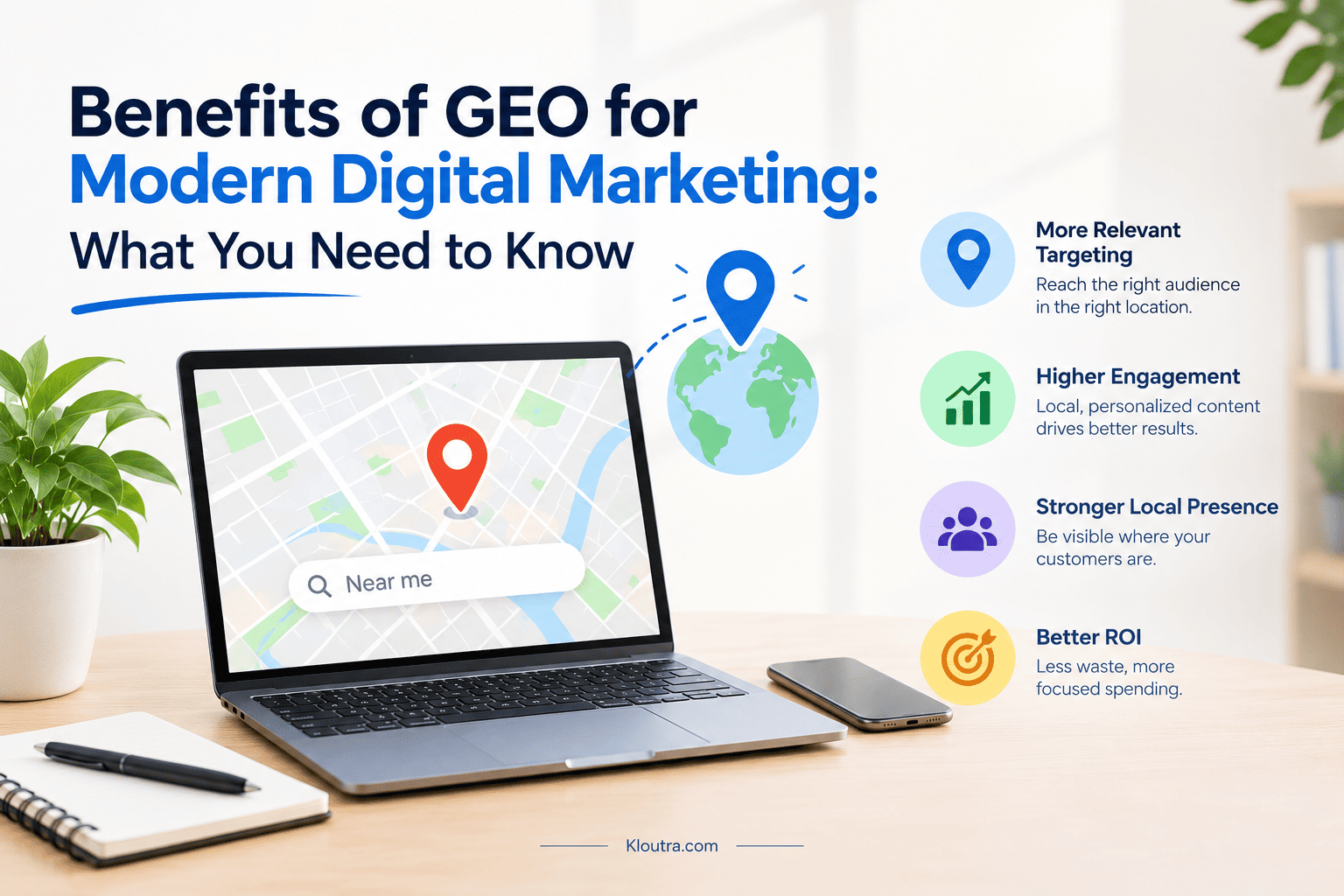
Benefits of GEO for Modern Digital Marketing: What You Need to Know
Introduction
The benefits of GEO for modern digital marketing include new ways to improve brand visibility. Generative Engine Optimization (GEO) focuses on helping content appear in AI-generated answers. It encourages businesses to create clear, useful, and reliable information. This can help people discover brands while researching products or services.
However, AI platforms choose sources differently, so results can vary. GEO also supports content marketing and helps businesses adapt to changing search habits. In this guide, you will learn the benefits of GEO for modern digital marketing, how GEO works, and how it compares with traditional SEO. You will also explore practical ways to implement GEO and measure its performance.
What Is Generative Engine Optimization (GEO)?
Generative Engine Optimization (GEO) helps content appear in AI-generated answers. It focuses on making information clear, useful, and easy to understand. AI search tools may use online sources to answer user questions. GEO aims to improve a brand’s chances of being mentioned or cited. However, no method guarantees visibility in AI answers.
How GEO Works
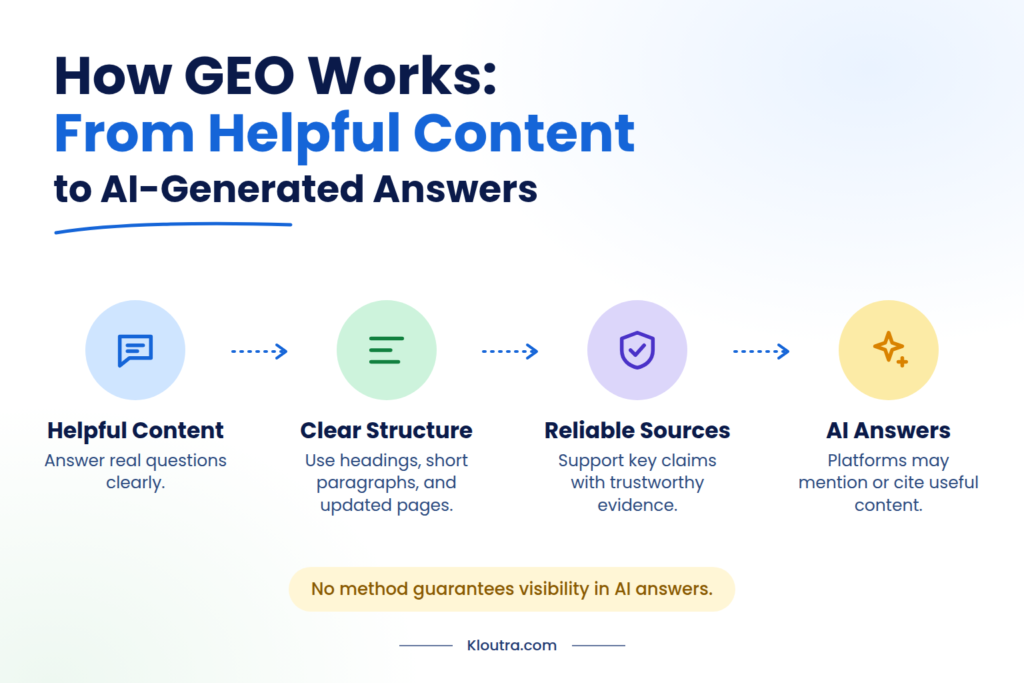
GEO starts with creating helpful content that answers real questions. Use clear headings and explain topics with accurate information. Support important claims with reliable sources. Keep your website content updated and easy to navigate. These practices help readers and search systems understand your content. AI platforms choose sources differently, so results can vary.
GEO vs. Traditional SEO
GEO and traditional SEO both aim to improve online visibility. However, they focus on different types of search experiences. GEO focuses on visibility in AI-generated answers and citations. Traditional SEO focuses on visibility in search engine results. Both can support a strong digital marketing strategy.
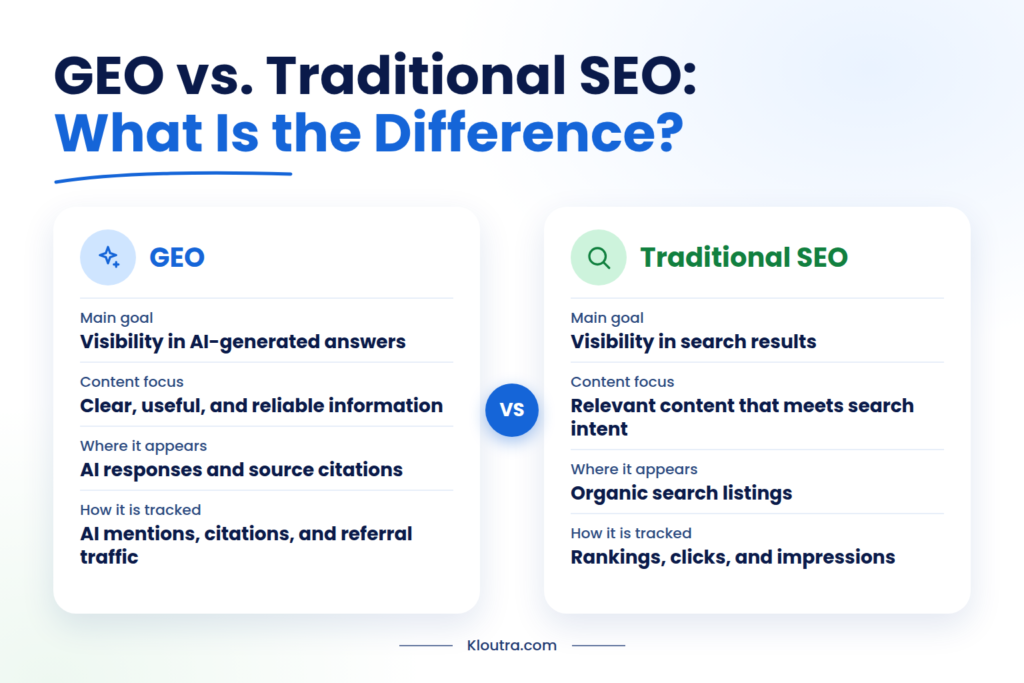
GEO vs. Traditional SEO
| Comparison | GEO | Traditional SEO |
|---|---|---|
| Main goal | Improve visibility in AI-generated answers | Improve visibility in search results |
| Content focus | Clear, useful, and reliable information | Relevant content that meets search intent |
| Visibility | AI responses and source citations | Organic search listings |
| Performance tracking | AI mentions, citations, and referral traffic | Rankings, clicks, and impressions |
GEO does not replace traditional SEO. Businesses can use both approaches to reach audiences across different search experiences.
7 Key Benefits of GEO for Modern Digital Marketing
Generative Engine Optimization (GEO) can help businesses improve their visibility across AI-powered search experiences. It supports useful content, brand discovery, and stronger online presence. However, results depend on the content, platform, and user query.
1. Improves Visibility in AI Search Results
GEO helps businesses prepare content for AI-powered search experiences. Clear, relevant information may help AI platforms understand a brand’s expertise. These platforms may mention or cite useful content in their answers. However, GEO cannot guarantee that a brand will appear.
2. Builds Brand Awareness
AI-generated answers can introduce brands to people searching for information. A brand mention may help users discover a business or product. This creates another opportunity to reach potential customers. Actual visibility depends on the platform and the user’s question.
3. Strengthens Brand Credibility
Helpful content can support a brand’s reputation online. Clear explanations and reliable sources help readers check important claims. When AI platforms cite a brand, users can explore its information. However, a citation alone does not guarantee trust or accuracy.
4. Reaches Audiences During Research
People often use search tools to compare products and explore solutions. GEO helps businesses make relevant information easier to understand. Useful content may appear when users research a specific topic. This can introduce a brand before customers make decisions.
5. Creates Opportunities for Relevant Website Traffic
Some AI search platforms provide links to their information sources. Users may follow these links to learn more about a topic. This can bring relevant visitors to a business website. However, AI visibility does not always lead to website clicks.
6. Supports Content Marketing Efforts
GEO encourages businesses to create useful content that answers real questions. Marketers can explain topics with clear headings and supporting evidence. They can also update outdated information and remove unclear explanations. These practices can improve content quality for readers and search systems.
7. Helps Businesses Adapt to Changing Search Behavior
People increasingly have different ways to find information online. Some use AI assistants alongside traditional search engines. GEO helps marketers consider these changing search experiences. Businesses can test their visibility and adjust their content strategies. They should continue using traditional SEO practices as well.
Key Benefits of GEO and Their Marketing Value
| Benefit | Marketing value |
|---|---|
| Better AI visibility | Creates opportunities for users to discover a brand |
| Brand awareness | Introduces businesses to potential customers |
| Credibility | Supports trust through useful, accurate information |
| Audience reach | Helps brands reach people during research |
| Website traffic | May bring visitors through AI source links |
| Content marketing | Encourages clear, helpful, answer-focused content |
| Search adaptation | Helps marketers respond to changing discovery habits |
Overall, GEO gives businesses another way to improve their online visibility. It works best alongside useful content and established SEO practices. Results can vary, so marketers should track performance and adjust their strategies.
How to Implement GEO in Your Digital Marketing Strategy
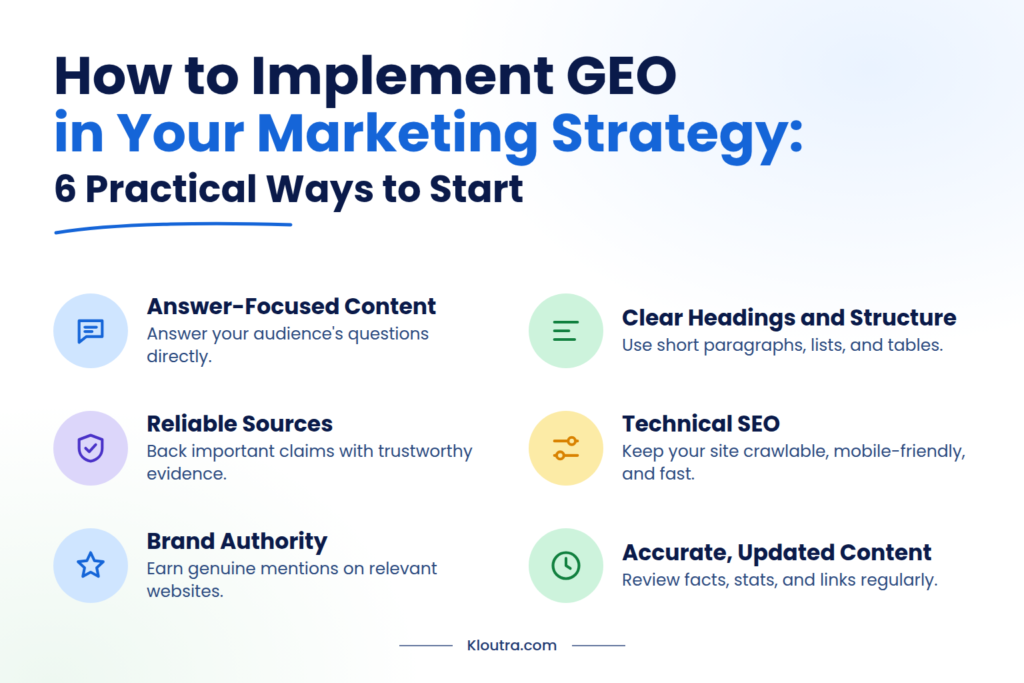
Businesses can use GEO to improve their chances of appearing in AI-generated answers. Start with helpful content and a well-organized website. Combine these practices with reliable information and traditional SEO.
Create Helpful, Answer-Focused Content
Create content that answers your audience’s questions directly. Use simple language and explain each topic clearly. Include practical examples when they help readers understand. Avoid adding information that does not support the main topic. Helpful content serves readers better than content written only for search engines.
Use Clear Headings and Structured Information
Organize your content with clear headings and short paragraphs. Use descriptive headings that explain each section’s purpose. Add lists or tables when they make information easier to understand. Keep related ideas together and follow a logical order. This structure helps readers navigate your content more easily.
Add Reliable Sources and Supporting Evidence
Support important claims with trustworthy sources and accurate information. Link to original research, official documentation, or relevant industry reports. Check facts before publishing your content. Make it clear which statements come from external sources. Reliable evidence helps readers verify information and assess its quality.
Improve Technical SEO
Make sure search engines can access and understand your website. Check for broken links and fix important technical errors. Use descriptive page titles and helpful meta descriptions. Make your website mobile-friendly and improve slow-loading pages. Allow relevant search crawlers to access the content you want discovered. Good technical SEO supports discoverability but does not guarantee AI citations.
Build Brand Authority Across Relevant Websites
Share useful information through relevant websites and industry publications. Contribute expert insights when they genuinely help their audiences. Keep your business name and important details consistent online. Earn relevant mentions through useful content and genuine relationships. Avoid buying spammy links or publishing content solely to gain mentions. These practices can support your online reputation.
Keep Content Accurate and Updated
Review your important pages regularly for outdated information. Update facts, examples, statistics, and links when needed. Remove claims that no longer reflect current information. Add new details when they help answer readers’ questions. Accurate content gives readers better information and supports long-term content quality.
A strong GEO strategy focuses on helpful content, clear structure, and reliable information. Combine these practices with technical SEO and regular performance checks. No single technique guarantees placement in AI-generated answers.
GEO vs. SEO: Which Strategy Should You Use?
GEO and SEO help businesses improve their online visibility. However, they focus on different search experiences. SEO helps websites appear in traditional search results. GEO focuses on visibility in AI-generated answers and citations.
Businesses should use both strategies together. SEO supports search rankings, website traffic, and content discovery. GEO helps marketers explore visibility across AI-powered search platforms. Both approaches benefit from useful content and reliable information.
The best approach depends on your audience and marketing goals. Businesses should maintain strong SEO practices while testing GEO techniques. Neither strategy guarantees visibility or traffic.
Challenges and Limitations of GEO
GEO offers new opportunities, but it also has some limitations. Businesses should understand these challenges before planning their strategies.
No Guarantee of AI Citations
AI platforms choose sources based on their own systems and processes. Even useful content may not appear in AI-generated answers. Businesses cannot guarantee mentions or citations through specific optimization techniques. Focus on accurate information, helpful content, and a strong website. These practices can support visibility but cannot promise results.
Measuring GEO Performance Can Be Difficult
GEO performance can be harder to track than traditional SEO. AI answers may change between searches, users, and platforms. Some platforms provide limited data about brand mentions or citations. Businesses can manually check relevant queries and record their results. They can also monitor referral traffic from AI platforms. These methods provide useful signals but may not show complete performance.
AI Search Platforms Keep Changing
AI search platforms regularly update their features and systems. Their answers, citations, and source selection can change over time. A strategy that works today may produce different results later. Businesses should review their performance and adjust their content when needed. Keep following reliable SEO practices instead of relying on one technique.
How to Measure GEO Performance
Measuring GEO performance helps businesses understand their visibility in AI-generated answers. Start by checking whether AI platforms mention or cite your content. Then track website visits and actions from referred visitors. These metrics help you understand which efforts may be working.
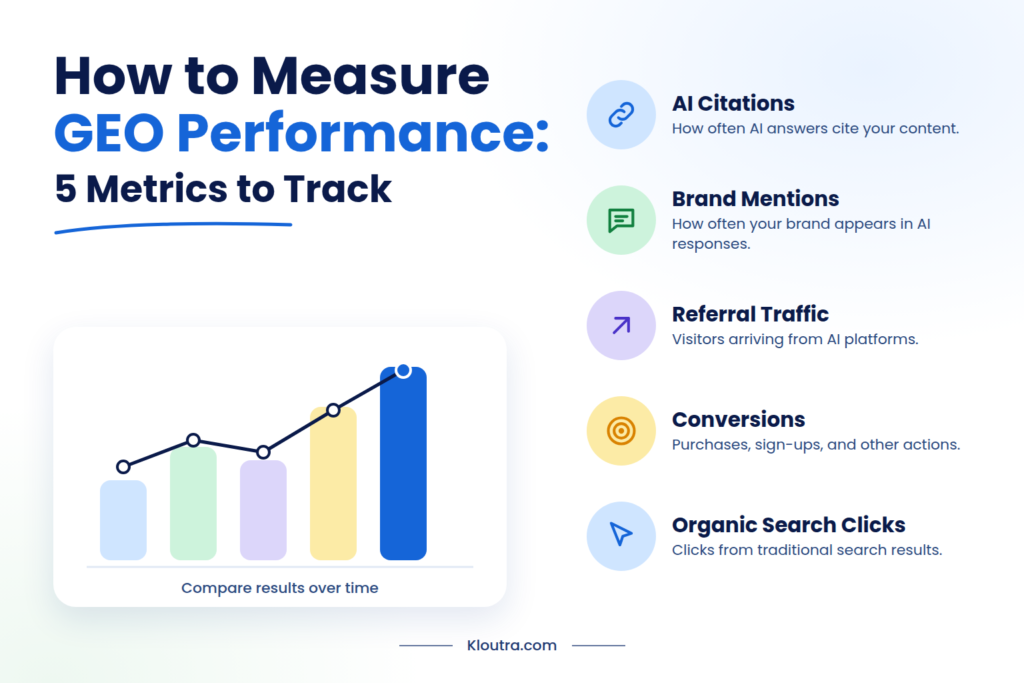
AI platforms offer different tracking options, and some provide limited reporting. You may need to check relevant questions manually. Compare results over time to identify changes in visibility. No single metric gives a complete picture of GEO performance.
Important GEO Metrics to Track
| Metric | What it measures |
|---|---|
| AI citations | How often AI answers cite your content |
| Brand mentions | How often your brand appears in AI responses |
| Referral traffic | Visitors arriving from AI platforms |
| Conversions | Actions taken by visitors, such as purchases or sign-ups |
| Organic search clicks | Clicks from traditional search results |
Track these metrics regularly and look for meaningful changes. Use website analytics and available search reports to measure results. When possible, connect traffic and conversions to specific referral sources. This helps you assess GEO alongside your existing SEO strategy.
Conclusion
Generative Engine Optimization (GEO) helps businesses improve their visibility in AI-powered search experiences. It can support brand awareness, useful content, and online discovery. However, no strategy guarantees AI mentions, citations, or website traffic.
Businesses should focus on accurate information and helpful content. They should also maintain strong traditional SEO practices. Track results regularly and adjust your strategy when needed. Combining GEO with SEO can help businesses reach people across different search experiences.
Frequently Asked Questions
Is GEO better than SEO?
GEO and SEO serve different purposes. GEO focuses on visibility in AI-generated answers, while SEO targets search results. Using both can help businesses reach people across different search platforms.
What Are the 5 Benefits of Digital Marketing?
Five key benefits of digital marketing include:
- Reaching a wider audience.
- Building brand awareness.
- Connecting with potential customers.
- Measuring marketing performance.
- Supporting sales and business growth.
What Is GEO in Digital Marketing?
GEO stands for Generative Engine Optimization. It helps businesses improve their chances of appearing in AI-generated answers. It focuses on clear, useful, and reliable content. However, GEO cannot guarantee mentions or citations.
Will GEO Replace SEO?
No, GEO is not expected to replace SEO completely. Search engines and AI tools offer different ways to discover information. Businesses can use both strategies to improve their online visibility.
Disclaimer: This article is for informational purposes only. GEO strategies and AI search results can change over time. Following these practices does not guarantee AI citations, brand mentions, search rankings, or website traffic. Results may vary by platform, content, and user query.