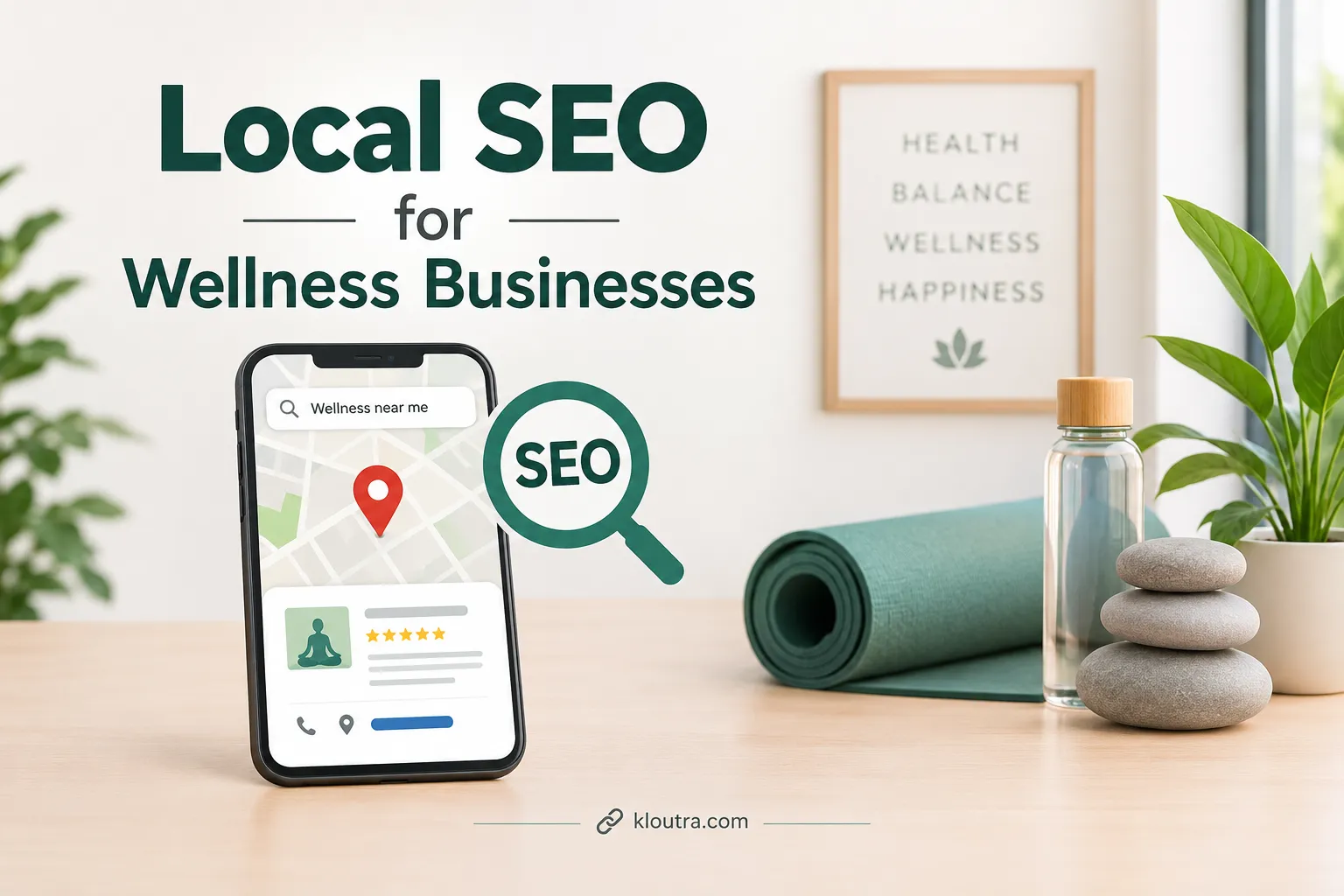
Local SEO for Wellness Businesses: Strategies to Get More Clients
Introduction
Someone searches “yoga classes near me” or “massage therapist in Austin” on Google. They check a few listings, read reviews, and choose a business. If yours doesn’t appear, you could miss a potential client.
Local SEO helps your wellness business appear in Google Search and Maps. It helps nearby clients find your services, check your hours, and read reviews before booking.
This guide explains local rankings, nine practical SEO strategies, common mistakes, and ways to track results. SEO takes time, but these steps can help clients find and trust your business.
Why Local SEO Matters for Wellness Businesses
Local SEO helps wellness businesses reach people searching for nearby services. Potential clients may search for yoga classes, massage therapy, nutrition coaching, or wellness centers. Local SEO helps these businesses appear in relevant Google Search and Maps results.
A strong local presence also helps people learn about your services before booking. They can check your opening hours, read customer reviews, and find your contact details. Accurate business information makes it easier for potential clients to choose your services.
Local SEO can also help small wellness businesses compete in their service areas. You can start by improving your Google Business Profile and website content. These steps can increase your visibility, but higher rankings are never guaranteed.
How Google Ranks Local Wellness Businesses
Google mainly uses three factors to rank local businesses: relevance, distance, and prominence. These factors help match searchers with suitable businesses.
Relevance, Distance, and Prominence
Relevance: Google checks how well your business matches a search. Keep your business category, services, and profile details accurate.
Distance: Google considers how far your business is from the searcher. Your location can affect which local businesses appear.
Prominence: Google considers how well-known your business is. Reviews, ratings, links, and information across the web can contribute to prominence.
Wellness businesses should focus on accurate details and genuine customer reviews. Keep your website and business profile clear and up to date.
9 Local SEO Strategies for Wellness Businesses
1. Optimize Your Google Business Profile
Create or claim your Google Business Profile and complete every relevant field. Choose the category that best describes your main service. Add accurate hours, contact details, and service information. Upload real photos of your space, team, or classes. Keep everything updated when your business changes.
2. Find Local Keywords Your Clients Actually Search For
Think about the words people use when looking for your services. Combine your service with your city or neighborhood. For example, a yoga studio might target “yoga classes in Austin.” Use relevant phrases naturally in your website content. Avoid repeating the same keyword just to rank higher.
3. Create Helpful, Service-Specific Website Pages
Give each main service its own page when you have useful details to share. Explain what the service includes, who it suits, and how clients can book. Include relevant prices, session details, and answers to common questions. Clear pages help visitors understand your services before contacting you.
4. Keep Your Business Details Consistent Across Directories
Check your business name, address, phone number, and website details across online directories. Correct outdated listings and remove duplicates where possible. Focus on trustworthy directories relevant to your location and industry. Accurate information helps people find and contact your business without confusion.
5. Collect Genuine Reviews and Respond Professionally
Invite clients to share honest feedback after their visits. Never buy reviews or offer rewards in exchange for positive ratings. Reply politely to both positive and negative feedback. Keep responses professional and protect clients’ private information. Genuine reviews can help potential customers feel more confident about choosing you.
6. Build Location Pages for the Areas You Actually Serve
Create location pages only when your business genuinely serves those areas. Include useful local details, available services, and accurate contact information. Avoid making many pages that differ only by city name. Each page should offer something helpful to people in that location.
7. Publish Useful, Trustworthy Wellness Content
Answer questions your clients commonly ask about your services. You could explain class preparation, appointment expectations, or how to choose a suitable wellness service. Use reliable sources for health-related claims. Avoid promising cures or guaranteed results. Helpful content builds trust and gives visitors a reason to explore your website.
8. Make Your Website Mobile-Friendly and Easy to Book From
Many people search for local services on their phones. Make sure your website loads quickly and displays properly on smaller screens. Keep menus simple and contact details easy to find. Use a clear booking button and a short booking process. Test your forms regularly to catch problems.
9. Track Local SEO Performance and Improve What Works
Track your Google Business Profile and Google Search Console data regularly to see what is working. See the measurement section below for the key metrics.
Common Local SEO Mistakes Wellness Businesses Should Avoid
Wellness businesses can waste time on SEO tactics that do not help customers. Avoid these common mistakes and focus on accurate information, trust, and useful content.
1. Using the Wrong Google Business Profile Category
Choose the category that best describes your main business. Avoid adding unrelated categories to target more searches.
2. Creating Fake or Duplicate Business Profiles
Create a profile that follows Google’s eligibility and representation rules. Avoid creating extra profiles for the same business or location. Incorrect profiles can confuse customers and cause policy problems.
3. Stuffing Keywords Into Your Business Name
Use your real-world business name on your profile. Do not add extra keywords, locations, or services to manipulate rankings.
How to Measure Local SEO Results
Track your local SEO results to see whether your efforts attract potential clients. Focus on profile activity, website traffic, phone calls, and bookings. Compare results over time instead of judging performance from one day.
Google Business Profile Performance
Check your Google Business Profile performance regularly. This report shows how people find and interact with your profile.
Review these important metrics:
- Searches: See which search terms help people discover your profile.
- Profile views: Track views across Google Search and Google Maps.
- Calls: Check how often people click your profile’s call button.
- Website clicks: See how many people visit your website from your profile.
- Direction requests: Track how often people request directions to your business.
- Bookings: Review booking data when your profile supports this feature.
Available metrics depend on your business and profile setup. Performance data requires a verified Business Profile.
Website Traffic, Calls, and Bookings
Use Google Search Console to track your website’s Google Search performance. Review clicks, impressions, click-through rates, and the search terms people use. Check which service pages attract visitors from local searches.
Use Google Analytics to understand what visitors do after reaching your website. Track relevant actions, such as booking submissions and contact form completions. Set up conversion tracking before relying on these numbers.
Record phone enquiries and completed bookings to measure business results. Ask new clients how they found your business when appropriate. Compare enquiries and bookings with your SEO performance over time.
More traffic does not always mean more customers. Focus on attracting relevant visitors who contact you or book services. Use these findings to improve pages that attract interest but few enquiries.
Final Thoughts
Local SEO helps wellness businesses connect with people searching for nearby services. Start by keeping your Google Business Profile accurate and complete. Use relevant local keywords and create helpful service pages. Encourage honest reviews and respond to clients professionally. Focus on helping local clients find, trust, and choose your business.
Frequently Asked Questions
How Long Does Local SEO Take to Work for Wellness Businesses?
Local SEO may take several months to show meaningful progress. Results depend on competition, location, website quality, and your current online presence.
Is Google Business Profile Free for Wellness Businesses?
Yes, Google Business Profile is free for eligible wellness businesses. You can manage your business information, add photos, and respond to reviews. You must follow Google’s eligibility guidelines to create a profile.
Can a Wellness Business Rank Without a Physical Storefront?
Yes, eligible wellness businesses can appear in local search results without storefronts. Service-area businesses can hide their home address and define their service areas. They must follow Google’s rules for business eligibility and profile setup.
How Often Should Wellness Businesses Update Their Local SEO?
Check your business information whenever your services, hours, or contact details change. Review your website, business profile, and performance data monthly. Update content when information becomes outdated or customers need new answers.
Can I Do Local SEO Myself?
Yes, you can handle many local SEO tasks yourself. Start with your Google Business Profile, useful service pages, and accurate business listings. Consider professional help when technical issues or competition become difficult to manage.
How Much Should I Pay for Local SEO?
Local SEO costs depend on your location, competition, and required services. Some businesses manage SEO themselves, while others hire freelancers or agencies. Request clear pricing, specific deliverables, and realistic goals before signing a contract. Avoid anyone promising guaranteed rankings.
Is SEO Dead Now With AI?
No, SEO is not dead because of AI. Google still uses SEO fundamentals across traditional and AI-powered search experiences. Focus on helpful content, technical accessibility, accurate information, and genuine expertise. AI changes how people search, but visibility and customer trust still matter.
What Is the 80/20 Rule in SEO?
The 80/20 rule suggests that a small number of actions may drive most results. It is a general business principle, not a fixed SEO formula. For wellness businesses, prioritize accurate business details, important service pages, genuine reviews, and relevant local searches. Measure results to identify what works best.
Disclaimer: This article provides general information about local SEO for wellness businesses. Search rankings and results vary based on competition, location, and other factors. Google may update its policies and features over time. Always check current guidelines before making changes to your business profile or SEO strategy. No specific ranking or business results are guaranteed.