How AI Search Engines Are Changing Traditional SEO Tactics
Introduction
AI search engines are changing how people find and consume information online. AI search engine optimization helps websites adapt to AI-driven search results and changing user behavior.
In this guide, you will learn how AI search engines are changing traditional SEO tactics. You will also discover practical ways to optimize content for modern AI search.
What Is AI Search Engine Optimization?
AI search engine optimization means optimizing content for AI-powered search experiences. It focuses on useful content, clear answers, context, and search intent.
AI search can use information from multiple web sources to answer user questions. Google’s AI Overviews and AI Mode are examples of these search experiences.
How AI Search Engines Understand Search Queries
AI search systems can look beyond exact keywords and consider the meaning and context of a query.
This helps them connect related concepts and information from different sources. Clear and well-structured content can make information easier to understand.
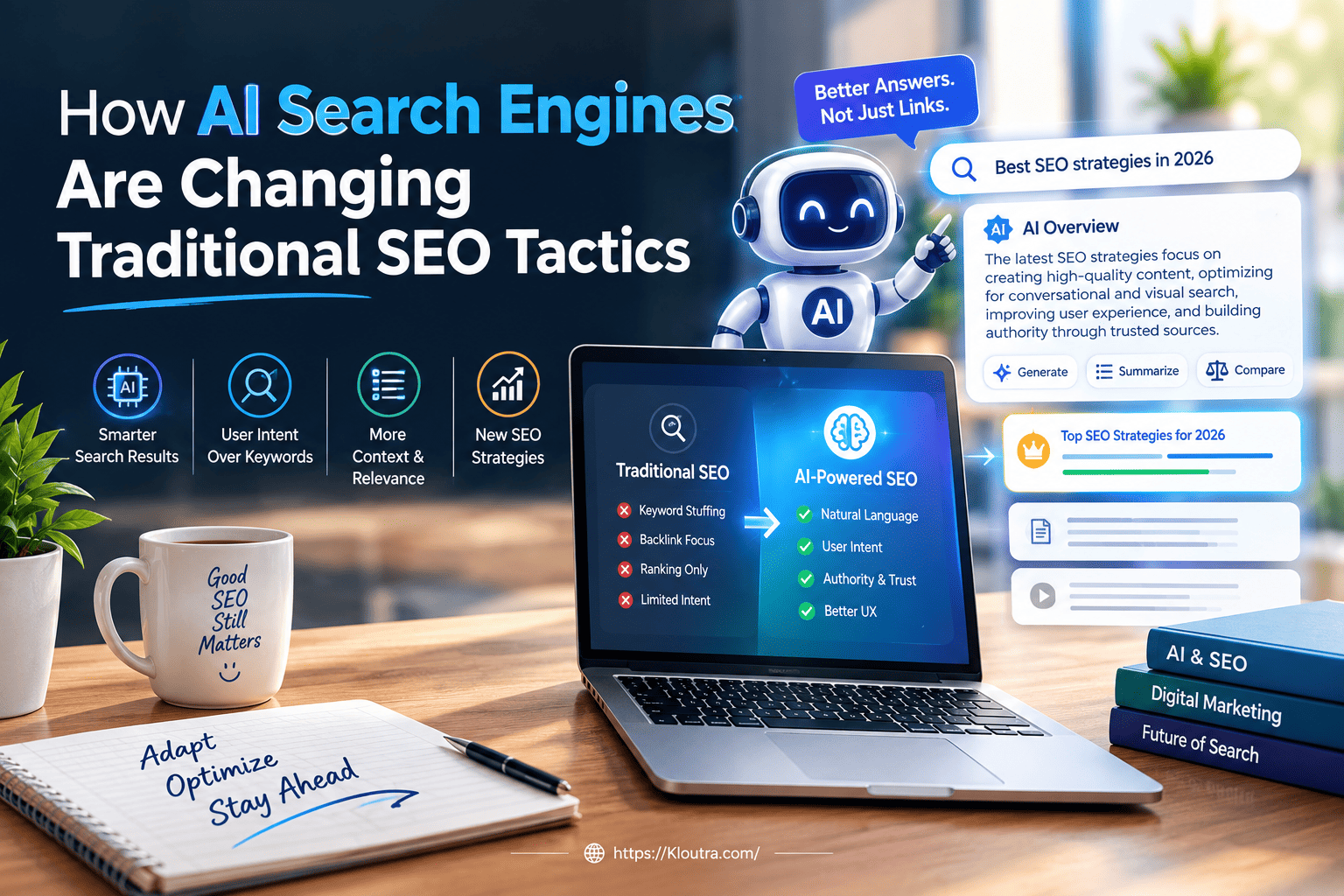
AI Search vs. Traditional Search Engines
Traditional search often presents a list of webpages for users. AI search can provide a generated response with supporting web sources.
This changes how people discover information through search. However, traditional SEO practices still matter for AI search visibility.
Why AI Search Engine Optimization Matters in 2026
AI features are now part of modern search experiences. Google provides AI Overviews and AI Mode in supported search experiences.
This means websites need useful, accurate, and well-organized content. Strong SEO foundations can still support visibility across search features.
How AI Search Engines Are Changing SEO
AI search is changing how users interact with search results. It also changes how websites should approach content and optimization.
Google continues to recommend SEO best practices for its generative AI search features.
From Keywords to Search Intent
Keywords still help search engines understand page topics. However, matching the user’s search intent is also important.
A clear AI marketing strategy should consider user intent and the questions people want answered. Content should answer the actual question behind each search. Avoid adding keywords when they do not improve the content.
The Shift Toward Conversational Queries
People can use longer and more natural questions when searching with AI. These queries often sound more like everyday conversations.
Content should provide direct answers to common questions. Natural language can also make information easier for readers to understand.
Why Context Matters More in AI Search
AI search can connect information across different parts of a query. Context helps systems understand what the user actually wants.
Writers should explain topics clearly and connect related ideas naturally. This creates content that is easier to understand and follow.
Changes in Search Results and Visibility
AI search can show answers alongside links and supporting sources. This can change how users discover individual webpages.
Google also tracks AI search features within Search Console reporting.
Websites should therefore monitor both traffic and search visibility. Useful content remains important for appearing across modern search experiences.
Traditional SEO Tactics That Are Changing
Traditional SEO tactics still matter, but search behavior is changing. AI search also puts more focus on context and useful information.
Keyword Optimization and Topic Relevance
Keywords still help search engines understand what a page covers. However, exact keyword matching is less important than before.
Google can understand related words, concepts, and the meaning behind queries. Focus on covering the topic clearly instead of repeating keywords.
Link Building and Website Authority
Links can help search engines discover and understand website content. However, building links only for rankings can create problems.
Focus on earning links through useful and original content. Avoid paid or unnatural link schemes that try to manipulate rankings.
Featured Snippets and Zero-Click Searches
Featured snippets can answer questions directly within Google Search. Some searches may also be answered directly without a website visit.
AI Overviews can provide summaries with links to supporting webpages. This makes clear and useful answers more important for search visibility.
Optimizing for Longer and Natural-Language Queries
People often search using natural questions and detailed phrases. However, you do not need separate pages for every query variation.
Create content that answers related questions within the same useful topic. Google can understand different ways people express similar searches.
How to Optimize Content for AI Search Engines
AI search still relies on many traditional SEO foundations. Your content should remain useful, accurate, accessible, and easy to understand.
Create Helpful and Direct Answers
Answer the main question early and explain it clearly. Avoid adding unnecessary information just to make content longer.
Google recommends helpful, reliable, and people-first content. Original information can also provide more value to readers.
Build Topical Authority
Cover important parts of a topic with useful and relevant information. Connect related pages through natural internal links.
Avoid publishing many pages simply to target different keyword variations. Focus on creating content that genuinely helps your audience.
Use Clear Content Structure
Use descriptive headings to organize your main topics and sections. Keep paragraphs short and make important information easy to find.
A clear structure helps readers understand your content more easily. It also supports search engines when they process your webpage.
Add Relevant Facts and Supporting Sources
Use accurate facts that directly support your main points. Link to reliable sources when additional evidence or context helps readers.
Keep important information visible in the main page content. Avoid adding sources or facts that do not support the topic.
AI Search Engine Optimization Strategies for Websites
Websites need clear and useful content for modern search experiences. Traditional SEO practices still support visibility in AI search.
Optimize for Semantic Search
Semantic search focuses on meaning rather than exact keyword matches. Create content that covers the topic clearly and naturally.
Use related terms when they help explain the subject. AI-powered SEO tools can also help identify related terms and improve content optimization. Avoid repeating the same keyword throughout your content.
Improve E-E-A-T Signals
E-E-A-T stands for Experience, Expertise, Authoritativeness, and Trustworthiness. These concepts can help demonstrate that your content is useful, reliable, and trustworthy.
Show who created the content and provide useful background information. Support important claims with accurate and trustworthy sources.
Use Structured Data and Schema Markup
Structured data helps Google understand information on your webpages. It can also make pages eligible for certain search features.
Use relevant schema types that match your actual page content. Always follow Google’s structured data guidelines and validate your markup.
Keep Content Accurate and Up to Date
Review important information regularly and update outdated details. This matters especially for fast-changing topics and current information.
Remove outdated claims and replace them with accurate information. Make sure your content still matches the user’s search intent.
The Role of AI Overviews and Answer Engines
AI Overviews and AI Mode can provide generated responses for search queries. These features can use information from multiple web sources.
Traditional SEO still matters for these newer search experiences. Google recommends maintaining strong SEO fundamentals for AI search.
How AI Overviews Affect Organic Traffic
AI Overviews can answer parts of a query directly within Google Search. Users can also access supporting webpages through links in these responses.
This may change how users interact with traditional search results. Website traffic can vary depending on the query and search experience.
How Answer Engines Select Information
Answer engines use information from available sources to build responses. They may consider content relevance, quality, and the user’s query.
Clear information helps systems understand the main points of your page. Strong SEO foundations can also support content discovery and indexing.
Optimizing Content for AI-Generated Answers
Give direct answers to questions throughout your content. Use descriptive headings and keep important information easy to find.
Support factual claims with reliable sources when appropriate. Keep your pages crawlable, indexable, useful, and regularly updated.
Technical SEO for AI Search
Technical SEO helps search engines access, understand, and index your website. These basics also support visibility in AI search features.
Improve Website Crawling and Indexing
Make sure search engines can access your important pages. Check your robots.txt file and sitemap regularly.
Use Google Search Console to check indexing issues. Also, fix broken links and unwanted duplicate pages.
Optimize Page Speed and User Experience
Fast pages provide a smoother experience for website visitors. Make your pages responsive across mobile and desktop devices.
Avoid unnecessary scripts, large images, and other elements that slow pages. Good page experience supports users while they browse your content.
Make Content Easy for AI Systems to Understand
Use clear headings and organize information into logical sections. Write direct answers that clearly match the page topic.
Keep important information in the visible page content. Avoid hiding important text only for search engines.
Use Internal Links Strategically
Internal links connect related pages across your website. They help visitors discover useful information about related topics.
Use descriptive anchor text that clearly explains the linked page. Link naturally when the additional information helps readers.
Common AI Search Optimization Mistakes
AI search does not require completely different SEO practices. Many common SEO mistakes can still reduce content quality.
Focusing Only on Keywords
Keywords help describe your topic, but they should not control your writing. Avoid repeating keywords just to influence search rankings.
Write naturally and answer the questions your audience actually asks. Google considers excessive keyword repetition a form of keyword stuffing.
Publishing Low-Quality AI-Generated Content
AI tools can help with research, drafting, and content development. However, publishing large amounts of unoriginal content creates risks.
A proper generative AI for content marketing workflow can help with content creation while keeping human review and originality in focus. Google considers scaled content abuse a spam practice when many pages are created mainly to manipulate search rankings.
AI-generated content can provide value when it is useful, accurate, and created for people rather than search engines.
Ignoring Search Intent
Search intent describes what users want from their search. Your content should directly address that purpose.
Check the questions users ask before creating or updating content. Then provide clear information that satisfies those needs.
Using Outdated SEO Tactics
Some older SEO tactics can hurt content quality and search performance. Keyword stuffing and manipulative link building remain against Google’s spam policies.
Focus instead on useful content, clean technical SEO, and natural linking. Review your SEO methods regularly as search systems continue changing.
How to Measure AI Search SEO Performance
Measuring AI search performance requires several different SEO metrics. Search Console now provides data for Google’s generative AI features.
Track Organic Search Traffic
Monitor clicks and impressions from Google Search regularly. Search Console shows both metrics for your website and individual pages.
Compare traffic across different periods to identify important changes. Also review which pages and queries bring visitors.
Monitor Search Visibility and Rankings
Track impressions, clicks, CTR, and average search position. These metrics help you understand your traditional search performance.
Search Console also provides performance data for Google’s generative AI search features, including AI Overviews and AI Mode.
Measure Brand Mentions in AI Answers
Check whether AI search systems mention your brand or website. Search for your brand alongside important questions in AI search experiences.
There is no universal metric for every AI platform. Record mentions manually or use available third-party monitoring tools.
Review Content Engagement
Monitor how visitors interact with your content after arriving. Useful metrics include engagement, conversions, and time spent on pages.
Compare these metrics before and after major content updates. This helps you understand which changes improve user behavior.
Future of AI Search Engine Optimization
AI search will continue changing how people find online information. SEO will need to adapt to these evolving search experiences.
The Growing Role of Conversational Search
Users can ask longer and more natural questions through AI search. AI Mode can also handle follow-up questions within a search conversation.
Content should answer questions clearly and provide useful supporting information. Natural language will remain important for understanding search intent.
AI Search and the Future of Organic Traffic
AI search can change how users interact with traditional search results. Google AI Overviews and AI Mode can show links to supporting webpages.
As a result, search visibility is becoming more complex than traditional rankings alone. Websites should monitor both standard and generative AI search performance.
How SEO Strategies May Evolve
SEO strategies will likely focus more on useful and well-structured content. Clear answers, strong technical SEO, and accurate information will remain important.
Search professionals should regularly review new search features and performance data. This helps them adjust strategies based on actual results.
Conclusion
AI search is changing how people discover information online. Traditional SEO still provides an important foundation for search visibility.
Focus on useful content, clear answers, strong structure, and accurate information. Also keep your website technically healthy and easy to access.
As AI search develops, SEO strategies will continue to adapt. Regularly review your content and search performance to stay prepared.
Disclaimer: The information in this article is provided for general informational and educational purposes only. AI search engines, SEO practices, and search features can change over time. Search results and performance may vary depending on the website, content, search query, and platform.
This article does not guarantee higher rankings, increased traffic, or visibility in AI search results. Always check official search engine guidelines and current information before making important SEO decisions.