AI Marketing Strategy: How to Implement It Step by Step
Introduction
AI marketing strategy helps businesses use artificial intelligence to improve their marketing efforts. It can support tasks like content creation, customer research, SEO, personalization, and marketing automation.
In this guide, we will explain how to create and implement an AI marketing strategy step by step. You will also learn about its benefits, useful tools, common mistakes, and key trends to watch in 2026.
What Is an AI Marketing Strategy?
An AI marketing strategy is a plan that uses artificial intelligence in marketing activities. It helps businesses understand customers and improve marketing decisions.
AI can analyze large amounts of customer and marketing data quickly. It can also help create content and personalize customer experiences.
Businesses can use AI for SEO, social media, email marketing, and advertising. They can also automate repetitive marketing tasks and save valuable time.
The goal is not to replace marketers with AI tools. Instead, AI helps marketers work faster and make better-informed decisions.
Why Is AI Marketing Strategy Important in 2026?
AI has become a common part of many modern marketing workflows. Businesses use it to analyze data and understand customer behavior. It can also help teams create content and automate repetitive tasks. This allows marketers to spend more time on planning and creative work.
How AI Changes Modern Marketing
AI helps marketers process large amounts of data more efficiently. It can identify patterns in customer behavior and campaign performance. Marketers can use these insights to improve their campaigns and targeting. AI can also support personalized content and customer communication.
Benefits of Using AI in Marketing
- AI can reduce time spent on repetitive marketing tasks.
- It can help marketers analyze customer and campaign data.
- AI can support personalized marketing experiences at scale.
- It can help teams create and organize marketing content.
- AI can improve workflow efficiency across different marketing activities.
- Marketers can use AI insights to make better-informed decisions.
How to Build an AI Marketing Strategy Step by Step
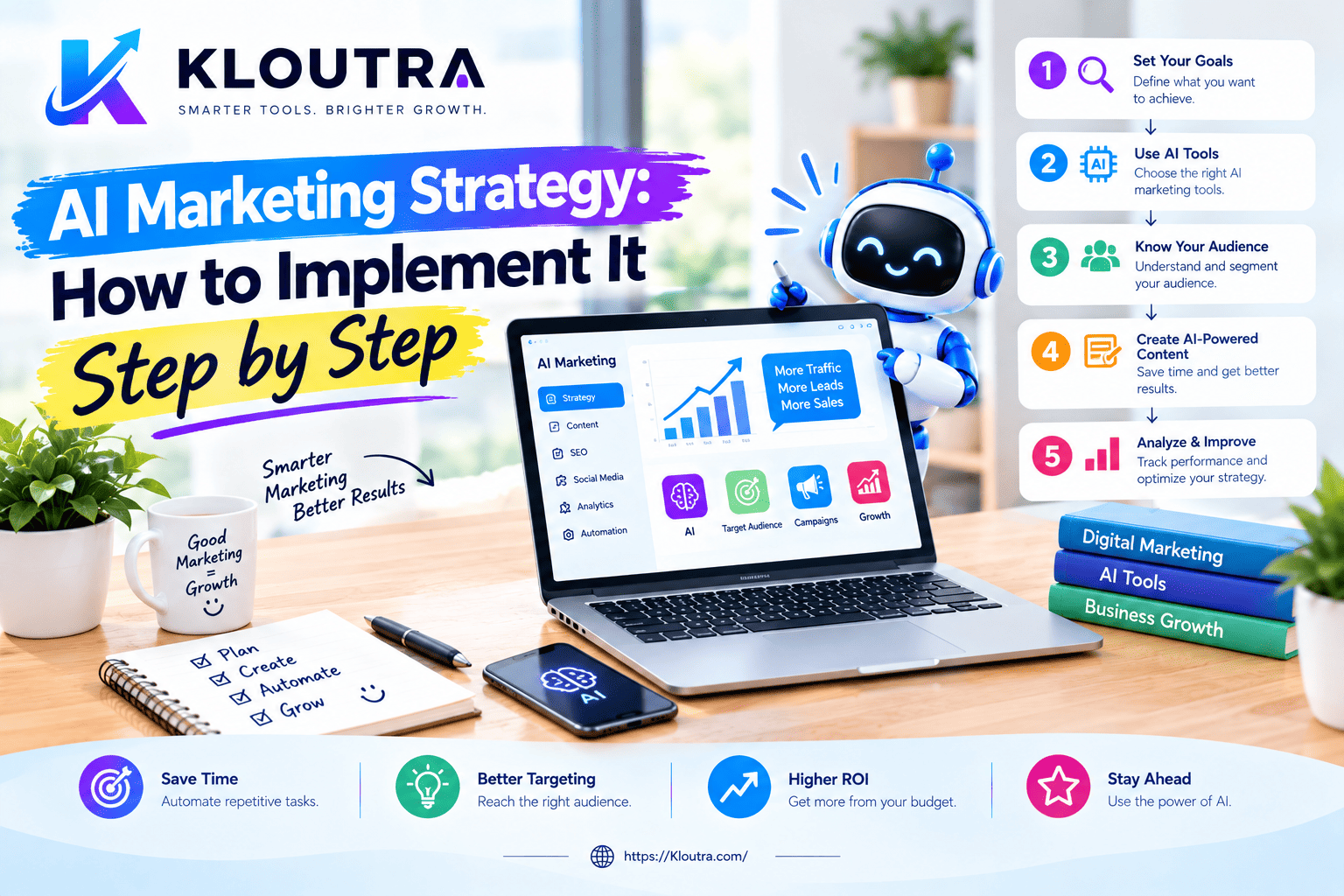
Building an AI marketing strategy starts with clear goals and customer knowledge. You should also choose tools that match your marketing needs. A simple workflow can help your team use AI more effectively. Regular testing helps you find what works and what needs improvement.
Define Your Marketing Goals
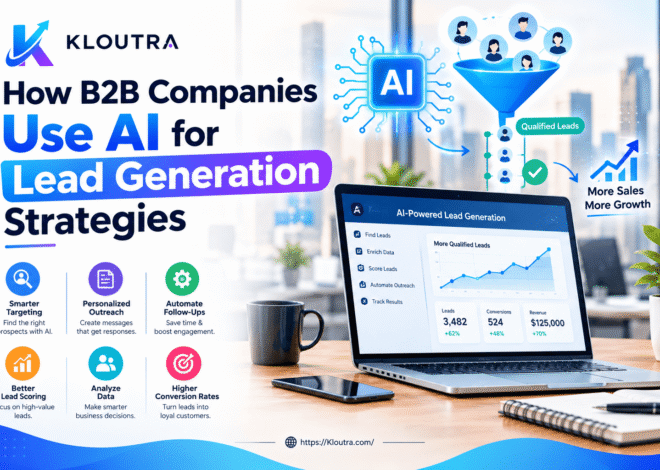
Start by deciding what you want your marketing efforts to achieve. Your goals should be clear, measurable, and connected to business needs. You might focus on traffic, leads, sales, engagement, or customer retention. AI lead generation strategies can also help businesses attract and qualify potential customers.
Understand Your Target Audience
Learn about your customers before adding AI to your marketing process. Study their needs, interests, problems, and online behavior. Use reliable customer data to understand different audience groups. This information helps you create more relevant marketing messages.
Choose the Right AI Marketing Tools
Choose AI tools based on your specific marketing goals. Look for tools that solve real problems in your workflow. Check their features, costs, integrations, privacy policies, and data practices. Avoid using multiple tools when one reliable tool can handle the task.
Create an AI-Powered Marketing Workflow
Decide where AI will fit into your existing marketing process. You can use AI for research, content, analysis, or automation. Keep human review in important tasks that affect customers. A clear workflow helps your team use AI consistently.
Test and Improve Your Strategy
Start with small campaigns before expanding your AI marketing strategy. Track results using relevant marketing metrics and business goals. Compare AI-assisted results with your previous campaign performance. Use these insights to improve your process and future campaigns.
How AI Can Improve Marketing Campaigns
AI can support many parts of a marketing campaign. It helps marketers research, create, analyze, and optimize their campaigns. Marketers should review AI-generated work before publishing or using it.
AI for Content Marketing
AI can help marketers generate content ideas and organize content plans for generative AI for content marketing. It can also assist with outlines, drafts, summaries, and content variations. Marketers should check facts, tone, originality, and brand guidelines carefully. Human review helps keep content useful, accurate, and relevant.
AI for SEO and Keyword Research
AI can help marketers identify topics and organize keyword research. It can analyze search data and suggest related topics. AI can also help improve content structure and search intent coverage. Marketers should verify keywords using reliable SEO and search data.
AI for Social Media Marketing
It can help create social media ideas and content variations. AI tools for social media management can also assist with captions, posting plans, and performance analysis. These insights can help marketers improve future social media campaigns. Human review remains important for brand voice and sensitive topics.
AI for Email Marketing
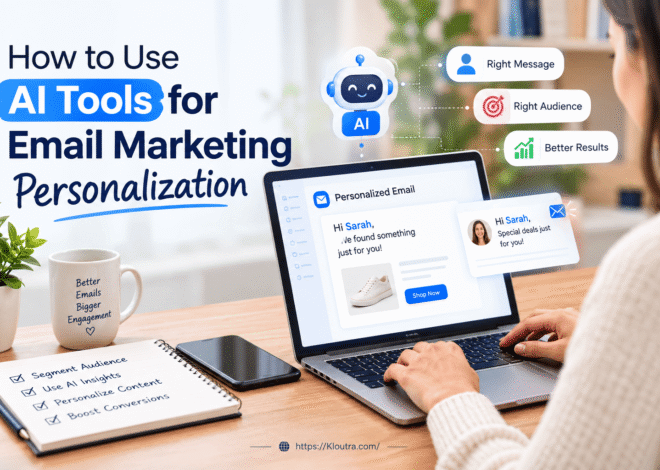
AI can help marketers create email subject lines and message drafts. It can also support audience segmentation and content personalization. Marketers can analyze campaign data to improve future email performance. They should still review messages before sending them to customers.
How AI Helps With Customer Data and Personalization
AI can help businesses understand customer data more efficiently. It can find patterns in customer behavior, preferences, and interactions. These insights can help marketers create more relevant marketing campaigns. Businesses should use customer data responsibly and follow applicable privacy rules.
AI-Powered Customer Insights
AI can analyze customer data from different marketing channels. It can help identify common behaviors, interests, and customer segments. Marketers can use these insights to understand what customers may need. Good data quality helps AI produce more useful marketing insights.
Personalized Marketing Campaigns
AI can help marketers personalize messages for different customer groups. It can suggest content based on customer interests and past interactions. Businesses can also tailor offers, emails, and website experiences. Personalization should respect customer preferences and applicable privacy requirements.
Best AI Marketing Tools to Consider
The best AI marketing tool depends on your goals and daily marketing tasks. Different tools support content creation, SEO, analytics, and marketing automation. Choose tools that fit your workflow, budget, and team requirements. Always check features, pricing, privacy practices, and integration options before choosing.
AI Tools for Content Creation
AI content tools can help marketers create ideas, outlines, and drafts. They can also rewrite, summarize, and adapt content for different audiences. Marketers should review AI content for accuracy and brand consistency. Human editing also helps maintain a natural and useful writing style.
AI Tools for SEO and Analytics
AI SEO tools can help with keyword research and content analysis. They can also identify related topics and potential content gaps. Analytics tools can help marketers understand traffic and campaign performance. Use reliable data before making important SEO or marketing decisions.
AI Tools for Marketing Automation
AI automation tools can help manage repetitive marketing tasks. They can support workflows for emails, lead management, and customer communication. Automation can save time when teams handle large numbers of tasks. Set clear rules and review automated actions regularly.
How to Measure an AI Marketing Strategy
Measuring your AI marketing strategy shows whether your efforts are producing useful results. Choose metrics that match your marketing goals and business objectives. Review performance regularly and compare results with earlier campaigns. This helps you find what works and where changes may help.
Track Conversion Rates and ROI
Conversion rate shows how many users complete a desired action. This action could include purchases, sign-ups, downloads, or form submissions. Track conversions before and after introducing AI into your marketing workflow. ROI helps you compare marketing returns with the costs involved.
Monitor Engagement and Customer Growth
Engagement metrics show how people interact with your marketing content. These metrics can include clicks, shares, comments, views, and email responses. Customer growth can show whether your marketing attracts new customers over time. Compare these results across campaigns to identify useful patterns.
Common AI Marketing Strategy Mistakes to Avoid
AI can improve marketing, but businesses should use it carefully. Poor planning can lead to inaccurate content and weak marketing decisions. Marketers should combine AI tools with human judgment and reliable data.
Relying Too Much on AI
AI should support marketers rather than replace human decision-making. AI-generated content can contain errors, missing context, or incorrect information. Always review important content before publishing or sharing it. Keep human input in creative, strategic, and customer-focused decisions.
Using Poor-Quality or Unverified Data
AI results depend partly on the quality of available data. Poor data can produce misleading insights and inaccurate marketing decisions. Use accurate, relevant, and properly collected customer data. Review important data before using it in marketing campaigns.
Ignoring Human Creativity and Oversight
AI can generate useful ideas, but humans provide context and creativity. Human review helps maintain your brand voice and marketing standards. Marketers should check AI outputs for accuracy, relevance, and clarity. A balanced approach can make AI marketing more effective.
AI Marketing Strategy Trends to Watch in 2026
AI marketing is moving toward smarter automation, personalization, and AI-powered search. Businesses are also focusing more on useful content and customer trust.
AI-Powered Marketing Automation
AI can automate repetitive tasks across different marketing activities. It can help manage campaigns, analyze results, and adjust workflows. More advanced systems can also coordinate several marketing tasks together.
Personalized Customer Experiences
Businesses are using AI to create more relevant customer experiences. AI can analyze customer data and support personalized marketing messages. Personalization should respect customer preferences and privacy requirements.
Generative AI for Marketing
Generative AI can help marketers create content ideas and drafts. It can also support campaign planning and content variations. Marketers should review AI-generated content for accuracy and brand quality.
AI Search and Answer Engine Optimization
People increasingly receive information through AI-powered search experiences. This creates new opportunities for brands to improve their AI visibility. Answer Engine Optimization focuses on making content useful for answer-based searches. Businesses should still follow strong SEO and content quality practices.
Final Thoughts on AI Marketing Strategy
An effective AI marketing strategy starts with clear goals and customer needs. Choose AI tools that support your specific marketing tasks and workflow. Always review important AI outputs before sharing them with customers.
Track your results and improve your strategy based on real performance data. AI can save time, but human judgment still guides important marketing decisions. A balanced approach can help businesses use AI responsibly and effectively.
Disclaimer: This article is for informational purposes only. AI tools, features, and marketing practices can change over time. Always verify information before making business or marketing decisions.