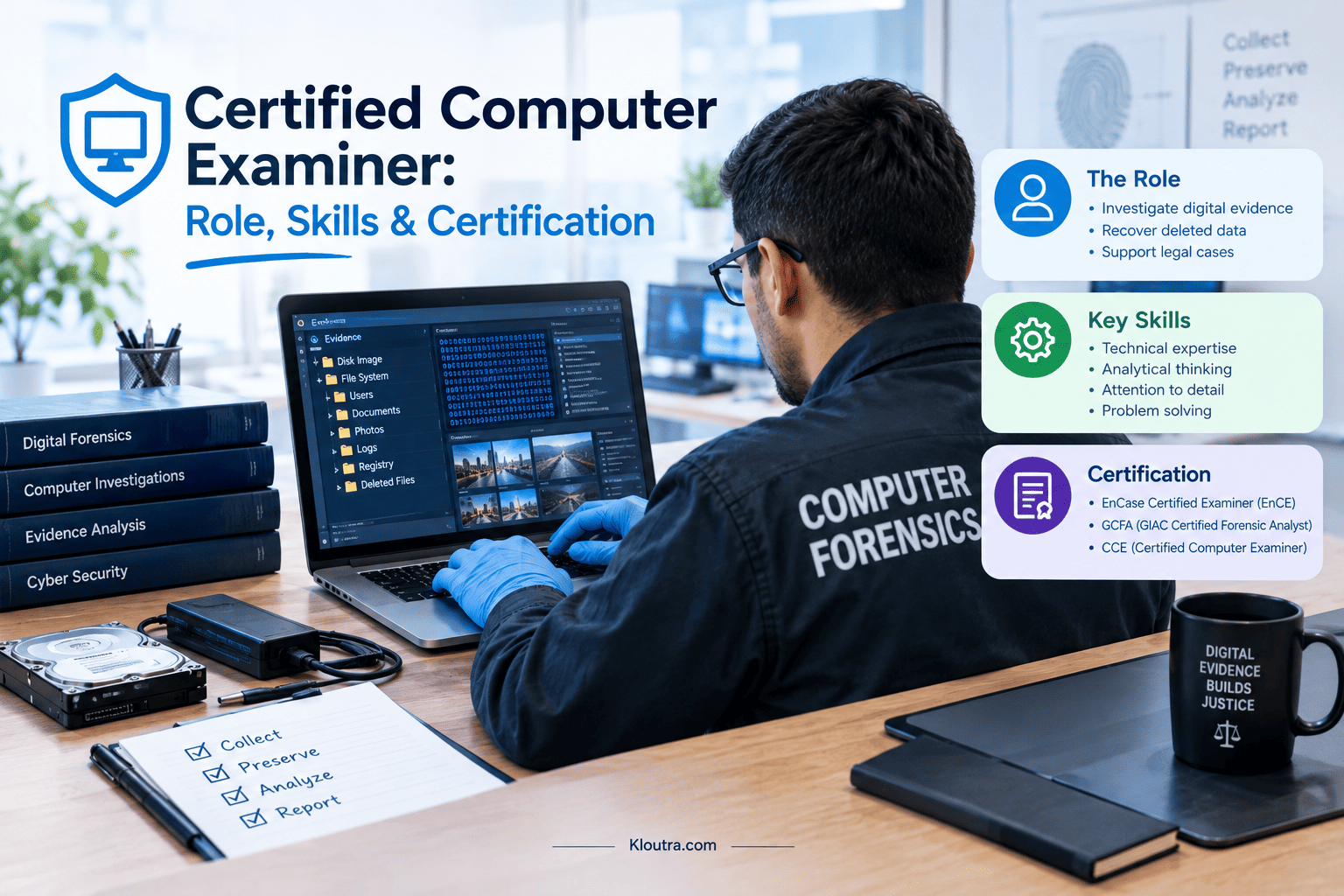
Certified Computer Examiner: Role, Skills & Certification
Introduction
A Certified Computer Examiner helps investigate computer-related incidents by examining digital evidence. These professionals inspect devices, analyze files, and recover deleted data when possible. They also prepare reports that explain their findings. This work requires technical knowledge, analytical thinking, and careful handling of private information. If you want to build a career in digital forensics, understanding this role is a useful first step.
In this guide, you will learn about the responsibilities, essential skills, and certification requirements. We will also explain how to become a Certified Computer Examiner, explore common forensic tools, and discuss career opportunities and salary factors.
What Is a Certified Computer Examiner?
A Certified Computer Examiner is a professional trained to examine digital devices and electronic evidence. This work helps people understand what happened during a computer-related incident. Examiners may investigate deleted files, suspicious activity, or possible data theft. They use special tools to collect and study digital information.
The title can also refer to a specific professional certification. The International Society of Forensic Computer Examiners (ISFCE) offers the Certified Computer Examiner (CCE) certification. It assesses skills related to computer forensics and digital evidence examination.
What Does Computer Examination Mean?
Computer examination involves checking a computer for relevant digital information. Examiners may inspect files, folders, system records, and storage devices. They look for evidence that helps answer specific questions. For example, they may investigate unauthorized access or suspicious file changes.
Professionals must handle evidence carefully during this process. They document their actions and protect the original data whenever possible. These steps help maintain the evidence’s reliability.
What Is Digital Forensics?
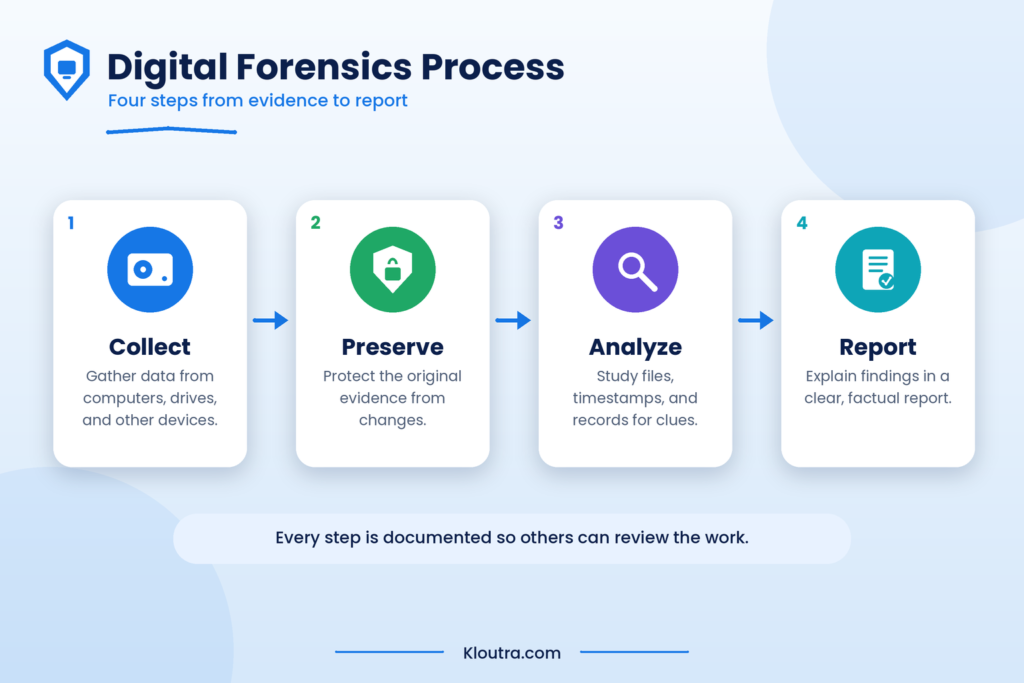
Digital forensics is the process of examining digital data for investigative purposes. It can involve computers, mobile phones, storage drives, and other devices. Specialists collect, preserve, analyze, and report relevant evidence.
Digital forensics can support criminal investigations and workplace security reviews. It can also help investigate data breaches and unauthorized activities. Examiners follow proper procedures to protect evidence and document their findings.
What Does a Certified Computer Examiner Do?
A Certified Computer Examiner investigates digital information to answer important questions. They examine devices, recover available data, and document their findings. Their work may support legal cases, workplace investigations, or security incidents.
The exact duties depend on the case and the examiner’s role. They must follow approved procedures and respect privacy laws.
Examining Digital Devices
Computer examiners inspect computers, hard drives, and other digital storage devices. They look for files, system records, and other relevant information. They may also examine devices for signs of unauthorized access.
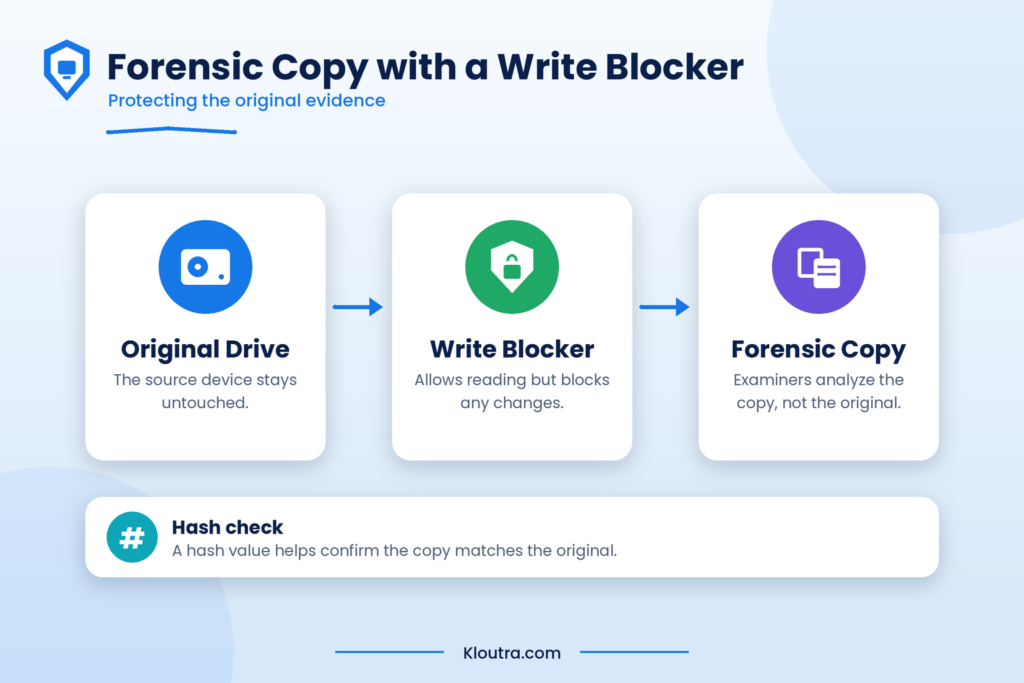
Examiners often create forensic copies before analyzing the data. This helps protect the original evidence from accidental changes. They record important steps throughout the examination.
Recovering and Analyzing Digital Evidence
Examiners use forensic tools to locate and analyze relevant digital information. They may recover deleted files when the data remains available. However, recovery is not always possible.
They also examine timestamps, file details, and other digital records. These details may help explain what happened and when. Examiners must consider context before drawing conclusions from their findings.
Preparing Forensic Reports
After examining the evidence, computer examiners prepare clear forensic reports. These reports explain their methods, findings, and conclusions. They also identify important limitations in the examination.
A good report separates observed facts from professional opinions. It should use simple language that readers can understand. Investigators, legal teams, or courts may use these reports during investigations.
Skills Required to Become a Certified Computer Examiner
A Certified Computer Examiner needs technical knowledge and strong problem-solving skills. They must understand computers, digital evidence, and forensic investigation methods. Good communication skills also help them explain their findings clearly. They must handle evidence carefully and follow professional ethical standards. These skills help examiners perform reliable and fair investigations.
Technical and Computer Forensics Skills
Computer examiners need a solid understanding of computer systems. They should know how operating systems and storage devices work. Knowledge of file systems and file formats helps them examine digital information. They also need to understand basic networking and cybersecurity concepts.
Computer forensics tools help examiners collect and analyze digital evidence. Examiners should learn how to create forensic copies of data. They must also protect original evidence from unwanted changes. Practical training helps them develop these technical skills.
Analytical Thinking and Attention to Detail
Computer examiners must carefully study digital evidence and identify useful details. They look for patterns, unusual activity, and possible links between files. Small details can help explain what happened during an incident.
Strong analytical thinking helps examiners test different explanations. They should avoid making claims without enough supporting evidence. Careful notes also help them explain their findings later.
Legal and Ethical Knowledge
Computer examiners must understand the rules that govern digital investigations. These rules can vary by country and case type. They should know when they have permission to examine a device. They must also respect privacy and protect confidential information.
Examiners should keep their findings accurate and objective. They must document their methods and avoid changing evidence unnecessarily. Professional ethics also require honesty and responsible handling of sensitive data.
Table 1: Essential Skills for a Certified Computer Examiner
| Skill | Why It Matters |
|---|---|
| Computer knowledge | Helps examiners understand devices and operating systems. |
| Digital forensics | Helps them collect and examine digital evidence correctly. |
| Data recovery | Helps them retrieve deleted data when recovery remains possible. |
| Analytical thinking | Helps them identify patterns and investigate unusual activity. |
| Attention to detail | Helps them notice important information and avoid mistakes. |
| Report writing | Helps them explain findings in clear, simple language. |
| Legal knowledge | Helps them follow applicable laws and investigation procedures. |
| Ethical judgment | Helps them protect privacy and maintain professional integrity. |
Certified Computer Examiner Certification Explained
The Certified Computer Examiner certification helps show knowledge of computer forensics. It focuses on examining computers and handling digital evidence correctly. People interested in digital investigations may consider this certification. However, they should review its requirements before starting the process.
What Is the CCE Certification?
CCE stands for Certified Computer Examiner. The International Society of Forensic Computer Examiners (ISFCE) offers this professional certification. It focuses on skills used in computer forensic examinations.
The certification covers the proper examination and analysis of digital evidence. It also emphasizes following accepted forensic procedures. People working in digital forensics may find it relevant to their careers.
A CCE credential does not automatically qualify someone for every forensic job. Employers may also require education, experience, or other professional qualifications.
Certification Requirements and Eligibility
Applicants must meet the ISFCE’s eligibility rules before taking the certification exams. These rules include training, experience, and application requirements. Candidates should check the current rules before applying.
The official exam process lists several requirements:
- Complete approved CCE training or meet an accepted alternative qualification.
- Have at least 18 months of verifiable professional digital forensics experience.
- Complete 40 hours of documented digital forensics self-study.
- Pass the required background check.
- Agree to follow the ISFCE Code of Ethics.
- Submit the required application and receive approval.
The ISFCE’s published policies describe these requirements in more detail. Some applicants may qualify for Associate status before meeting the experience requirement. Always confirm your eligibility directly with the certification provider.
Exam Format and Assessment
The CCE certification process includes an online exam and practical examinations. The online exam contains at least 100 multiple-choice questions. Candidates have 60 minutes to complete it.
The practical part includes three separate digital forensic examinations. Candidates analyze disk images, recover available data, and prepare detailed reports. An assigned assessor evaluates each practical report.
Candidates must meet the required scores across all four exam components. The published policy requires an overall average of at least 80%. It also sets minimum scores for individual exams.
Certified Computer Examiner Certification Requirements
| Requirement | What to Check |
|---|---|
| Training | Complete an accepted CCE training route or alternative qualification. |
| Professional experience | Check the requirement for 18 months of verifiable forensic experience. |
| Self-study | Confirm the required 40 hours of documented study. |
| Application | Submit the application and receive approval from ISFCE. |
| Background check | Review the provider’s background check policy. |
| Code of Ethics | Agree to follow professional and ethical standards. |
| Online exam | Prepare for at least 100 questions in 60 minutes. |
| Practical exams | Complete three examinations and submit detailed forensic reports. |
| Passing scores | Meet the required overall and individual exam scores. |
Note: Certification requirements can change. Check the official ISFCE CCE certification page before applying.
How to Become a Certified Computer Examiner
Becoming a Certified Computer Examiner takes learning, practice, and careful preparation. You need computer knowledge and an understanding of digital evidence. Practical experience also helps you develop useful forensic skills. Follow these steps to start building your career in computer forensics.
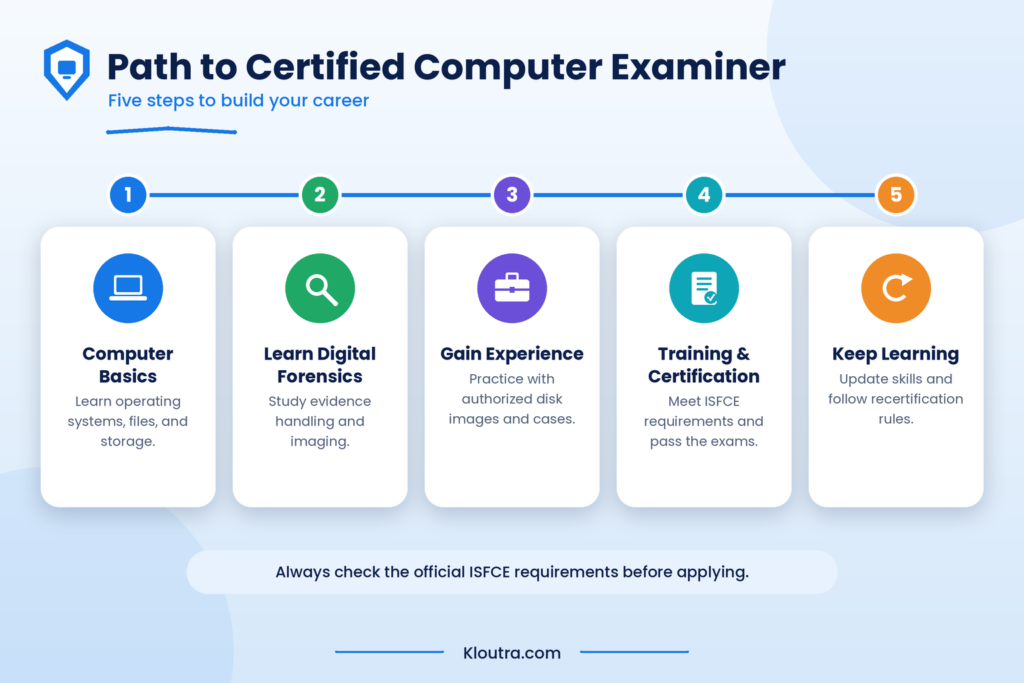
Step 1: Build a Strong Computer Science Foundation
Start by learning how computers and operating systems work. Understand Windows, Linux, files, folders, and storage devices. Learn basic networking and cybersecurity concepts. You can also read more technology guides to strengthen your basics. These skills help you understand how computers store and process information.
You can study computer science or information technology through formal education. However, a degree alone does not guarantee forensic certification. Focus on building practical technical knowledge alongside your studies.
Step 2: Learn Digital Forensics
Digital forensics teaches you how to examine electronic evidence. Learn how investigators collect, preserve, and analyze digital information. Study file systems, metadata, deleted files, and forensic imaging.
You should also learn how to document every examination step. Proper documentation helps others understand and review your findings. Practice using forensic tools in authorized training environments. Never examine someone else’s private data without proper permission.
Step 3: Gain Practical Experience
Practical experience helps you understand real digital forensic investigations. Practice examining disk images and identifying relevant files. Learn to record your methods and explain your findings clearly.
You can seek internships, entry-level forensic roles, or supervised training opportunities. Always work with devices and data you have permission to examine. The CCE certification requires verifiable professional forensic experience for full certification. Check the provider’s current rules before applying.
Step 4: Choose Relevant Training and Certification
Choose training that matches your career goals and current skills. If you want the CCE credential, review the ISFCE requirements. The provider offers training through its online course and approved training centers.
Check the course content, fees, and application rules before enrolling. Prepare for both the online assessment and practical examinations. Complete the required application and wait for approval before proceeding.
Step 5: Keep Your Skills Updated
Digital technology changes, so computer examiners must keep learning. Follow trusted digital forensics resources and professional training programs. Practice with new tools in authorized environments.
The CCE credential also has recertification requirements. Check the current rules for continuing education and practical experience. Regular learning helps you maintain relevant skills and follow current forensic practices.
Tools Used by Certified Computer Examiners
Certified Computer Examiners use special tools to examine digital evidence. These tools help them inspect files, analyze storage devices, and find useful information. The right tool depends on the device and investigation.
Some tools also help recover deleted files and examine system activity. However, deleted data cannot always be recovered. Examiners must choose suitable tools and check their results carefully.
Common tools include:
- Autopsy: Helps examine files, browser activity, and other digital evidence.
- The Sleuth Kit: Provides tools for analyzing disk images and file systems.
- Disk imaging tools: Create copies of storage devices for forensic examination.
- Write blockers: Help prevent changes to storage devices during evidence collection.
- Hashing tools: Help check whether digital data has changed.
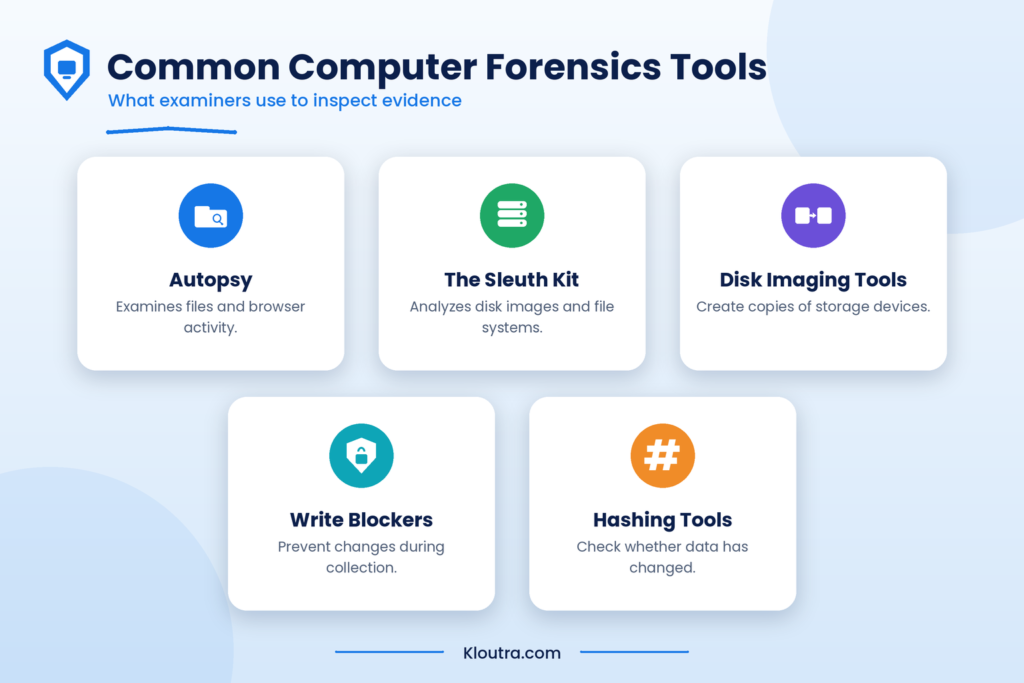
Examiners should learn each tool’s limits before using it. They should also document their methods and verify important findings.
Certified Computer Examiner vs. Other Digital Forensics Roles
A Certified Computer Examiner focuses on examining digital evidence. Other digital forensics professionals may investigate phones, networks, or security incidents. Their duties can overlap, depending on their training and workplace.
The CCE is a professional certification, not a separate job title. People with this certification may work in different digital investigation roles. Their actual duties depend on their experience and employer.
Computer Examiner vs. Related Digital Forensics Roles
| Job Role | Main Focus |
|---|---|
| Certified Computer Examiner | Examines computer evidence using forensic methods. |
| Digital Forensics Analyst | Collects and analyzes digital evidence from different sources. |
| Mobile Device Forensics Examiner | Examines phones and tablets for relevant digital evidence. |
| Incident Response Analyst | Investigates security incidents and helps limit their impact. |
| Cybersecurity Analyst | Monitors systems and helps identify security threats. |
These roles can share many skills and responsibilities. Job titles alone do not define every professional’s duties. Employers may also require specific training, experience, or certifications.
Career Opportunities and Salary Factors
Certified Computer Examiners can work in several digital investigation fields. They may work with law enforcement agencies, businesses, or forensic service providers. Some professionals also support legal teams and private investigations.
Common career options include:
- Computer Forensics Analyst: Examines computers and digital evidence.
- Digital Forensics Examiner: Investigates digital devices and related information.
- Incident Response Analyst: Helps investigate cybersecurity incidents.
- Cybersecurity Analyst: Helps protect systems against security threats.
- Forensic Consultant: Provides digital examination services to clients.
The exact job title depends on the employer and required duties. Some positions require a degree, professional experience, or additional certifications.
What Affects a Computer Examiner’s Salary?
Computer examiner salaries vary by country, employer, and experience. The CCE certification alone does not guarantee a particular salary. Employers also consider technical skills and the complexity of assigned work.
Important salary factors include:
- Experience: Experienced examiners may qualify for more advanced positions.
- Education: Some employers prefer degrees in computer science or related fields.
- Technical skills: Specialized forensic skills can help candidates qualify for specific roles.
- Location: Salaries vary between countries, cities, and local job markets.
- Employer: Government agencies, private companies, and consulting firms offer different pay packages.
- Job responsibilities: Senior roles may involve complex investigations or expert testimony.
For example, the UK National Careers Service lists annual salaries of approximately £30,000 for starters and £65,000 for experienced forensic computer analysts. These figures describe a related occupation, not guaranteed salaries for CCE holders.
Challenges and Ethical Responsibilities in Computer Examination
Computer examination requires patience, accuracy, and responsible handling of evidence. Examiners may face damaged devices, encrypted files, or incomplete data. Some deleted information may not be recoverable.
They must also protect private information during investigations. Examiners should only access data with proper legal authority or permission. They must follow applicable laws and workplace procedures.
Other common challenges include:
- Changing technology: New devices and systems require ongoing learning.
- Evidence integrity: Poor handling can damage evidence or affect its reliability.
- Time pressure: Investigations may involve deadlines and large amounts of data.
- Accurate reporting: Examiners must explain findings without making unsupported claims.
- Objectivity: They must report evidence fairly, even when findings challenge expectations.
Ethical examiners document their actions and protect confidential information. They also explain the limits of their methods and conclusions. These practices help others review their work and understand the evidence.
Conclusion
A Certified Computer Examiner helps investigate computer-related incidents through digital evidence analysis. The work requires technical knowledge, careful thinking, and ethical conduct. Learning computer forensics and gaining practical experience can prepare you for this field.
Before pursuing CCE certification, review the provider’s current requirements. Choose relevant training and practice using forensic tools responsibly. With continued learning, you can build skills for digital investigation careers. For more helpful guides, visit Kloutra.
Disclaimer: This article is for informational purposes only. Certification requirements, fees, and salaries may change. Always check official sources for updated information. Career outcomes and salaries vary by experience, location, and employer. This article is not officially endorsed by any certification provider mentioned.
Frequently Asked Questions
How much does it cost to get IACIS certified?
IACIS certification costs depend on the program and training required. Some certification-only programs cost $800, while training courses cost extra. The official IACIS website lists current fees and requirements.
Does DFIR pay well?
Yes, DFIR can offer competitive salaries, especially for experienced professionals. Pay depends on your country, skills, role, and experience. A 2026 salary report showed median advertised pay of about $102,200 annually across several countries. This figure combines different DFIR roles and markets.
How much does the CHFI exam cost?
The official EC-Council store lists the CHFI exam voucher at $650. Eligible academic users may qualify for a lower price. Self-study applicants may also need to pay a separate $100 eligibility fee. Training costs may be extra.
What is the salary of cyber forensic?
Cyber forensic salaries vary by country, experience, and job duties. In the United States, digital forensics salaries differ across employers and roles. Recent DFIR job-posting data showed a median of about $87,600 annually for digital forensics roles across several countries. Treat this as a guide, not a guaranteed salary.

Related Posts

RCA Tablet Serial Number: How to Find It

What Is Audiodisplayed? Meaning, Uses and Key Facts