Direct Store Delivery Route Accounting Software: Features & Benefits
Introduction
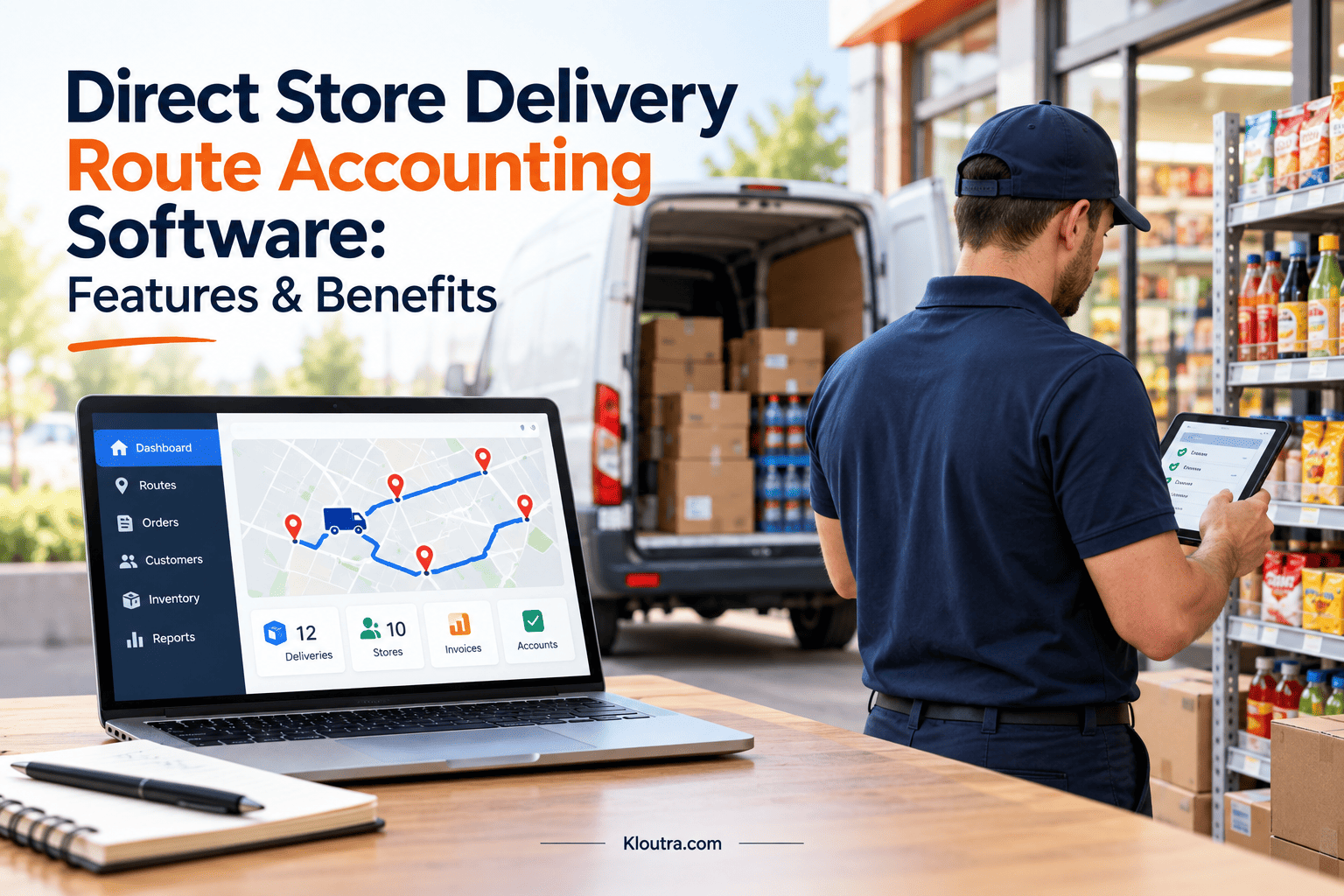
Direct Store Delivery Route Accounting Software helps businesses manage deliveries, sales, invoices, and payments. It supports distributors who deliver products directly to retail stores. The software can connect delivery activities with sales and accounting records. This helps teams track transactions and organize daily operations. Features vary between providers, so businesses should compare available options. Route planning, inventory tracking, and payment records can help manage delivery tasks. Some systems also offer mobile access and accounting integrations.
Choosing the right software depends on your business needs and budget. This Kloutra guide explains its features, benefits, common types, and challenges. It also shares practical tips for choosing a suitable solution.
What Is Direct Store Delivery Route Accounting Software?
Direct store delivery route accounting software helps businesses manage deliveries, route sales, invoices, and payments. It supports distributors who deliver products directly to retail stores. The software can connect delivery activities with sales and accounting records. This helps businesses track transactions and keep financial information organized. Available features vary between software providers.
How Does Direct Store Delivery Route Accounting Software Work?
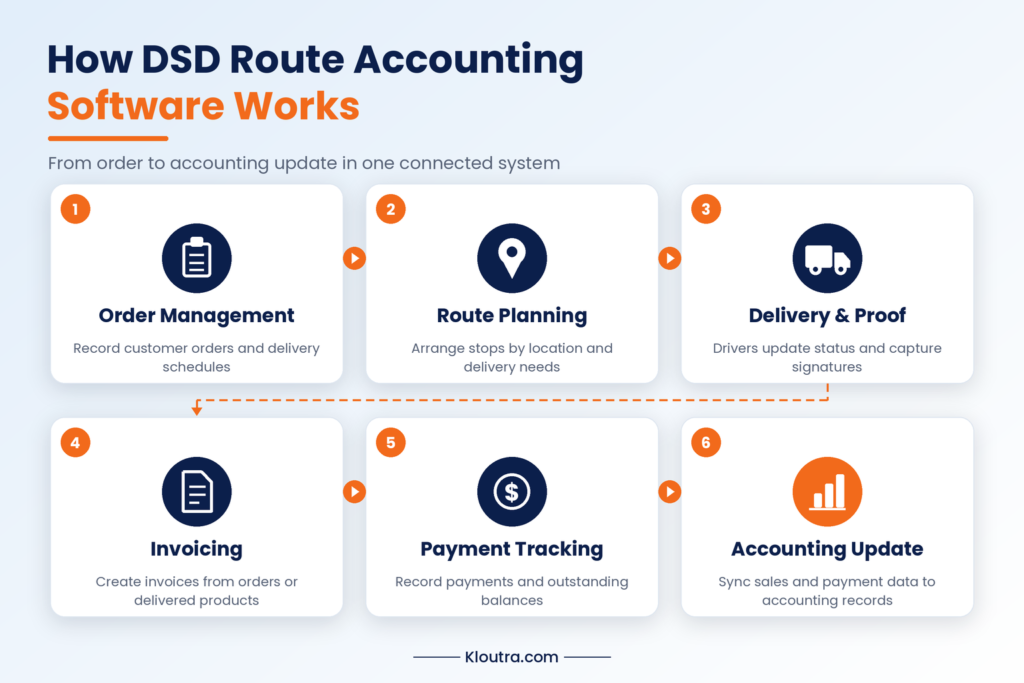
Direct store delivery route accounting software connects several tasks in one system. It helps teams manage orders, deliveries, sales, and payment records.
Order Management and Route Planning
The software helps teams record customer orders and organize delivery schedules. Route planning tools can arrange stops based on locations and delivery needs. Some systems also help drivers manage orders during their routes. These features help teams organize daily deliveries and reduce manual work.
Delivery Tracking and Proof of Delivery
Drivers can use mobile devices to view delivery details and update order statuses. Depending on the software, they may record delivered quantities and customer signatures. Some systems also support photos or electronic proof of delivery. These records help businesses confirm deliveries and resolve order disputes.
Invoicing, Payments, and Accounting Updates
The software can create invoices based on orders or delivered products. Teams can record payments and track outstanding customer balances. Some systems update accounting records automatically or connect with separate accounting software. These features help businesses monitor sales, payments, and unpaid invoices more accurately.
Key Features of Direct Store Delivery Route Accounting Software
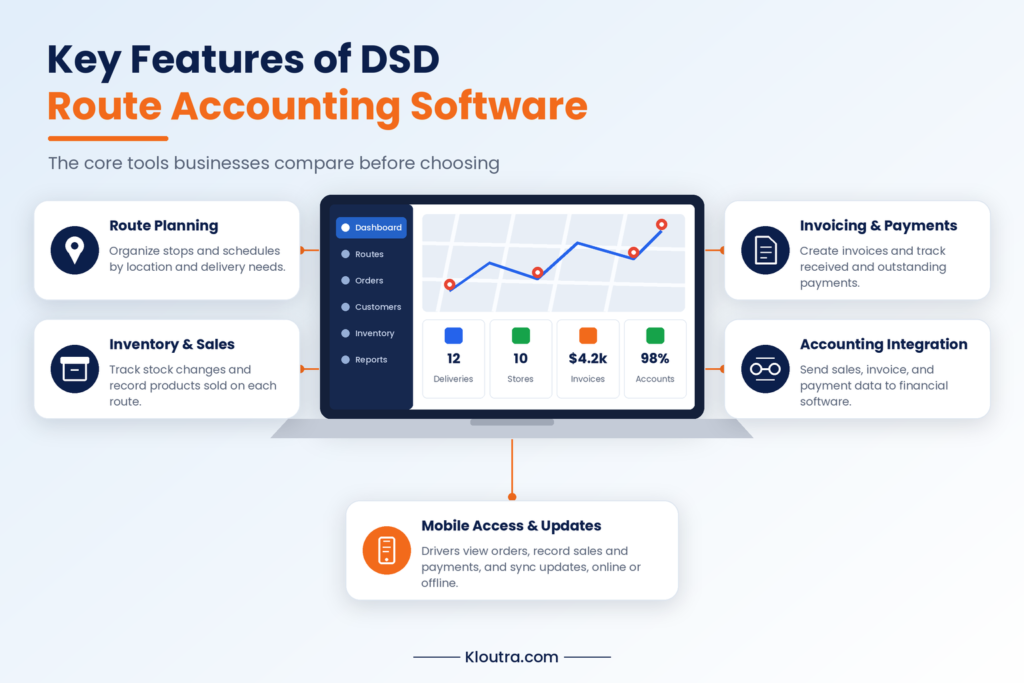
Direct store delivery route accounting software combines delivery, sales, and accounting tools. Features vary by provider, so businesses should compare options carefully.
Route Planning and Optimization
Route planning tools help businesses organize delivery stops and schedules. Some systems suggest efficient routes based on locations and delivery needs. This can reduce unnecessary travel and help drivers manage their time. Available optimization features depend on the software.
Inventory and Sales Management
Inventory tools help teams track product quantities and stock changes. Sales features record orders and products sold during deliveries. Some systems update inventory after each completed transaction. Accurate records help businesses monitor stock and identify shortages.
Automated Invoicing and Payment Tracking
Some systems create invoices from orders or completed deliveries. Payment tracking helps teams record received payments and outstanding balances. Businesses can also review unpaid invoices and customer account details. Automation can reduce manual entry, depending on the system.
Accounting Integration and Financial Reporting
Accounting integration connects delivery records with financial software. It can help transfer sales, invoice, and payment data between systems. Reporting tools summarize revenue, sales activity, and outstanding balances. Available reports and integrations vary by provider and subscription.
Mobile Access and Real-Time Updates
Mobile access lets drivers view orders and delivery details while working. Depending on the system, they can record sales, payments, and delivery status. Some platforms sync updates immediately when an internet connection is available. Others support offline work and sync data later.
Benefits of Direct Store Delivery Route Accounting Software
Direct store delivery route accounting software helps businesses manage deliveries, sales, and financial records. The right system can reduce manual work and improve daily operations.
Improved Delivery Efficiency
Route planning tools help drivers organize delivery stops and schedules. This can reduce unnecessary travel and save time. Teams can also access order details before reaching each store. Better planning helps businesses manage daily deliveries more smoothly.
Fewer Accounting Errors
Manual data entry can lead to missing details and incorrect figures. Software helps record orders, invoices, and payments in one system. Some platforms also transfer data directly to accounting software. These features can reduce data entry mistakes and improve record accuracy.
Better Cash Flow and Payment Tracking
Payment tracking helps businesses monitor received payments and unpaid invoices. Teams can identify overdue balances and follow up with customers. Clear payment records also help businesses understand incoming cash. This supports better financial planning and day-to-day decisions.
Accurate Inventory and Sales Records
Inventory tools help teams track available stock and product sales. Recording deliveries and sales keeps inventory records more up to date. Businesses can review product movement and identify potential stock shortages. Accurate records also help teams compare sales across routes and stores.
Common Types of Direct Store Delivery Software
Businesses can choose different software types based on their delivery and accounting needs. Some tools manage complete delivery operations, while others focus on specific tasks.
| Software Type | Main Purpose | Best For |
|---|---|---|
| DSD Management Software | Manages orders, deliveries, and sales | Distribution businesses |
| Route Accounting Software | Tracks route sales, invoices, and payments | Route-based sales teams |
| Fleet and Route Planning Software | Plans delivery routes and vehicle schedules | Delivery operations |
| Accounting Software with DSD Integration | Connects delivery transactions with financial records | Businesses needing linked accounting systems |
Each software type serves a different purpose. Some platforms combine several functions, such as delivery and logistics software, in one system. Before choosing, businesses should check which features each provider offers.
Direct Store Delivery Route Accounting Software Comparison
Direct store delivery software offers different features depending on the provider and plan. This table compares common features found in basic and advanced systems.
| Feature | Basic Software | Advanced Software |
|---|---|---|
| Route Planning | Basic route scheduling | Route optimization tools |
| Invoicing | Manual or basic invoice creation | Automated invoice generation |
| Payment Tracking | Records payments and balances | May offer faster payment updates |
| Reporting | Standard sales reports | More detailed sales and financial reports |
| Integration | Limited software connections | More options for connecting business systems |
Advanced systems may offer more automation and reporting tools. However, features vary by provider, subscription, and setup. Compare each product’s features before choosing software for your business.
Who Should Use Direct Store Delivery Route Accounting Software?
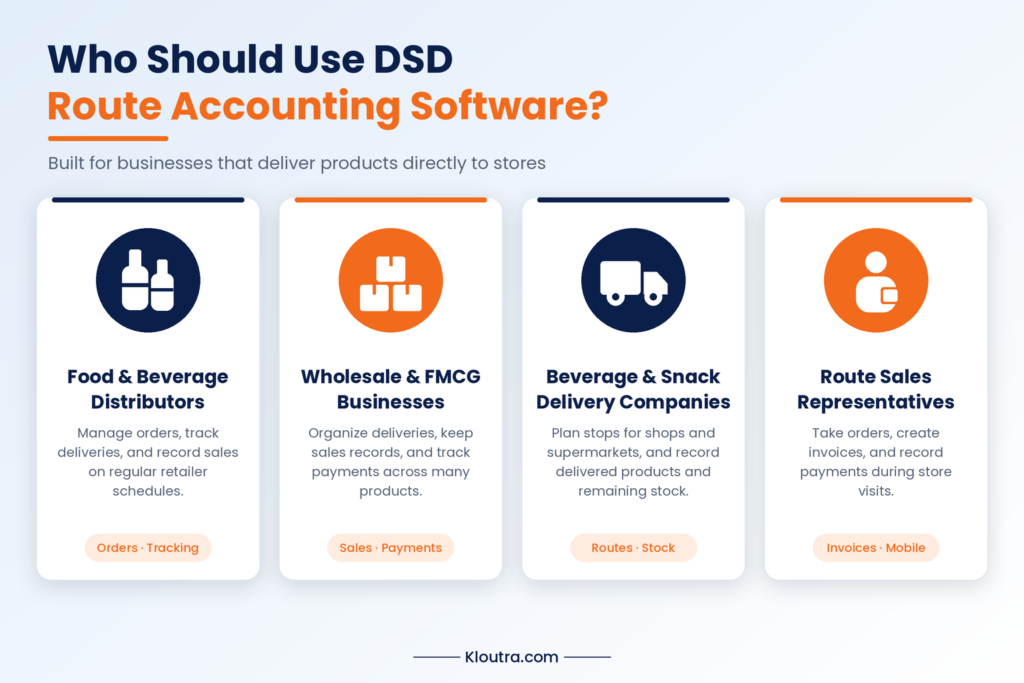
Direct store delivery route accounting software suits businesses that deliver products directly to stores. It helps manage orders, deliveries, sales, and payment records.
Food and Beverage Distributors
Food and beverage distributors often deliver products to retailers on regular schedules. This software helps them manage orders, track deliveries, and record sales. Inventory features can also help monitor stock changes during deliveries.
Wholesale and FMCG Businesses
Wholesalers and fast-moving consumer goods (FMCG) businesses handle many products and customer orders. Software helps organize deliveries, maintain sales records, and track customer payments. Businesses that offer sales schemes and discounts to retailers may also need tools to track them. These tools can support smoother daily distribution operations.
Beverage and Snack Delivery Companies
Beverage and snack companies often supply shops, supermarkets, and convenience stores. Route management tools help organize delivery stops and schedules. Sales and inventory features help teams record delivered products and remaining stock.
Route Sales Representatives
Route sales representatives visit stores to take orders and sell products. Mobile software helps them access customer details and update sales records. Depending on the system, they can also create invoices and record payments during visits.
How to Choose the Right Direct Store Delivery Route Accounting Software
Check Your Business and Accounting Needs
Start by identifying your daily delivery and accounting tasks. Consider how many orders, routes, and customers you manage. Choose software that supports your sales process and accounting needs.
Compare Pricing and Essential Features
Compare pricing plans before choosing a software solution. Check for route planning, invoicing, inventory tracking, and payment records. Make sure the price fits your budget. Ask about extra fees for setup, users, or added features.
Review Integration and Mobile Support
Check whether the software connects with your current accounting system. Integration can reduce manual data entry and duplicate records. Also, check its mobile features. Drivers and sales representatives may need access while visiting stores.
Consider Ease of Use and Scalability
Choose software that your team can learn and use easily. A simple interface can reduce training time. Also, consider your future needs. The software should support more routes, customers, or orders as your business grows.
Common Challenges and How to Avoid Them
Incorrect Inventory and Sales Data
Incorrect entries can cause stock differences and sales reporting errors. Record orders and deliveries carefully. Update inventory after each delivery. Check sales records regularly to find mistakes early.
Payment Reconciliation Problems
Missing payments or incorrect entries can make account matching difficult. Record each payment against the correct invoice. Review unpaid balances regularly. Compare payment records with bank statements to identify differences.
Poor Software Integration
Software that does not connect properly can create duplicate records. Tools that connect business systems in one place can help reduce this problem. Check compatibility with your current accounting system before buying. Test data transfers before full use. Review synced records to catch errors early.
Employee Training and Adoption
Employees may struggle with unfamiliar software at first. Provide clear training for daily tasks. Show drivers how to record orders, deliveries, and payments. Let employees practice before using the system independently. Offer support when problems arise.
Final Thoughts
Direct store delivery route accounting software helps businesses manage deliveries, sales, invoices, and payments. The right system can improve record accuracy and simplify daily tasks. Before choosing software, compare its features, pricing, integrations, and ease of use. Select a solution that meets your current needs and supports future growth. Explore more business software guides to compare tools for your operations.
Frequently Asked Questions
What Is Direct Store Delivery Route Accounting Software?
Direct store delivery route accounting software helps businesses manage deliveries, sales, invoices, and payments. It connects route activities with sales and financial records.
How Does Route Accounting Software Help Distributors?
It helps distributors organize delivery routes, record orders, track inventory, and manage sales. These tools can reduce manual work and improve record accuracy.
Can Direct Store Delivery Software Track Invoices and Payments?
Yes, many systems support invoice creation and payment tracking. Available features depend on the software provider and selected plan.
What Should Businesses Look for in DSD Software?
Look for route planning, inventory tracking, invoicing, payment records, and useful reports. Check accounting integrations, mobile access, pricing, and ease of use before choosing.
Disclaimer: This article is for informational purposes only. Software features, pricing, and integrations may vary by provider. Always check the details before choosing a solution for your business.