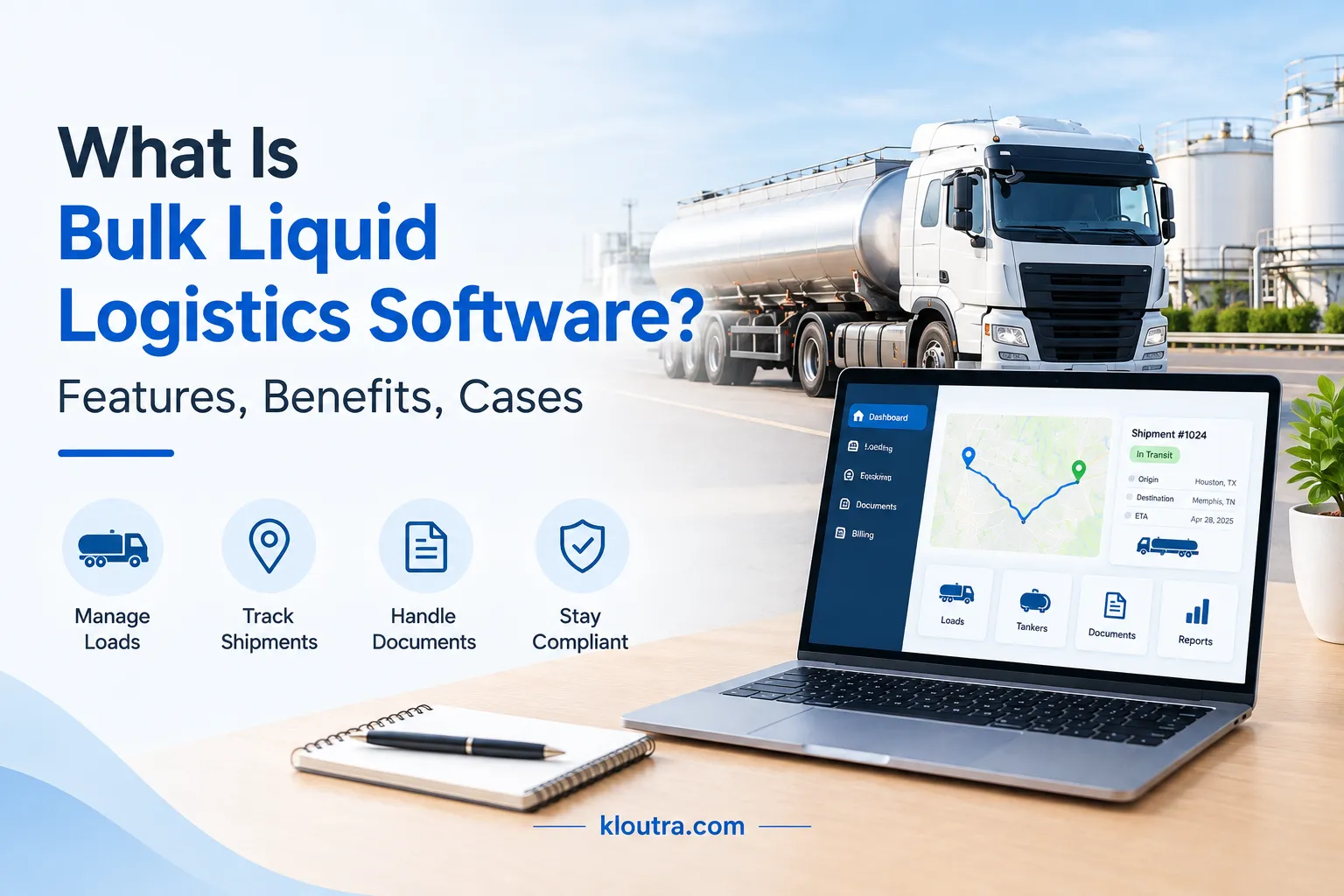
What Is Bulk Liquid Logistics Software? Features, Benefits, Cases
Introduction
Moving bulk liquids is more complex than moving standard freight. Companies must manage tankers, loads, cleaning records, deliveries, and documents.
Managing these tasks manually can create delays and extra paperwork. Bulk liquid logistics software brings these operations into one system.
In this guide, we’ll explain its features, benefits, use cases, and key differences.
What Is Bulk Liquid Logistics Software?
Bulk liquid logistics software helps companies manage liquid transportation. It supports tank trucks, ISO tanks, and specialized transport equipment. These systems manage loads, dispatching, tracking, documents, and billing in one place.
Unlike general logistics software, it handles bulk-specific requirements. These include product compatibility, tank wash records, cargo history, and liquid quantity records.
How Does It Work?
The process usually starts when a company enters a liquid shipment order. The system records the product, quantity, destination, and equipment requirements.
Dispatchers can then assign a suitable tanker, driver, or carrier. The software can check equipment needs and product compatibility before loading.
During transportation, teams can monitor loads and receive shipment status updates. Some platforms also connect GPS and telematics data for better visibility.
The system can collect bills of lading, proof of delivery, wash records, and other documents. After delivery, these records can support billing and load reconciliation.
Key Features of Bulk Liquid Logistics Software
Bulk liquid logistics software helps companies manage specialized transportation tasks.
Load and Dispatch Management
The software helps teams create, schedule, and manage liquid loads. Dispatchers can assign drivers, tankers, carriers, and delivery locations. They can also track each load throughout the transportation process.
This gives dispatchers better control over daily schedules. It also helps reduce manual coordination between drivers, customers, and operations teams.
Tanker and Tank Management
Tanker management helps companies keep track of available transport equipment. Teams can monitor tanker details, availability, location, and operational status. This makes it easier to assign suitable equipment to upcoming loads.
The system can also keep important equipment records in one place. This helps teams avoid unnecessary delays caused by unavailable or unsuitable tankers.
Product Compatibility and Tank Wash Records
Different liquid products may require specific tanks and cleaning procedures. Software can store previous cargo information and tank cleaning records. Teams can use these records when preparing equipment for new loads.
Tank wash records can also include cleaning details and related certificates. This helps reduce the risk of carrying incompatible products in the same equipment.
Real-Time Tracking and ETA
GPS tracking can show where trucks and loads are during transportation. Teams can monitor shipment progress and estimated arrival times. This gives dispatchers better visibility after a load leaves the facility.
Tracking can also help teams identify delays and update customers. Better visibility makes it easier to respond when delivery plans change.
Digital Documentation and Compliance
Bulk liquid transportation involves many documents and operational records. Software can store bills of lading, proof of delivery, wash records, and other documents. Teams can access these records without searching through paper files.
Digital records can also support compliance and audit processes. They help companies keep important information organized and easier to retrieve when needed.
Benefits of Bulk Liquid Logistics Software
Bulk liquid logistics software helps companies manage transportation more efficiently.
Less Manual Work
Bulk liquid transportation involves many scheduling and documentation tasks. Software brings these tasks into a single digital workflow. Teams can manage load details, dispatch information, and documents more easily.
Digital records also reduce the need for paper-based processes. This can save time and reduce repeated data entry.
Improved Accuracy and Compliance
Centralized records help teams keep important information organized. Load details, tank wash records, and delivery documents can stay together. This makes information easier to check and update.
Faster Operations and Billing
Better access to shipment information can speed up daily operations. Completed delivery records can also support faster billing.
Use Cases of Bulk Liquid Logistics Software
Bulk liquid logistics software supports different liquid transportation industries. Its features can help manage loads, equipment, tracking, and records.
Chemical and Hazardous Liquids
Chemical and hazardous liquid transport requires careful handling and accurate documentation. Companies may need to manage product details, suitable tankers, cleaning records, and safety documents. Software keeps these details organized in one system.
Food-Grade Liquids
Food-grade liquids require clean and suitable transport equipment. Software can track tank cleaning records, previous cargo, shipments, and delivery details.
Fuel and Industrial Liquids
Fuel and industrial liquids often require specialized tankers and planned deliveries. Software helps teams schedule loads, assign equipment, and track deliveries from dispatch to arrival.
ISO Tank Transport
ISO tanks transport bulk liquids by road, rail, and sea. Software helps companies track tank movements, shipment details, equipment, and delivery records across these transport stages.
Bulk Liquid Logistics Software vs. General TMS
Both systems can manage transportation planning and dispatch. However, bulk liquid software handles more specialized tanker requirements.
| Area | Bulk Liquid Logistics Software | General TMS |
|---|---|---|
| Main purpose | Designed for liquid bulk transportation operations. | Designed for broader transportation operations. |
| Tanker management | Tracks tankers, equipment, and load requirements. | Usually manages standard vehicle and equipment details. |
| Product compatibility | Can manage product and tank compatibility information. | Often needs extra configuration for these requirements. |
| Tank cleaning | Can store tank wash and cleaning records. | Usually does not focus on tank cleaning workflows. |
| Load tracking | Tracks liquid loads, tanks, and delivery status. | Tracks shipments and vehicles across general freight. |
| Hazardous liquids | Can support specialized compliance and shipment records. | May require additional tools or configuration. |
| ISO tanks | Can support tank movement and related shipment records. | May provide general container tracking instead. |
| Documentation | Handles documents such as BOLs, PODs, and wash records. | Handles common transport documents and delivery records. |
| Best suited for | Tanker fleets, liquid bulk carriers, and specialized operators. | General freight carriers and mixed transportation operations. |
How to Choose Bulk Liquid Logistics Software
Choose software that matches your equipment, products, and daily transport workflow. The right system should also support your future operational needs.
Features to Check
Start by checking the features your bulk liquid operation actually needs. Look for load scheduling, dispatch, tanker tracking, and digital documents.
If you handle different products, check product compatibility features. Tank wash records can also matter for many liquid carriers. Check whether the software supports your equipment types. This may include tank trucks, ISO tanks, or rail tank cars.
Integrations and Scalability
Good integrations can connect logistics software with other business systems. Common connections include accounting, telematics, fleet management, and EDI systems.
Also check whether the software can support your operation as it grows. It should handle more loads, users, vehicles, and connected systems without major workflow changes.
Ask vendors about integration options before choosing a platform. Check available APIs, supported systems, and setup requirements.
Frequently Asked Questions
Can it track tankers and loads?
Yes, many systems can track tankers, drivers, and active loads. GPS or ELD integrations can provide real-time location information.
Does it manage tank wash records?
Some bulk liquid systems can store and manage tank wash records. These records can connect with specific loads and equipment. This helps teams check cleaning information before assigning new loads.
Final Thoughts
The right software can reduce manual work and improve shipment visibility. It can also help teams manage tanker-specific records more efficiently.
Before choosing software, check your products, equipment, workflows, and business needs. Make sure it supports the features your operation requires.
Disclaimer:
This article provides general information about bulk liquid logistics software. Features and capabilities can vary between software providers. Always review the latest product details and consult the vendor before making a business decision.