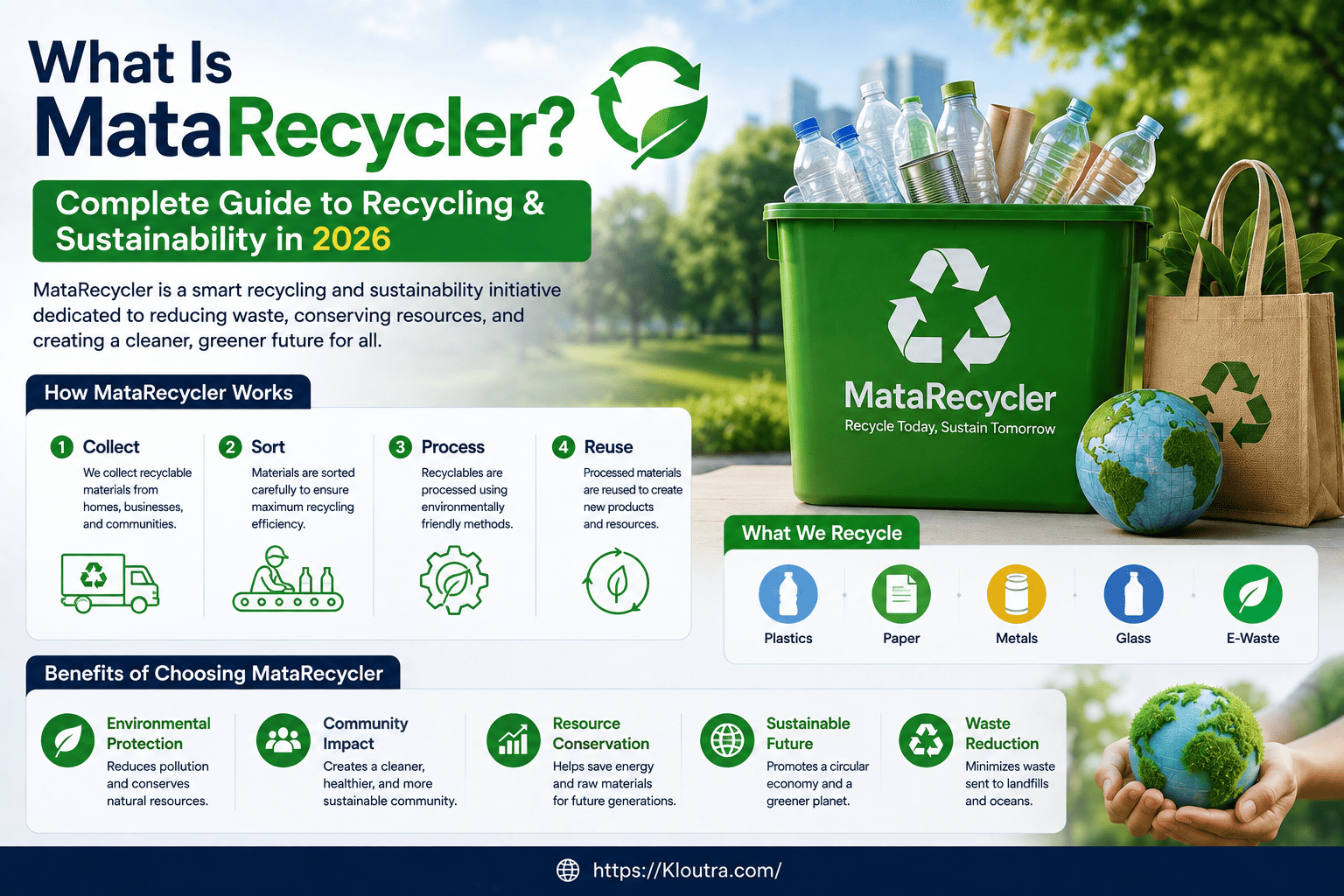
What Is MataRecycler? A Complete Guide to Smart Recycling in 2026
Have you ever thrown something in the recycling bin and wondered if it actually gets recycled? You’re not alone. Millions of people ask the same question every day. Lately, a new term has been popping up online: MataRecycler. But what is MataRecycler, and is it something you should actually care about?
In this guide, we’ll break down what the term means, where it comes from, and what it tells us about the bigger trend it’s part of: AI-powered recycling. We’ll also look at real technology already changing how the world handles waste, so you walk away with facts you can actually use.
What Is MataRecycler, Exactly?
Here’s the honest answer: MataRecycler is not an established, verified company or product. It’s a name that has recently started appearing across a handful of blogs and websites, each describing it differently.
Some articles describe it as an industrial AI-powered sorting system used in factories. Others describe it as a phone app that reminds you when to recycle. These descriptions don’t match each other, which is usually a sign that a term is more buzzword than a real, single product.
So if you searched “what is MataRecycler” hoping to find a company you can sign up with or a product you can buy, you won’t find one yet. What you will find is a growing conversation about something very real: smart, AI-driven recycling. That’s the part worth understanding.
Why This Matters for You
Even though MataRecycler itself isn’t a verified product, the problem it claims to solve is 100% real. Recycling systems around the world genuinely do struggle with contamination, sorting errors, and low participation. Understanding how modern recycling technology actually works will help you make sense of any new “smart recycling” name you come across in the future, MataRecycler or otherwise.
The Real Problem: Why Traditional Recycling Struggles
Before we talk about smart solutions, it helps to understand what’s broken.
- Human sorting is slow and imperfect. People make mistakes, especially when items look similar (like different types of plastic).
- Contamination ruins entire batches. One greasy pizza box in a bin of clean paper can send the whole load to a landfill instead of a recycling plant.
- Rules vary by city. What’s recyclable in one town isn’t in the next, which confuses residents.
These aren’t small issues. According to RTS’s State of Recycling report, the US recycling rate has grown from about 7% in 1960 to nearly 35% today, real progress, but still far from where it needs to be, especially as each American generates close to 5 pounds of waste a day on average. That gap between how much we could recycle and how much we actually do is exactly why AI-based recycling technology has become such a hot topic.
Think about it this way. A recycling truck picks up mixed materials from hundreds of homes every day. By the time it reaches the sorting facility, workers have only seconds to decide what each item is and where it goes. Even skilled workers get tired, and tired eyes miss things. That single gap, between what people put in their bins and what actually gets sorted correctly, is where most recycling loss happens.
How AI-Powered Recycling Actually Works
This is where things get genuinely interesting, and where the “MataRecycler” buzz likely borrows its ideas from real, working technology.
Smart Sorting With Computer Vision
Modern recycling facilities increasingly use cameras and sensors to identify materials. The system looks at shape, color, and texture to figure out whether something is plastic, glass, metal, or paper, often in a fraction of a second.
Companies like AMP (formerly known as AMP Robotics) are well-documented examples of this in action. Their AI platform, called Neuron, scans mixed waste on a conveyor belt and identifies materials by shape, color, and texture. A connected robotic arm, called Cortex, then physically picks and sorts items, often faster and more consistently than a human sorter working the same line.
Machine Learning That Improves Over Time
AI sorting systems don’t just follow fixed rules. They learn from the materials they process, gradually getting better at telling apart tricky items, like different grades of plastic that look nearly identical to the human eye.
Smart Bins and IoT Sensors
Some cities are testing bins fitted with fill-level sensors. When a bin is nearly full, it signals collection trucks, so routes get planned only when needed. This cuts down on wasted fuel and unnecessary pickups.
Benefits of Smart Recycling Technology
Whatever it ends up being called, smart recycling technology offers some clear, real advantages:
| Benefit | What It Means |
|---|---|
| Higher sorting accuracy | Less recyclable material accidentally ends up in landfills |
| Lower contamination | Cleaner batches mean materials are more likely to actually get reused |
| Cost savings over time | Automated sorting can reduce labor costs at large facilities |
| Better data | Facilities can track exactly what’s coming in and where inefficiencies are |
These benefits apply broadly to the smart recycling movement, not to any single unverified brand name.
Advantages and Disadvantages of Smart Recycling Technology
Like any technology, AI-driven recycling isn’t perfect. It helps to look at both sides before assuming it’s a complete fix.
Advantages
- Higher accuracy. AI sorting systems can identify materials more consistently than manual sorting, which reduces the amount of recyclable material that ends up in landfills by mistake.
- Speed at scale. Automated systems can process large volumes of waste around the clock, which is hard to match with manual labor alone.
- Safer working conditions. Sorting waste by hand exposes workers to sharp objects, chemicals, and repetitive strain. Automation can take over some of the riskiest parts of the job.
- Better data. Facilities gain visibility into exactly what materials are coming through, which helps with planning and reporting, something EPA guidance on recycling also highlights as important for measuring real progress.
Disadvantages
- High upfront cost. AI sorting equipment is expensive to install, which can be out of reach for smaller municipalities or facilities with tight budgets.
- Not a fix for contamination at the source. Smart sorting helps after waste reaches a facility, but it doesn’t stop people from putting the wrong items in their bins in the first place.
- Maintenance and training needs. These systems still need skilled technicians to maintain, calibrate, and troubleshoot them.
- Limited to what it’s trained on. AI sorting systems need ongoing training data to keep up with new packaging types and materials, so they aren’t a “set it and forget it” solution.
Where Smart Recycling Is Headed
The recycling industry is moving toward more automation, and a few trends are worth watching:
- Better material recognition for newer packaging types, like bio-based plastics, which can confuse older sorting systems.
- City-wide integration, where smart bins, collection trucks, and sorting facilities share data in real time.
- Wider access to smart recycling tools in regions that currently lack reliable kerbside recycling.
If a genuinely new platform or company adopts a name like MataRecycler in the future, it will likely build on these same ideas. To keep up with how AI is transforming industries beyond recycling, check out our AI for Business section for more coverage.
Smart Recycling and the Circular Economy
You’ve probably heard the phrase “circular economy” thrown around a lot lately. In simple terms, it means keeping materials in use for as long as possible, instead of the old model: make it, use it, throw it away.
Smart recycling technology is one of the key tools that makes a circular economy actually work. Here’s why. Better sorting means more materials come out clean enough to be reused in new products. A clean, well-sorted bale of aluminum, for example, can go straight back into making new cans. A contaminated one often can’t.
For businesses, this matters too. Manufacturers are under growing pressure, from regulators and customers alike, to use more recycled material in their products. That demand only gets met if recycling facilities can supply consistently clean, well-sorted material. AI-based sorting is one of the more practical ways facilities are trying to meet that bar.
How to Recycle Smarter, Starting Today
You don’t need a fancy AI system to improve your own recycling habits. Here are a few practical steps:
- Rinse containers before recycling them. Food residue is one of the biggest causes of contamination.
- Check your local rules. Recycling guidelines really do vary by city, so a five-minute check can prevent mistakes.
- Don’t “wish-cycle.” If you’re not sure something is recyclable, it’s often better to leave it out than guess wrong and contaminate a whole batch.
- Separate materials clearly. Keep paper, plastic, and glass apart when your local system requires it.
Frequently Asked Questions
Is MataRecycler a real company?
Not based on what’s currently verifiable. The term appears across a few websites with inconsistent descriptions, which suggests it isn’t tied to one established, verifiable business yet.
What does MataRecycler mean?
Different sources use it to mean different things, from an industrial sorting system to a recycling reminder app. There’s no single, confirmed definition at this time.
Is AI recycling technology real?
Yes. AI-powered sorting, using computer vision and machine learning, is already used by real companies at recycling facilities to improve sorting speed and accuracy.
How can I recycle better without special technology?
Simple habits make a big difference: rinse containers, follow your local recycling rules, and avoid tossing items in the bin when you’re unsure if they belong there.
Will smart recycling technology become more common?
It’s likely. As cities look for ways to cut contamination and processing costs, AI-based sorting and smart collection systems are expected to keep expanding.
Conclusion
So, what is MataRecycler? Right now, it’s a term without a clear, verified source, not a company you can point to or a product you can buy. What’s real, though, is the broader shift toward smarter, AI-powered recycling that’s already changing how cities and facilities handle waste.
Instead of waiting on a single named platform, the best move you can make today is simple: recycle a little smarter yourself, rinse what needs rinsing, check your local rules, and skip the guesswork. That’s a habit that pays off no matter what new name shows up in your search results next. For more on how emerging technology is shaping sustainability, browse our Technology section.
Disclaimer: MataRecycler is not a verified company or product at the time of writing. This article explains the term as it currently appears online and uses verified sources to explain the real technology it references. Information may change if new, credible details emerge.