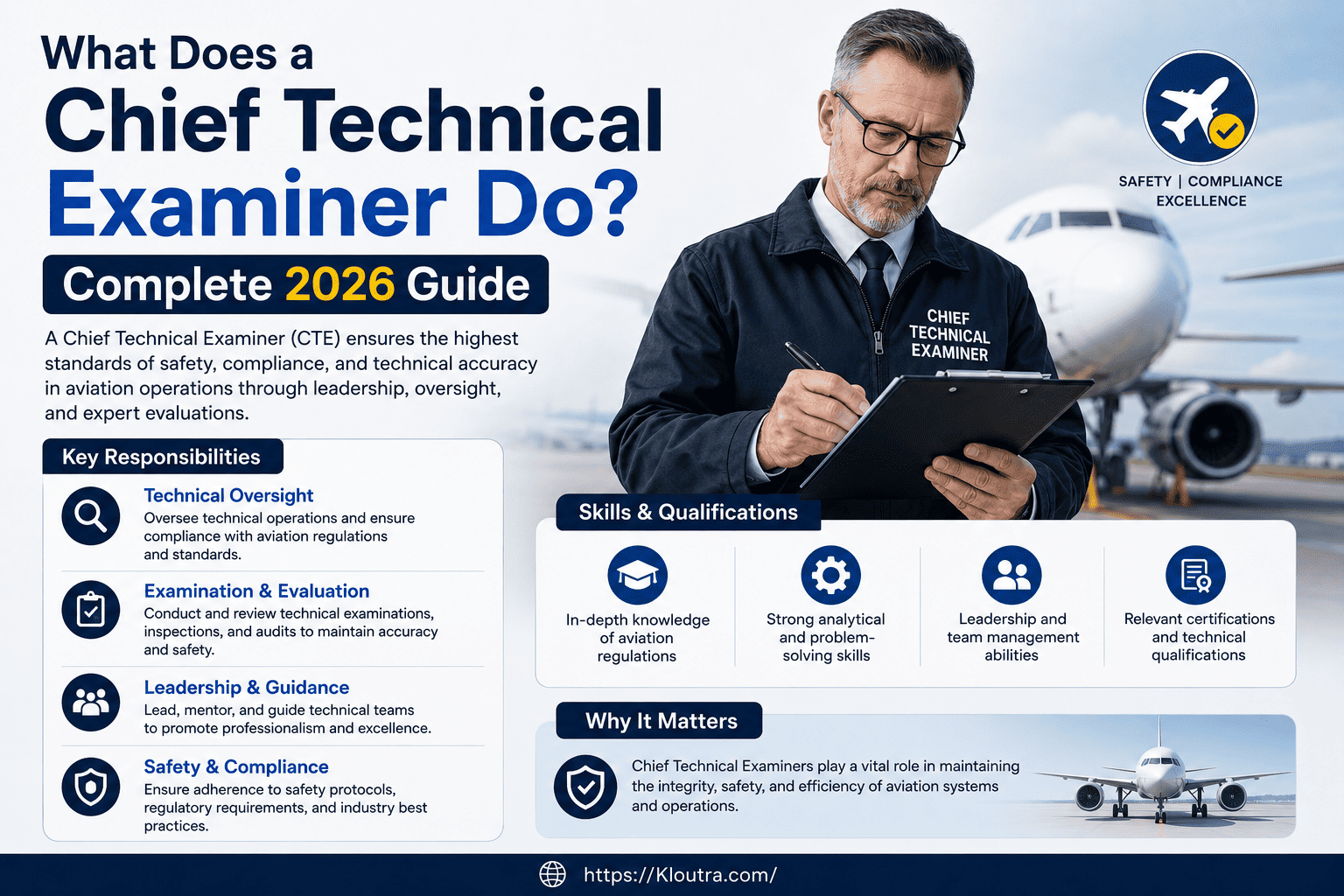
What Does a Chief Technical Examiner Do? Complete 2026 Guide
Every year, governments spend huge sums of money on roads, bridges, hospitals, and other public projects. But who makes sure this money goes to the right place? That’s where a chief technical examiner comes in.
If you have ever wondered what does a chief technical examiner do, or why this job matters so much in government projects, this guide will explain everything in simple words. By the end, you will understand the chief technical examiner meaning, the daily duties, the skills needed, and how someone can build a career in this field.
This guide draws on publicly available information from the Central Vigilance Commission, the Indian government body that oversees this role, and is updated for 2026. For more explainer guides like this one, check out the Kloutra.com blog.
What Is a Chief Technical Examiner?
A chief technical examiner (often written as CTE) is a senior official who checks government infrastructure and procurement projects for quality, fairness, and proper use of public money. Think of this role as a strict teacher who checks your homework — not to fail you, but to confirm the work is actually correct before anyone marks it “done.”
In India, this role is closely linked to the Central Vigilance Commission (CVC). The CVC runs a special wing called the Chief Technical Examiners’ Organisation (CTEO). This is why you will often see the terms CTEO, CVC, and chief technical examiner used together.
Where Does the Role Come From?
The CVC set up the CTEO to build its own in-house engineering expertise. Before this wing existed, vigilance officers had to depend on outside engineers to judge technical matters. That created delays and, sometimes, a lack of independence.
With a dedicated technical examiner in place, the CVC can now review government contracts, construction projects, and big purchases using its own trained engineers. This makes the whole process faster and more trustworthy.
Why This Role Matters
Public infrastructure spending is an easy target for waste and corruption. A contractor might use cheaper material than promised. A tender might quietly favor one bidder. A bill might claim more work than what crews actually completed on the ground.
A chief technical examiner exists to catch these problems early — ideally before public money is lost, not after.
Chief Technical Examiner Role and Responsibilities
The chief technical examiner role covers a project from start to finish, not just the final stage. Here is how the responsibilities break down.
Pre-Tender Review
Before officials even open a project for bidding, the examiner checks the estimates and design documents. Are the costs realistic? Does the scope of work read clearly? Does the project serve a genuine need?
This step matters because an inflated estimate or a vague scope is often where financial problems begin.
Tender Evaluation Scrutiny
Once bids come in, the chief technical examiner duties include checking whether the tender process was fair. Do the terms favor only one company? Did the evaluation follow proper government financial rules?
For example, if a tender asks for a very specific brand of equipment with no valid technical reason, that is often a red flag worth investigating.
Construction-Phase Inspection
This is where field work happens. The examiner, or a team working under them, visits the actual site. They compare the ongoing construction with what the approved plans show.
Common checks include material quality, whether crews follow construction standards (such as BIS or IRC codes), and whether the measurement books match the real work on site.
Post-Completion Verification
After the project finishes, the chief technical examiner functions include reviewing final bills and completion reports. This step catches any mismatch between what the department paid for and what the contractor actually delivered.
Chief Technical Examiner Duties: A Day-to-Day View
So, how does a chief technical examiner work on a normal day? It is less about sitting in an office and more about a mix of paperwork and field visits.
Reviewing Documents
A large part of the job involves going through estimates, contracts, test reports, and measurement records. The examiner looks for gaps — missing signatures, unclear rates, or numbers that don’t add up.
Conducting Site Inspections
Surprise site visits are common. This keeps contractors and departments honest, since they cannot simply “prepare” for an announced audit.
Coordinating With Technical Teams
Large audits need more than one person. A chief technical examiner usually works with assistant technical examiners and specialist engineers, especially for complex projects like power plants, IT systems, or medical equipment.
Writing Clear Reports
Findings mean nothing if no one can act on them. The examiner must write reports in plain language, showing exactly what went wrong, how much money is at risk, and what action officials should take next.
Chief Technical Examiner Qualifications and Skills
Not everyone can step into this job. It usually requires a strong technical background combined with independence and integrity.
Educational Background
Most chief technical examiners come from civil, mechanical, or electrical engineering backgrounds. Employers also expect a solid understanding of construction, procurement rules, and public administration.
Field Experience
Deep, hands-on project experience matters more than textbook knowledge here. Someone who has managed real construction sites will spot a fake bill or a weak wall faster than someone who has not.
Chief Technical Examiner Skills That Matter
- Attention to detail — spotting a mismatched number in a 200-page report.
- Clear communication — writing findings that non-technical officials can understand.
- Independence — resisting pressure from powerful departments or contractors.
- Knowledge of procurement rules — understanding financial regulations, not just engineering.
- Calm judgment — telling the difference between an honest mistake and a deliberate fraud.
Chief Technical Examiner Authority: What Powers Does the Role Have?
The chief technical examiner authority mainly comes from staying independent of the department it checks. This separation is intentional. If the same department checked its own work, conflicts of interest would be almost impossible to avoid.
The examiner’s office can flag technical violations, recommend recovery of overpaid amounts, and refer serious cases for a full vigilance inquiry. However, it typically does not act as the final investigating or punishing authority — it provides the technical evidence that other bodies use to take action.
Chief Technical Examiner Career Path
If this sounds like an interesting career, here is generally how people reach this position.
- Start with an engineering degree — usually civil, mechanical, or electrical.
- Gain field experience — working on real government or large private projects for several years.
- Move into audit or vigilance-related roles — such as a technical examiner or assistant technical examiner.
- Build expertise in procurement and financial rules — since the job is not purely technical.
- Progress to senior examiner or CTE-level roles — usually after years of proven, unbiased reporting.
Because this career path can vary by country and organization, candidates should always confirm exact steps and eligibility criteria with the relevant government body or official notification at the time of applying.
Common Issues a Chief Technical Examiner Finds
Understanding common problems helps explain why this job exists in the first place.
| Issue | What It Looks Like |
|---|---|
| Inflated estimates | Costs listed well above standard market rates |
| Material substitution | Contractors use cheaper materials than the approved specs |
| Measurement discrepancies | Bills show more work than crews actually completed |
| Documentation gaps | Missing test reports or unsigned inspection records |
| Unfair tender terms | Conditions that favor one specific bidder |
Not every issue the examiner finds is fraud. Sometimes poor training or rushed paperwork simply causes the mistake. Part of the examiner’s skill is telling the difference.
How Technology Is Changing This Role
The chief technical examiner technical audit process is slowly becoming more digital. Many government bodies now use electronic measurement books, geo-tagged site photos, and data dashboards to track project progress in real time — a shift that mirrors the broader technology trends reshaping public-sector work everywhere.
These tools do not replace the examiner’s judgment, but they do make it much harder to hide gaps between paperwork and reality. As more infrastructure projects use digital record-keeping, expect audits to become faster and more data-driven over the coming years — though the pace of this shift will vary by country and department.
Advantages and Disadvantages of the Chief Technical Examiner System
Like any oversight system, the CTE model has real strengths and real limits. Knowing both sides gives a fuller, more honest picture of the role.
Advantages
- Independence reduces bias. Since the examiner sits outside the executing department, findings are less likely to get influenced by internal pressure.
- Early detection saves money. Catching an inflated estimate at the pre-tender stage is far cheaper than discovering fraud after a project is complete.
- Improves future projects. Findings from one audit often lead departments to fix weak processes, benefiting projects that come later.
- Builds public trust. Independent checks show taxpayers that someone is actively watching how public money gets used.
- Deters corruption. Just knowing that surprise inspections can happen encourages contractors and officials to stay compliant.
Disadvantages
- Limited staff, huge scope. A small examiner’s office often has to cover thousands of projects, so it cannot check every single one in depth.
- Advisory, not enforcement power. The examiner can flag problems, but another authority usually has to act on the findings, which can slow down consequences.
- Delays are possible. Detailed technical audits take time, and this can occasionally slow down project timelines or fund releases.
- Sampling risk. Since examiners cannot inspect everything, some issues in unchecked areas may go unnoticed.
- Resistance from departments. Some officials may see audits as an obstacle rather than a safeguard, which can create friction during inspections.
FAQs About Chief Technical Examiners
What is a chief technical examiner?
A chief technical examiner is a senior official who independently audits government infrastructure and procurement projects. Their job is to confirm that departments spend public money correctly and that the technical work matches the approved plans.
What are the duties of a chief technical examiner?
Their main duties include reviewing project estimates before tendering, checking whether bidding was fair, inspecting construction sites, and verifying final bills after project completion. They also write detailed reports on any issues they find.
What is CTEO and how is it related to CVC?
CTEO stands for Chief Technical Examiners’ Organisation. In India, it functions as the technical wing of the Central Vigilance Commission (CVC), giving the CVC in-house engineering expertise to review government projects.
Can a chief technical examiner investigate corruption directly?
Not exactly. The examiner identifies technical red flags, such as inflated bills or unfair tenders, and passes this evidence to the proper vigilance or investigating authority for further action.
What qualifications do you need to become a chief technical examiner?
Most examiners have a background in civil, mechanical, or electrical engineering, along with several years of real project experience. Knowledge of procurement rules and public administration is also important, and exact requirements can vary between organizations.
Conclusion
A chief technical examiner plays a quiet but important role in public life. Every time a road avoids early collapse, or a hospital rises with proper materials, careful technical examination likely played a part in that outcome.
In short, understanding what does a chief technical examiner do comes down to one idea: someone independent checks that public money buys real, quality work — not just paperwork that looks good on the surface. If you are exploring a career in engineering, audit, or public administration, this role offers a meaningful way to combine technical skill with public accountability.
Disclaimer: This article is for general information only, not official or legal advice. Rules, roles, and processes can change, so please confirm details with the CVC or relevant government body before relying on them.