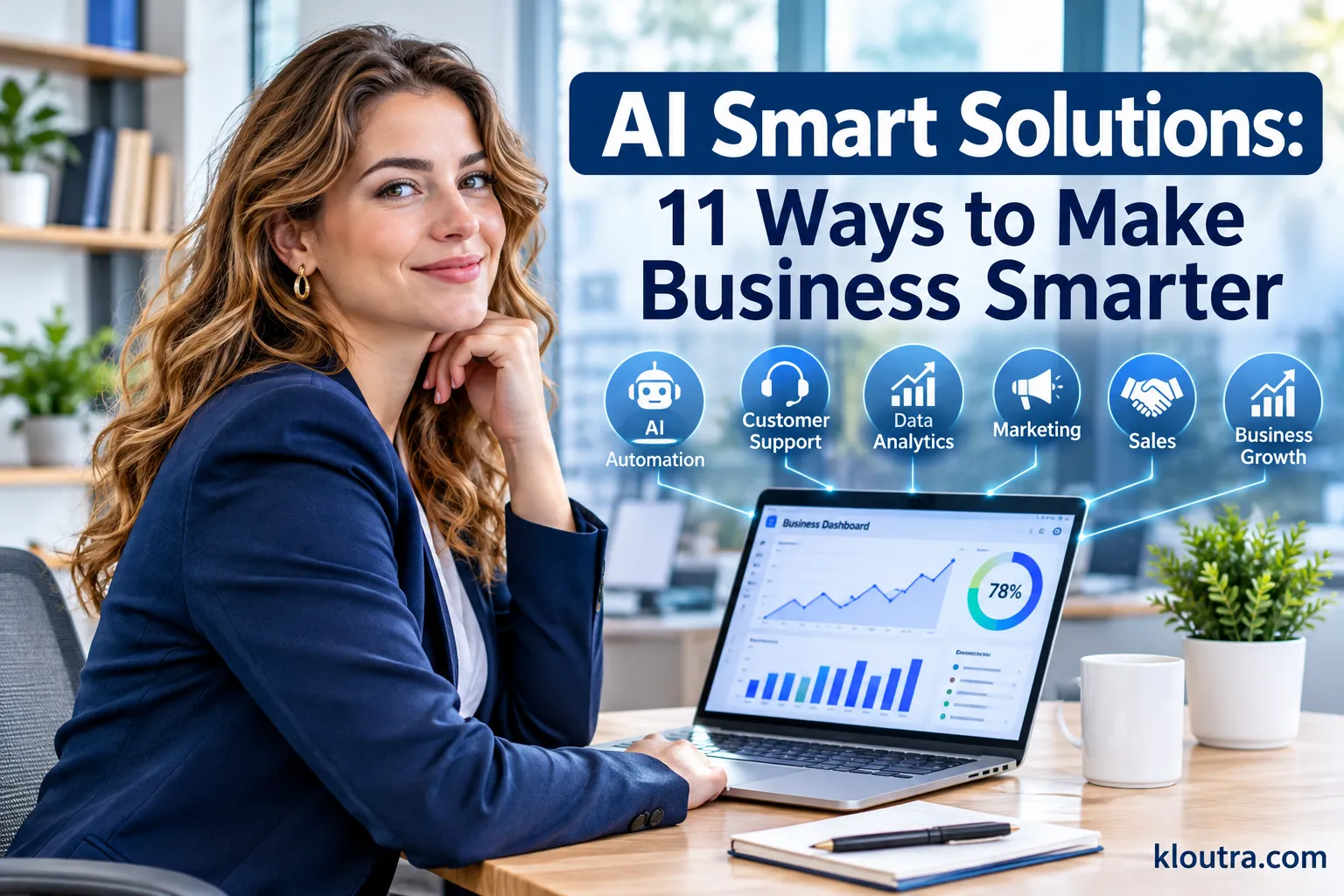
AI Smart Solutions: 10 Ways to Make Business Smarter
Businesses in the United States need to save time, serve customers and manage daily tasks. Small businesses often handle marketing, sales and customer support with limited resources. AI smart solutions make this work easier. They help businesses automate tasks, improve customer service and make better decisions. Here are 10 ways AI smart solutions can help businesses work smarter.
1. Automate Repetitive Business Tasks
Many businesses spend hours on repetitive tasks such as entering data organizing documents, updating records and sending routine emails. These activities take time away from more important work. AI automation tools can handle many of these tasks.For example, a company can use AI to organize incoming emails, create task lists, update customer records and prepare routine reports. Tools such as Zapier and Microsoft Power Automate help connect different business applications and automate workflows.
2. Improve Customer Support With AI Chatbots
Customers often expect quick answers when they contact a business. However, small companies may not have enough staff to respond to every question immediately. AI chatbots can answer common questions about products, services, pricing, delivery and business hours. They can also guide customers through basic support steps.
For example:
An online store can use a chatbot to explain its return policy or help shoppers find product information. Platforms such as Intercom and Tidio offer AI-powered customer support features. However, businesses should provide a way to contact a human representative when a question becomes complicated.
3. Create Better Marketing Content
Marketing requires a steady flow of useful content. Businesses need social media posts, email campaigns, product descriptions, website copy and blog articles. AI writing tools can help create first drafts, suggest content ideas, improve headlines and rewrite unclear sentences.
For example:
A small marketing agency can use ChatGPT to brainstorm campaign ideas and prepare initial social media captions. Other useful platforms include Jasper and Grammarly.
4. Make Smarter Business Decisions With Data
Business owners collect information from website visits, sales, customer feedback and marketing campaigns. However, understanding large amounts of data can be difficult. AI analytics tools can identify patterns, highlight changes and help businesses understand their performance.
For example:
A plumbing company can check its job records to find out which services earn the most money and which months are busiest. Tools such as Microsoft Power BI and Tableau offer data analysis features that help businesses turn information into useful reports.
5. Improve Sales and Lead Generation
Finding potential customers takes time. Sales teams need to research prospects organize contact details, follow up with leads and manage customer conversations. AI-powered sales tools can help identify promising leads organize customer information and suggest follow-up actions.
For example:
A B2B company can use HubSpot to manage its sales pipeline and support lead management with AI features. AI can also help sales teams draft personalized emails and prepare for customer meetings.
6. Personalize the Customer Experience
Customers are more likely to engage with businesses that understand their interests. Sending the same message or product recommendation to everyone may not deliver good results. AI can analyze customer preferences, browsing activity and previous purchases to support personalized experiences.
For example:
An online clothing store can recommend products based on a customer’s previous shopping activity. E-commerce platforms and marketing tools offer recommendation and personalization features that help businesses create more relevant customer experiences. Businesses should use customer data responsibly and provide clear privacy information.
7. Manage Business Finances More Efficiently
Managing invoices, expenses, payments and financial records can become difficult as a business grows. AI-powered accounting tools can help organize transactions, extract information from receipts, categorize expenses and identify unusual activity.
For example:
QuickBooks offers AI-powered features that support bookkeeping and financial management. A small business can use these tools to reduce manual data entry and keep financial records more organized. AI tools should not replace qualified accounting or tax advice.
8. Improve Inventory Management
Retail businesses need to keep the right products in stock. Too much inventory increases storage costs, while too little can lead to missed sales. AI inventory solutions can analyze previous sales, seasonal patterns and current stock levels to help businesses estimate future demand.
For example:
A hardware store can use past sales to know which items, like heaters and snow shovels, customers will need more during winter. Some inventory management platforms also provide low-stock alerts and automated replenishment support.
9. Strengthen Cybersecurity
Cybersecurity is important for every business that stores customer information, processes payments or uses online systems. AI-powered security tools can help identify unusual login activity, detect suspicious behavior and monitor potential threats.
For example:
A business can use AI-enabled security software to flag an unusual login from an unfamiliar location. Tools such as Microsoft Security and CrowdStrike offer AI-supported cybersecurity capabilities. AI does not prevent every cyberattack. Businesses should also use strong passwords, multi-factor authentication, regular software updates and secure data backups.
10. Improve Customer Feedback Analysis
Customer reviews and feedback can reveal what people like or dislike about a business. However, reading hundreds of comments manually takes time. AI sentiment analysis tools can examine customer feedback and identify common themes.
For example:
A restaurant can analyze online reviews to understand whether customers frequently mention slow service, food quality or staff behavior. Businesses can use these insights to identify problems and improve their services. AI may misunderstand sarcasm or context, so important feedback should still be reviewed by people.
How to Choose the Right AI Smart Solutions for Your Business
Not every business needs the same AI tools. A small online store may need customer support automation, while a marketing agency may benefit more from AI writing and analytics tools.
Before choosing a solution, consider these points:
- Identify a real problem: Choose a tool that solves an existing business challenge.
- Check the cost: Compare subscription fees with the time or money the tool could save.
- Review integrations: Make sure the tool works with your existing business software.
- Check security: Understand how the provider stores and handles your business data.
- Test before expanding: Start with a small task and measure the results.
- Keep human oversight: Review important AI-generated information and decisions.
Avoid adopting multiple AI tools without a clear purpose. Reviewing the different types of AI tools available can help you understand what each one does before you commit. A small number of useful solutions can deliver more value than a complicated collection of software.
Before choosing an AI solution, it can help to review how the platform is accessed and how the provider operates. Information about the Servis AI login process explains how users reach the platform, while a company overview shows which AI-powered services are offered, which business problems they address and whether the approach fits a given set of needs. Reviewing these details makes it easier to compare options and select a provider that matches specific goals and budget.
Final Thoughts
AI smart solutions are helping businesses improve everyday operations, from customer support and marketing to financial management and cybersecurity. Small businesses do not need expensive custom AI systems to get started. They can begin with simple tools that solve specific problems and gradually expand their use as their needs change.
Frequently Asked Questions
1. What are AI smart solutions?
AI smart solutions are tools and systems that use artificial intelligence to automate tasks, analyze information, improve customer experiences and support business decisions.
2. How can AI smart solutions help small businesses?
They can help small businesses save time, manage customer support, create marketing content organize finances and improve daily operations.
3. Are AI smart solutions expensive?
Not always. Many tools have free plans. Paid plans for small businesses often cost $10 to $30 per user each month. Tools with more features or larger teams may cost more. Always check the latest prices before choosing a tool.
4. Which small businesses benefit most from AI tools?
Small businesses like shops, restaurants, marketing agencies, real estate offices and clinics can all benefit from AI tools. These tools are most useful when a business needs help with customer questions, payments or follow-up messages.
5. Can AI smart solutions replace human employees?
AI can automate some repetitive tasks, but it cannot fully replace human judgment, creativity, communication and professional expertise. Most businesses benefit from combining AI with human work.
Disclaimer: This article is for informational purposes only. AI tools, features and pricing may change over time. Always check the official websites before choosing a tool. Businesses should review AI-generated information and protect their data when using AI solutions.