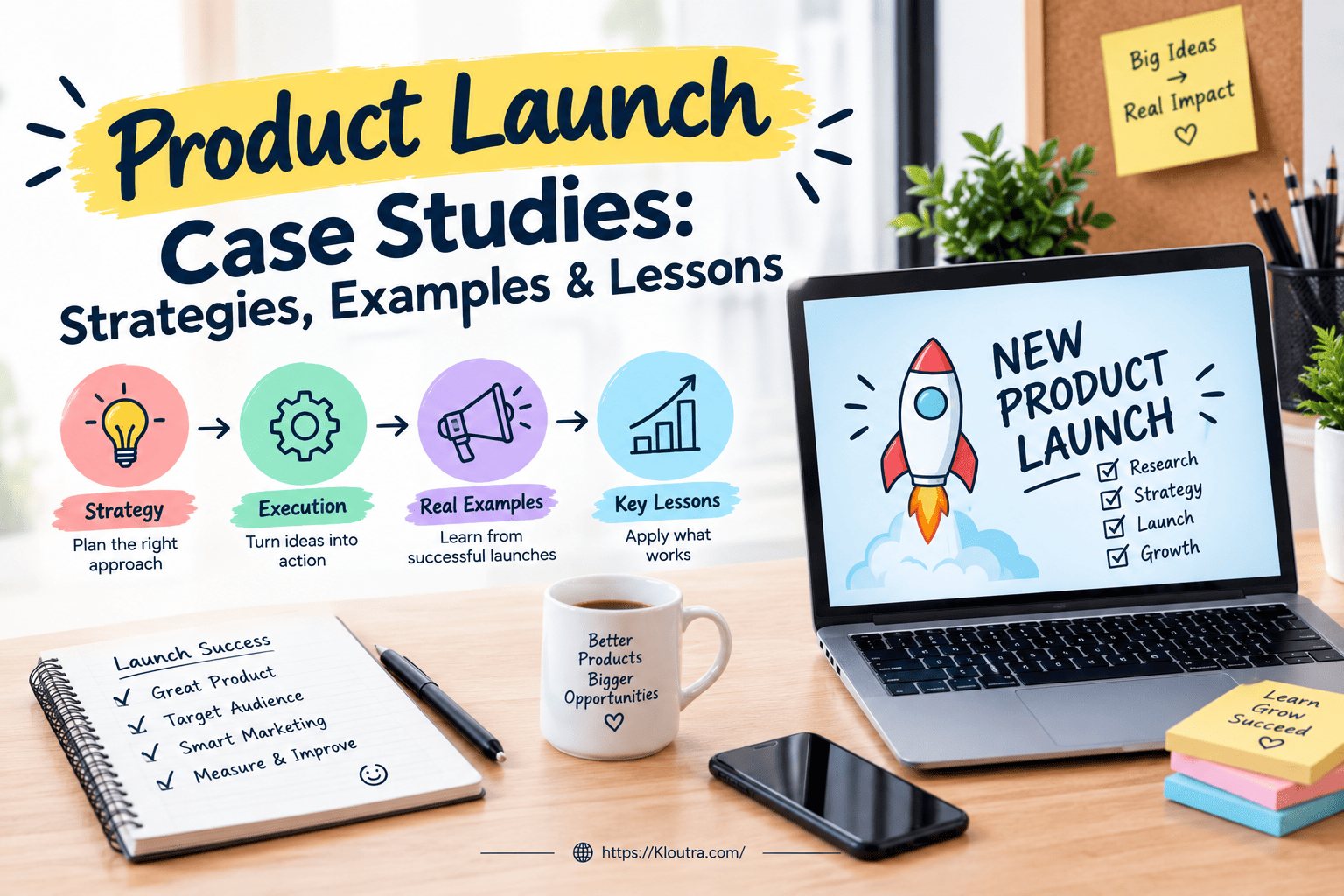
Product Launch Case Studies: Strategies, Examples & Lessons
Introduction
Product Launch Case Studies show how businesses plan, market, and introduce new products to their target audiences. They can reveal what strategies worked, what challenges brands faced, and how customers responded. This guide explores successful product launch examples, effective strategies, common mistakes, and key lessons businesses can use for better product launches.
What Are Product Launch Case Studies?
Product Launch Case Studies are detailed examples of how businesses introduce products to the market. They explain the planning, marketing, launch process, and results. These studies help readers understand which approaches worked and which challenges businesses faced.
What a Product Launch Case Study Includes
A product launch case study usually covers the product and its target market. It explains the goals behind the launch and the strategy used to reach customers. It may also discuss marketing channels, customer response, sales, and other results. This information shows how a launch strategy worked in real-world conditions.
Why Product Launch Case Studies Matter
Case studies help businesses learn from real product launches. They show how companies handle planning, marketing, customer needs, and launch challenges. They also help marketers compare different strategies before choosing their own approach. Learning from past launches can reduce mistakes and improve future planning.
What Makes a Product Launch Successful?
A successful product launch starts with a clear understanding of customers. The business must also communicate why the product offers value. Good planning helps connect the product with the right audience. Strong marketing then creates interest and encourages people to try it.
Product Positioning and Target Audience
Product positioning explains how a product should appear in the market. Businesses need to identify the customers most likely to need it. They should understand customer problems, preferences, and buying behavior. Clear positioning helps create marketing messages that speak directly to those customers.
Pre-Launch Marketing and Awareness
Pre-launch marketing builds awareness before the product becomes available. Businesses can use websites, email, social media, content, and other channels. The goal is to explain the product and create interest. Early communication can also help businesses gather audience feedback before launch.
Launch Campaign and Customer Engagement
The launch campaign introduces the product and encourages customers to take action. Businesses may use advertising, social media, email, events, or partnerships. Clear messaging helps customers understand the product and its benefits. After launch, businesses can monitor feedback and respond to customer questions.
Best Product Launch Case Studies
Successful product launches can teach useful lessons about marketing and customer engagement. Different industries use different launch strategies. The following examples show several approaches businesses can study.
| Type | Example | Main Lesson |
|---|---|---|
| Technology | Apple | Strong product positioning |
| Automotive | Tesla | Build anticipation and demand |
| Sportswear | Nike | Strong brand storytelling |
| Consumer | Coca-Cola | Consistent brand messaging |
| Hospitality | Airbnb | Customer-focused marketing |
Apple
Apple is known for clear product positioning and focused launch messaging. Its launches often explain the product’s main benefits clearly. Apple also uses events and media coverage to build public interest.
Tesla
Tesla has used product reveals and direct communication to create attention. Its launches often focus on product features and future potential. Tesla also benefits from strong customer and media interest around new models.
Nike
Nike connects product launches with strong brand stories and athlete partnerships. Its campaigns often focus on performance, identity, and customer motivation. This approach helps products connect with broader brand values.
Coca-Cola
Coca-Cola uses consistent branding across products and marketing campaigns. Its product marketing often connects with familiar brand messages and experiences. This consistency helps customers recognize and understand its products.
Airbnb
Airbnb focuses strongly on customer experience and community. Its marketing highlights travel experiences and connections between hosts and guests. This customer-focused approach supports its position in the travel market.
Product Launch Strategies From Successful Brands
Successful brands usually plan their launches before the product becomes available. They focus on the right audience, clear messaging, and customer response. These strategies can help businesses create stronger product launches.
Build Product Awareness Before Launch
Businesses can create interest before customers can buy the product. They can share teasers, previews, email updates, or social posts. Pre-launch marketing helps build an audience and measure early interest. It can also provide useful feedback before the full launch.
Create a Strong Marketing Message
A clear message helps customers understand the product quickly. It should explain who the product serves and why it matters. An AI marketing strategy can also help businesses plan targeted messages and campaigns. Businesses should keep their main message consistent across marketing channels. Clear positioning also helps the product stand out among competitors.
Use Social Media and Influencer Marketing
Social media can help brands reach existing and potential customers. Businesses can share product demonstrations, previews, and launch announcements. Social media content automation can also help businesses create and schedule posts more efficiently. Relevant creators can show products to their own audiences. The best channels depend on where the target customers spend time.
Collect Customer Feedback
Customer feedback helps businesses understand how people respond to new products. Businesses can collect feedback through reviews, surveys, testing, and customer conversations. Early feedback can reveal problems before a wider launch. Post-launch feedback can also guide future product improvements.
Common Product Launch Mistakes to Avoid
Product launches can struggle when businesses make avoidable planning and marketing mistakes. Clear research, messaging, and customer feedback can reduce these risks.
Poor Market Research
Poor research can lead businesses toward the wrong target audience. It can also create products that lack clear market demand. Businesses should study customer needs, preferences, competitors, and buying behavior. AI market research tools can help businesses analyze customer and market data faster. This research helps teams make better decisions before launching.
Unclear Product Messaging
Customers should quickly understand what the product offers. Unclear messaging can make the product difficult to understand. Businesses should explain the product’s value in simple language. They should also keep the main message consistent across marketing channels.
Weak Marketing Strategy
A good product still needs a clear marketing plan. Businesses should choose channels that reach their target audience. They should also plan promotion before, during, and after launch. Relying only on launch day can limit long-term product awareness.
Ignoring Customer Feedback
Customer feedback can reveal problems after a product launch. Businesses can use reviews, surveys, support requests, and direct conversations. This feedback can guide product improvements and future marketing decisions. Ignoring useful feedback can cause businesses to miss important opportunities.
How to Measure Product Launch Success
Businesses need clear metrics to understand how well a product launch performs. These metrics show customer interest, marketing performance, and business results. Tracking several metrics gives a more complete view of launch performance.
| Metric | What It Measures |
|---|---|
| Sales | Revenue and product purchases |
| Conversion Rate | Percentage of visitors who become customers |
| Customer Acquisition Cost | Cost of acquiring each customer |
| Website Traffic | Number of visitors reaching the website |
| Engagement | Audience interactions with the marketing campaign |
Sales show how many products customers purchase and how much revenue they generate. Businesses can compare sales with their launch goals.
Conversion Rate shows how many visitors complete a desired action. For example, customers may purchase a product or sign up.
Customer Acquisition Cost shows the average cost of gaining a new customer. Businesses can compare this cost with customer value.
Website Traffic shows how many people visit pages related to the product. Traffic can indicate growing interest during a launch.
Engagement measures actions such as likes, comments, shares, and clicks. These actions show how audiences respond to launch campaigns.
Key Lessons From Product Launch Case Studies
Product launch case studies show several useful lessons for businesses. A strong launch starts with clear customer and market research. Businesses should also explain their product value in simple terms. Building awareness before launch can create early customer interest. After launch, businesses should track results and customer feedback. These insights can help improve future products and marketing plans.
Frequently Asked Questions About Product Launch Case Studies
What is a product launch case study?
A product launch case study explains how a business launched a product. It usually covers planning, marketing, customer response, and results.
What should a product launch case study include?
It should explain the product, target audience, launch strategy, and results. It should also highlight important challenges and lessons from the launch.
What are the best examples of successful product launches?
Apple, Tesla, Nike, Coca-Cola, and Airbnb offer useful launch examples. Each brand uses different strategies to reach and engage customers.
How do you measure product launch success?
Businesses can track sales, conversion rates, website traffic, and customer acquisition costs. Engagement and customer feedback can also provide useful performance insights.
Conclusion
Product launch case studies show how businesses can plan and improve product launches. They explain useful strategies, common mistakes, and important performance metrics. A successful launch starts with clear research and strong product positioning. Businesses should also build awareness and communicate product value clearly. After launch, tracking results and customer feedback helps guide improvements. These lessons can support better decisions for future product launches.
Disclaimer: This article is for informational and educational purposes only. Product examples and strategies may change over time. Always verify current information before making business or marketing decisions.