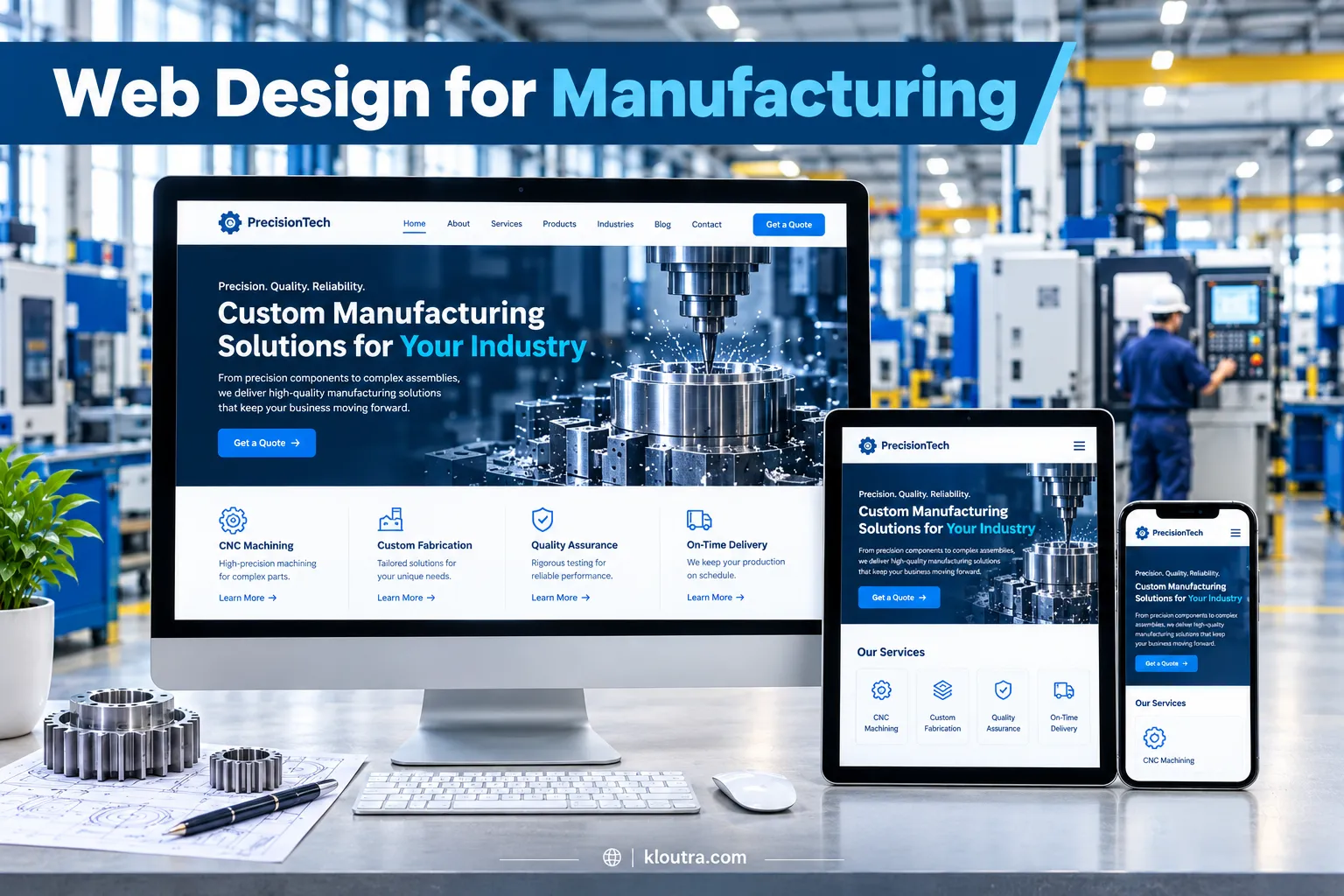
Web Design for Manufacturing: 9 Features Every Website Needs
Introduction
Manufacturing buyers often check a company’s website before choosing a supplier. If the website is confusing, they may struggle to understand its products and capabilities. Effective web design for manufacturing makes information easy to find and helps buyers take the next step. This guide explains nine essential website features, common design mistakes, and simple ways to keep your website updated.
Why Website Design Matters for Manufacturing Companies
A good manufacturing website helps buyers understand your business and products quickly. It shows what you make, who you serve, and what makes your company different.
Many buyers research manufacturers online before requesting quotes or contacting suppliers. Your website should answer their questions without making them search through confusing pages. Clear product details, technical specifications, and industry certifications help buyers make informed decisions.
A well-designed website also makes your company look professional and reliable. Fast loading, mobile-friendly pages, and simple navigation improve the browsing experience. Clear contact details and quote request forms help potential customers take the next step.
For manufacturing companies, a website should connect product information with real business needs. It should help buyers find the right details and contact your team easily.
9 Essential Features of a Manufacturing Website
A manufacturing website should help buyers understand your products, check your capabilities, and contact your team. These nine features make your website more useful, professional, and easier to navigate.
1. Clear Homepage and Value Proposition
Your homepage should explain what your company manufactures and who it serves. Use a clear headline that describes your main products or services. Add a short introduction highlighting your experience, capabilities, or industry focus.
Choose high-quality images of your products, facility, or production process. Include a clear button that directs visitors to your products or quote request page.
2. Detailed Product and Service Pages
Buyers need accurate information before choosing a manufacturing supplier. Give each major product or service its own dedicated page. Include specifications, materials, dimensions, applications, and available customization options where relevant.
Add clear product images that show important details. Explain which industries or business needs each product serves. If buyers need technical documents, provide accessible datasheets or downloadable product specifications.
3. Easy Navigation and Logical Site Structure
Visitors should find important information without clicking through many pages. Keep your main menu simple and use familiar labels. Include sections for products, industries served, company information, and contact details.
Group related products under clear categories. Use descriptive page titles and organize information in a logical order. A search function can also help visitors find specific products on larger websites.
4. Mobile-Friendly and Responsive Design
Buyers may visit your website using phones, tablets, or desktop computers. Your layout should adjust smoothly to different screen sizes. Text must remain readable without unnecessary zooming or horizontal scrolling. Make menus, buttons, and forms easy to use on smaller screens. Display product images clearly without slowing down the page.
5. Fast Loading Speed and Website Performance
Slow pages can frustrate visitors and make product information harder to access. Large images, unnecessary scripts, and poorly configured hosting can affect loading speed.
Compress images without making product details difficult to see. Monitor real user performance through Google’s Core Web Vitals, which measure loading, responsiveness, and visual stability.
6. Strong Calls to Action for Generating Leads
A manufacturing website should make the next step clear for potential buyers. Use specific buttons such as “Request a Quote,” “Discuss Your Project,” or “Contact Sales.”
Place relevant calls to action near product details and service information. Keep quote forms focused on essential details, such as product requirements and business contact information. Ask for additional information only when it helps your team prepare an accurate response.
7. Certifications, Case Studies, and Customer Proof
Buyers want evidence that your company can meet their requirements. Display relevant industry certifications and quality standards your business actually holds. Case studies can explain a client’s problem, your solution, and the results. Include real project photos or customer testimonials when available.
Avoid unsupported claims about product quality, production capacity, or industry experience. Accurate information helps potential customers assess your capabilities.
8. Search Engine Optimization for Manufacturing Businesses
SEO helps search engines understand your website and its products. Use clear page titles, useful headings, and descriptive URLs. Write separate pages for important products, services, and industries you serve.
Include the terms buyers naturally use when searching for manufacturing suppliers. Add useful technical details instead of repeating keywords unnecessarily. Optimize image sizes and write descriptive alternative text for meaningful product images.
Keep important product information accessible to visitors and search engines. Review your website’s search performance regularly and update outdated details.
9. Secure Website and Easy Contact Options
Manufacturing websites often collect business inquiries and customer contact details. Protect this information with HTTPS and secure website configurations. Keep your content management system, themes, and plugins updated.
Use strong passwords and limit administrative access to trusted team members. Set up regular backups and a clear recovery process. Choose secure contact forms that collect only the information your team needs. Display your business email, phone number, and location when relevant. Test contact forms regularly to ensure messages reach the right team.
Manufacturing Website Design Mistakes to Avoid
A manufacturing website can lose potential inquiries when buyers cannot find the information they need. Avoid these common mistakes when building or improving your website.
Hiding Technical Specifications
Do not hide essential information inside brochures when you can display it directly on product pages.
Using Generic Stock Photos
Unrelated factory images do not show your actual capabilities. Use genuine facility, equipment, and product photos whenever possible.
Making Quote Forms Too Complicated
Long forms can discourage buyers from submitting inquiries. Allow drawing uploads when they help your team prepare quotations.
Overlooking SEO During a Website Redesign
Changing URLs without proper redirects can make existing pages harder to find. Map old URLs to relevant new pages using permanent redirects when appropriate. Check internal links, indexing settings, and important page content before launch.
These mistakes are avoidable. Focus on accurate technical information, straightforward navigation, and an easy quotation process.
How to Keep a Manufacturing Website Updated
Update product specifications, materials, and manufacturing capabilities whenever they change. Add new products and remove details about discontinued items.
Check quote forms, contact details, and file uploads regularly. Fix broken links and keep website software and plugins updated. Review your website after major business changes. Keep information accurate so buyers can assess your capabilities and request quotes confidently.
Final Thoughts
A manufacturing website should help buyers evaluate your business and contact your team easily. Review your current pages and fix the issues that may prevent inquiries. Make improvements based on your customers’ needs and business goals. If you plan a major redesign, protect your existing search visibility with proper URL redirects.
Frequently Asked Questions
What Should a Manufacturing Website Include?
A manufacturing website should explain products, services, and production capabilities. Include technical specifications, industry certifications, contact details, and a clear quote request form. Make sure the website works well on mobile devices.
How Much Does a Manufacturing Website Cost?
The cost depends on the website’s size, features, and design requirements. A simple website usually costs less than a custom website with product catalogs, integrations, or quote systems. Request quotes from developers based on your specific needs.
How Often Should a Manufacturing Website Be Updated?
Review your website at least every few months. Update product specifications, services, certifications, and contact details whenever they change. Check forms, links, security updates, and website performance regularly.
Disclaimer: This article provides general information about Web Design for Manufacturing. Website costs, features, and requirements vary by business. Consult a professional web designer to discuss your company’s specific needs.