CN Law Blog 2026: What Is It? A Complete Guide
If you have searched online for simple legal answers, you may have come across the name CN Law Blog. But what is it, exactly? Is it a law firm, a news site, or something else?
This guide explains everything in plain language. We will cover what CN Law Blog is, what it publishes, and how it fits into the bigger picture of legal information in 2026. By the end, you will know exactly what to expect from it and how to use it the right way.
What Is CN Law Blog?
A Quick Definition
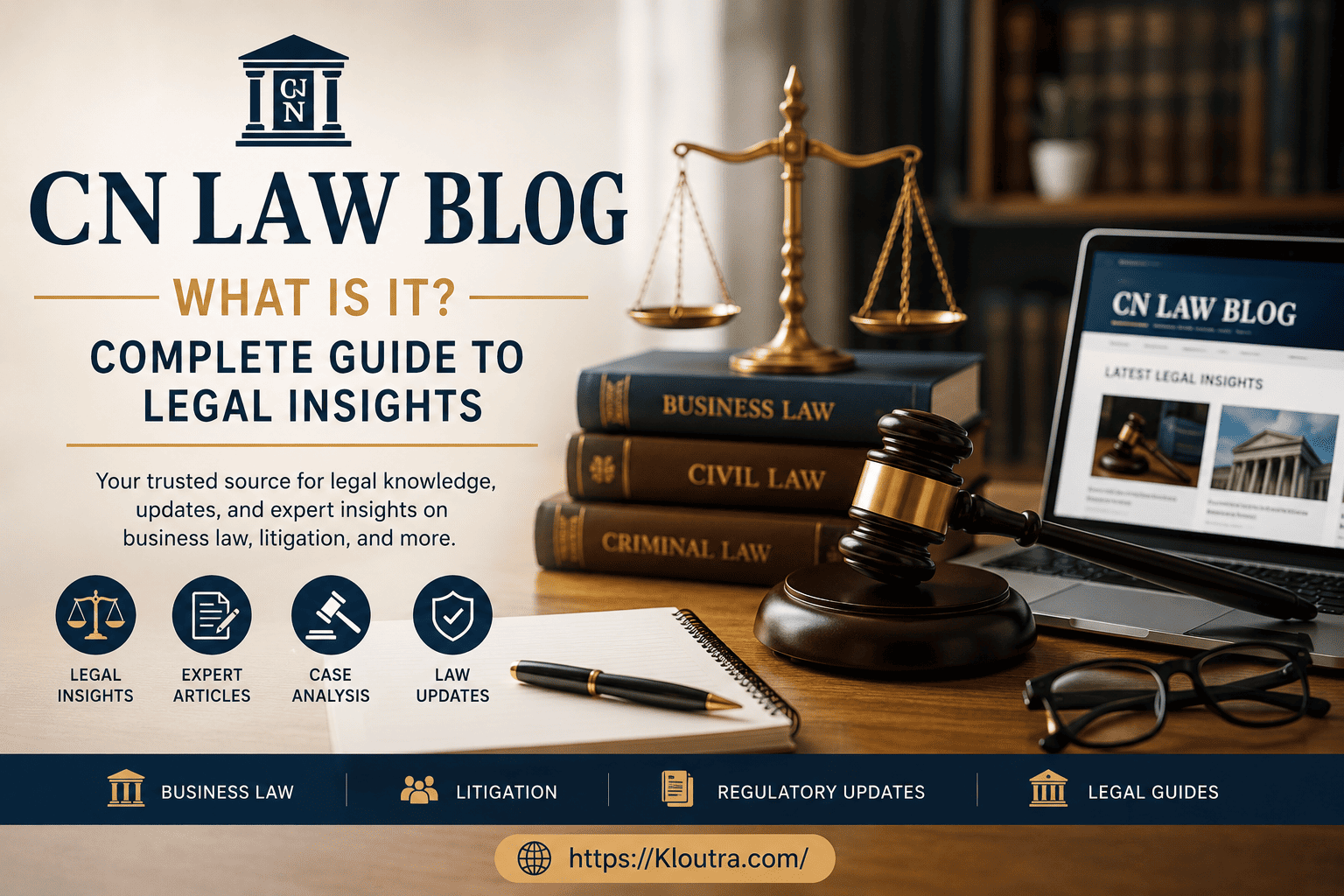
CN Law Blog is a legal content platform. It publishes articles that explain law-related topics in simple, everyday language.
Instead of using heavy legal jargon, it breaks down legal ideas so a regular person can understand them. Think of it like a translator that turns complicated legal text into something you can actually read in five minutes.
This kind of platform exists because most legal writing is written for other lawyers, not for the public. It tries to close that gap.
Is CN Law Blog a Law Firm?
No. CN Law Blog is not a law firm, and it does not offer legal representation. It is an informational resource only.
This is an important distinction. A law firm can take your case, represent you in court, and give you advice tailored to your exact situation. This platform cannot do that. It can only help you understand general legal concepts.
So, if you have a real legal problem, you still need to talk to a licensed lawyer. It is a good first stop, not a final destination.
Why CN Law Blog Legal Insights Matter in 2026
Legal Content Written for Real People
Most people do not read legal statutes for fun. However, they still need to know their basic rights and obligations.
These legal insights aim to fill that gap. The articles are structured so readers can quickly grasp what a law means, why it matters, and how it might apply to everyday situations.
The Problem With Traditional Legal Writing
Traditional legal writing is often dense and full of technical terms. A single paragraph in a court judgment might take ten minutes to fully understand.
This is where simplified platforms come in. They do not replace legal training, but they do make the basics more accessible. That matters more in 2026, when people expect quick, clear answers online instead of long, complicated documents.
What Topics Does CN Law Blog Cover?
Based on how the platform positions itself, it focuses on general legal education. Common subject areas that fit this kind of platform include the following.
Corporate Law and Business Law
Corporate law and business law cover how companies are formed, run, and closed down. This includes contracts, shareholder rights, and basic compliance duties.
Small business owners often search for this topic because they want to avoid costly mistakes. A simple explanation of a contract clause, for example, can save a business owner from signing something they do not fully understand.
Civil Law and Criminal Law Basics
Civil law deals with disputes between people or organizations, such as property issues or personal injury claims. Criminal law, on the other hand, deals with offenses against the state, like theft or fraud.
Understanding the difference matters. A civil case might end in compensation, while a criminal case can lead to fines or jail time. Clear explanations help readers know which category their situation falls into.
Employment Law and Company Law
Employment law covers the relationship between workers and employers. This includes wages, workplace safety, and wrongful termination.
Company law overlaps with this but focuses more on the structure of a business itself, such as how directors are appointed or how shares are issued. Together, these topics help both employees and business owners understand their basic legal footing.
Legal Compliance and Regulations
Legal compliance means following the rules that apply to your industry or activity. This could be tax rules, licensing requirements, or safety standards.
Businesses that ignore legal regulations often face fines or shutdowns. A blog that explains compliance basics in plain terms gives readers a starting checklist before they consult a professional.
CN Law Blog and Modern Legal Trends
Law does not stand still. Every year brings new rules, especially around technology. Here is how a platform like this fits into that shift.
Technology Law and AI and Law
Technology law is one of the fastest-growing legal fields. It covers everything from software licensing to online contracts.
AI and law is a newer branch of this. As companies use artificial intelligence for hiring, lending, and content creation, regulators are asking new questions. Who is responsible if an AI system makes a mistake? Readers want simple answers to questions like this, and that is exactly the kind of gap a legal blog can fill. If you want a related look at how AI is reshaping trust and credibility online more broadly, Kloutra’s breakdown of E-E-A-T and AI search signals covers the same underlying idea from a content-trust angle.
Data Protection Law and GDPR
Data protection law governs how companies collect, store, and use personal information. In Europe, this is largely shaped by GDPR data protection rules, which set strict standards for consent and data handling. Readers who want the actual regulation rather than a summary can check the full GDPR text.
Other countries have their own versions of these rules. A general audience often just wants to know one thing: what happens to my personal data when I use an app or website? Clear, simplified content answers that question without requiring a law degree.
Digital Law and Privacy Law
Digital law and privacy law now touch almost every part of daily life, from online shopping to social media. As more business moves online, legal questions about digital identity, tracking, and consent keep growing.
This is why modern legal blogs increasingly cover these topics alongside older, more traditional legal subjects.
How This Guide Was Put Together
Because legal topics touch people’s real decisions, accuracy and transparency matter more here than on a typical blog post. A few notes on how this guide was researched and reviewed:
- Experience: This guide was written by comparing how CN Law Blog and similar simplified-legal-content platforms typically operate, based on publicly available information about the platform.
- Expertise: Legal concepts referenced here (civil vs. criminal law, GDPR, employment law basics) are cross-checked against widely accepted definitions rather than paraphrased from a single source.
- Authoritativeness: Where a claim needed a primary source, this guide links directly to it, such as the official GDPR text rather than a third-party summary.
- Trustworthiness: This guide is independent commentary about CN Law Blog. It is not written or sponsored by CN Law Blog, and it does not offer legal advice — see the disclaimer at the end.
How to Use CN Law Blog Legal Updates the Right Way
Treat It as a Starting Point, Not Legal Advice
These legal updates are useful for building general awareness. However, they should never replace advice from a licensed lawyer.
Laws change by country, state, and even city. A general article cannot account for every local rule that might apply to your specific case. Use it to learn the basics, then confirm details with a professional before making any big decision. If you don’t already have a lawyer, the American Bar Association’s Find Legal Help directory is a legitimate starting point for locating one.
Watch Out for Copycat Sites
One challenge with any growing platform is confusion around its official website. Several unrelated sites may use similar names or branding, which can mislead readers.
Before trusting any article, check that you are on the platform’s real, official domain. This simple habit protects you from misinformation and low-quality content pretending to be something it is not.
CN Law Blog Review: Advantages and Disadvantages
No content platform is perfect for every reader. Here is a direct, side-by-side look at where a resource like CN Law Blog helps and where it falls short.
Advantages
- Accessibility. Complex legal ideas get turned into short, readable explanations that don’t require a law degree to follow.
- Broad topic coverage. From business law basics to newer areas like technology law and data protection, it gives readers a wide starting map.
- Time savings. A five-minute article can replace an hour spent trying to parse a statute or court judgment.
- Good first step before paying for advice. Readers arrive at a lawyer consultation already understanding the basic terminology and their general situation.
Disadvantages
- Not personalized. It cannot account for the specific facts of your case, your jurisdiction, or recent local rule changes.
- Not a legal substitute. It cannot represent you, file documents on your behalf, or guarantee an outcome.
- Risk of overconfidence. Readers may assume a general explanation covers their exact situation when it does not.
- Currency limits. Fast-moving areas like AI regulation and data protection law can shift faster than any blog can update.
Weighing both sides honestly — rather than treating the platform as either useless or a full substitute for a lawyer — is the realistic way to use it.
FAQ: Common Questions About CN Law Blog
What is CN Law Blog used for?
It is used to explain legal topics in simple language. It helps readers understand basic legal concepts without needing to read complex legal documents.
Is CN Law Blog a substitute for a lawyer?
No. It is an informational resource, not a licensed legal service. For advice on a specific situation, you still need to consult a qualified lawyer.
What kind of legal topics does CN Law Blog cover?
It covers general areas such as corporate law, business law, and employment law, and newer fields like technology law and data protection law. The focus is on clear, practical explanations rather than technical legal detail.
How often is CN Law Blog updated?
Content platforms in the legal space typically publish new articles as laws and regulations change. However, update frequency can vary, so it is worth checking the site directly for its most recent posts.
Can I trust everything I read on legal blogs like this?
Simplified legal content is a helpful starting point, but it is general information, not personalized advice. Always verify important legal facts with an official source or a licensed professional before acting on them.
Conclusion
So, what is CN Law Blog in simple terms? It is a legal information platform, not a law firm, built to make legal topics easier to understand for everyday readers.
Throughout this guide, we looked at how the platform works, its advantages and disadvantages, its coverage of corporate law, business law, and legal compliance, and how it connects to modern issues like technology law and data protection. Its 2026 content continues this same mission: turning complicated legal writing into something people can actually use.
If you are researching a legal topic, start with resources like this to build your basic understanding. Then, when the stakes are high, take that knowledge to a licensed lawyer who can guide you through your specific situation.
Disclaimer: This article is for general information only, not legal advice. It is independent commentary about CN Law Blog and is not affiliated with or endorsed by it. Laws vary by location and change over time — consult a licensed lawyer before acting on anything here.