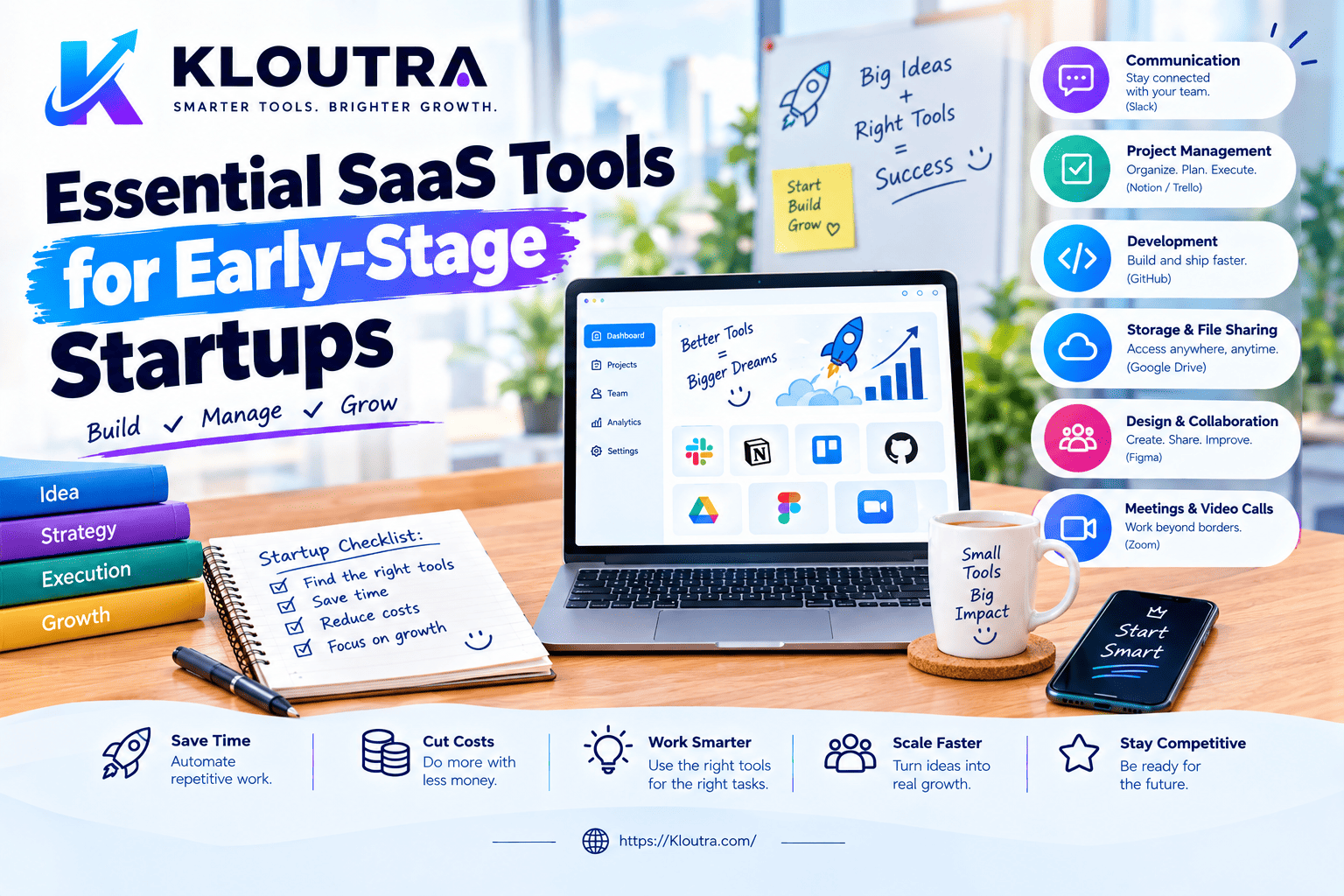
Essential SaaS Tools for Early-Stage Startups
Introduction
SaaS tools for startups help small teams manage work with fewer resources. They can support project management, communication, sales, and marketing tasks. These tools can also reduce manual work and save valuable time.
Early-stage startups should choose tools that solve real business needs. The right software can improve productivity and support business growth. It should also fit the budget and work well with other tools.
What Are SaaS Tools for Startups?
SaaS tools are software applications delivered through the internet. Startups can use them without managing their own software infrastructure.
These tools support many daily business tasks and workflows. Common examples include project management, accounting, sales, marketing, and communication. Most SaaS tools run on a subscription or usage-based model.
Startups often choose SaaS tools because they are easy to access. Teams can use them through web browsers or dedicated apps. Many tools also connect with other software used by the business.
Why Startups Need SaaS Tools
Save Time and Reduce Costs
SaaS tools can reduce the need for expensive software infrastructure. Startups usually pay through monthly or annual subscriptions. This lowers the upfront cost of adopting business software. Providers also handle updates and infrastructure maintenance.
These tools can also help teams automate routine business tasks. This gives employees more time for important work. SaaS tools can scale as startups add users or features.
Improve Team Productivity
SaaS tools help teams manage tasks and share information online. Team members can access many tools through web browsers. Collaboration tools can support communication across remote and office teams.
Many SaaS platforms also connect with other business applications. These integrations can reduce repeated data entry and manual work. Automatic updates also keep teams using the latest software version.
Essential SaaS Tools for Startups
Project Management Tools
Project management tools help startups organize tasks and track project progress. Teams can assign tasks, set deadlines, and share updates. These tools also keep project information in one central place.
Communication and Collaboration Tools
Communication tools help teams stay connected during daily work. They support messages, meetings, file sharing, and team discussions. Collaboration platforms can also help remote teams work together smoothly.
CRM and Sales Tools
CRM tools help startups manage customer and prospect information. They can track contacts, sales deals, follow-ups, and customer interactions. This gives sales teams better visibility across their sales pipeline.
Accounting and Finance Tools
Accounting tools help startups manage invoices, expenses, transactions, and financial records. Some platforms also support financial reports and business planning.
Best SaaS Tools for Startup Marketing
SEO and Content Marketing Tools
SEO tools help startups research keywords and improve website visibility. Content tools can support planning, writing, and managing marketing content. AI automation tools can help small teams manage marketing work more efficiently.
Email Marketing Tools
Email marketing tools help startups create and send campaigns to subscribers. They can also support audience management and marketing automation. Startups can use these features to maintain regular customer communication.
Social Media Management Tools
Social media management tools help startups plan, schedule, and publish posts. Many platforms also provide analytics for measuring social media performance. These features can save time when managing several social channels.
SaaS Tools for Customer Support
Help Desk and Support Tools
Help desk tools organize customer questions, requests, and support tickets. They help teams track issues from start to resolution. Many platforms also provide ticketing, workflows, and support reports.
These tools give support teams one place to manage customer conversations. This can make support work easier as customer numbers grow.
AI Customer Support Tools
AI customer support tools can answer common customer questions automatically. They can also route complex issues to human support agents. Some tools use company knowledge bases to provide relevant answers.
Startups can use AI support to handle repetitive questions. Human agents can then focus on more complex customer problems.
SaaS Tools for Startup Security
Password Management Tools
Password management tools help teams store and manage account credentials securely. They can generate strong passwords and support secure password sharing. Some also provide access controls for business accounts.
Startups should limit access to important accounts based on team roles. They should also use multi-factor authentication whenever available.
Data Backup and Security Tools
Backup tools help startups protect important business data from accidental loss. They can create automatic backups and support data recovery. Some services also offer encryption and access controls.
Security tools can also help monitor systems for potential threats. Startups should protect customer data, business files, and important accounts.
How to Choose SaaS Tools for Your Startup
Consider Your Budget
Start by setting a clear budget before comparing different SaaS tools. Check monthly fees, annual costs, and possible extra charges. Some tools charge based on users, storage, or usage. Consider future costs as your team and usage grow.
Check Integrations and Scalability
Choose tools that connect with the software your startup already uses. Good integrations can reduce manual work and repeated data entry. Also, check whether the tool can support your future growth.
Compare Features and Pricing
Compare the features you actually need before choosing a tool. Do not pay extra for features your team rarely uses. Check pricing tiers, usage limits, add-ons, and renewal costs.
Common SaaS Mistakes Startups Should Avoid
Using Too Many Tools
Using too many tools can make workflows harder to manage. It can also create duplicate features and unnecessary monthly costs. Review your tools regularly and remove those you no longer need.
Ignoring Security
Startups should check security before storing business or customer data. Review access controls, encryption, backups, and relevant security certifications. Choose providers that clearly explain their security practices.
Paying for Unused Features
Avoid choosing expensive plans for features you rarely need. Start with essential features that support your current business goals. You can upgrade later when your needs become more advanced.
How SaaS Tools Can Help Startups Scale
SaaS tools can support startups as their teams and customer base grow. Many tools let businesses add users, features, or storage when needed.
They also reduce the need to manage software infrastructure internally. Providers usually handle maintenance, updates, and much of the underlying infrastructure.
SaaS tools can also automate routine tasks and connect different business systems. This helps teams reduce manual work as operations become more complex.
As startups grow, they can adjust SaaS plans to match demand. This flexibility can help control costs and support changing business needs.
Conclusion
SaaS tools can help startups manage work with fewer resources. They support tasks like marketing, sales, finance, support, and collaboration.
Startups should choose tools based on their current needs and budget. The right tools can also support growth as business needs change.
Disclaimer: This article provides general information about SaaS tools for startups. Features, pricing, and availability may change over time. Always check the provider’s official website before choosing a SaaS tool. We do not guarantee specific results from using any mentioned tool.