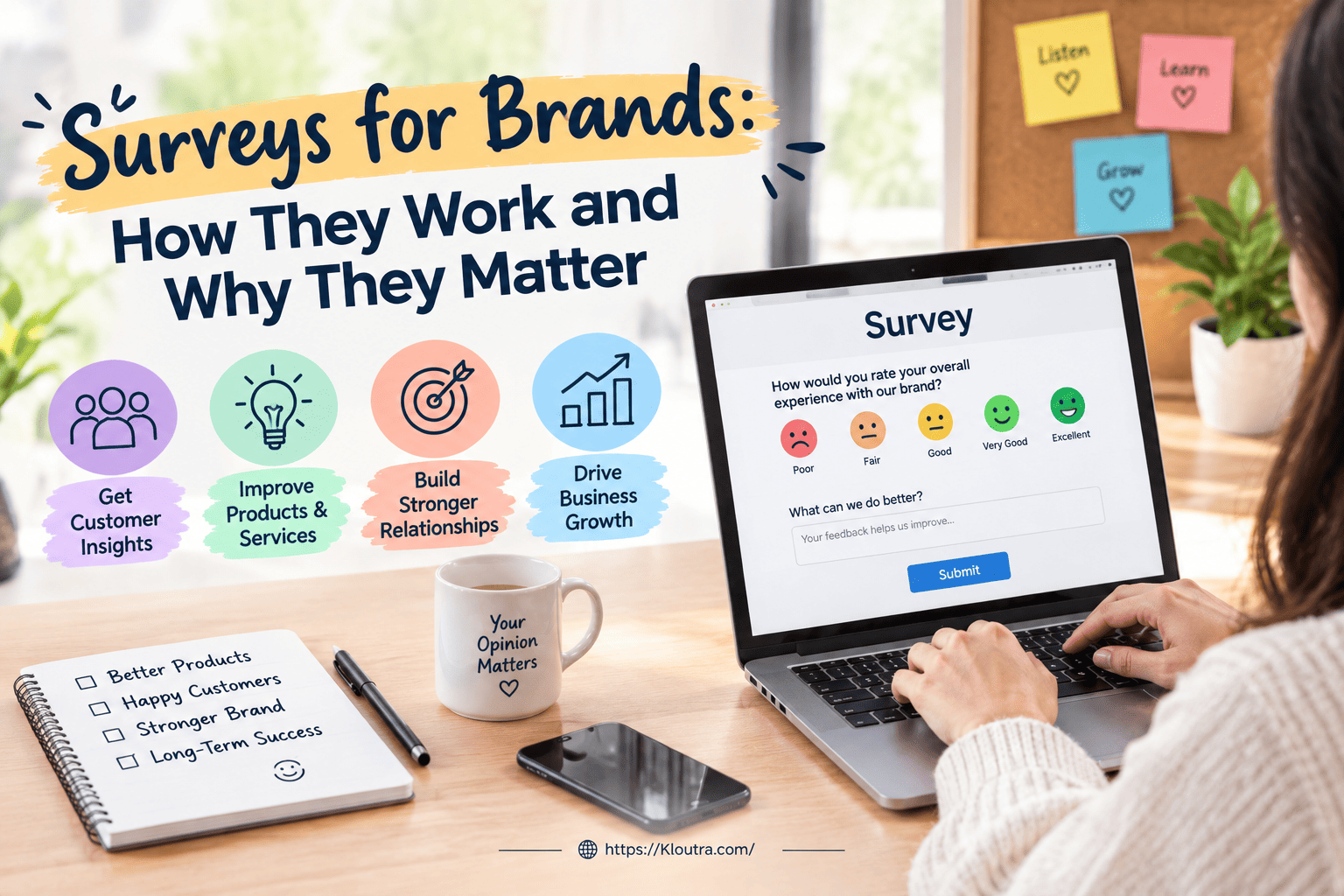
Surveys for Brands: How They Work and Why They Matter
Introduction
Surveys for Brands help businesses understand what customers think, need, and expect. They can collect useful feedback about products, services, customer experiences, and brand perception. This information helps brands make better decisions and improve their marketing strategies. In this guide, we will explain how brand surveys work, their main types, key benefits, and best practices.
What Are Surveys for Brands?
Surveys for brands are tools used to collect feedback from customers and audiences. They help businesses understand opinions, preferences, needs, and experiences. Brands can use surveys to measure customer satisfaction and brand awareness. They can also identify areas that need improvement.
How Do Brand Surveys Work?
Brand surveys follow a simple process from planning to analyzing responses. A brand first decides what it wants to learn. It then chooses the right audience and creates clear questions. After collecting responses, the brand reviews the results and identifies useful patterns.
Setting Clear Survey Goals
Every brand survey should have a clear purpose. The goal explains what the brand wants to learn. For example, a brand may measure customer satisfaction or brand awareness. Clear goals also help teams create more relevant survey questions.
Choosing the Right Audience
Brands should send surveys to people relevant to their research goals. The audience can include customers, potential buyers, or specific user groups. Choosing the right participants helps produce more useful and relevant feedback.
Creating Relevant Survey Questions
Good survey questions should be clear, simple, and directly related to the goal. Brands can use multiple-choice, rating, and open-ended questions. Questions should avoid confusing wording or unnecessary details. A focused survey can also make it easier for people to respond.
Collecting and Analyzing Responses
Brands can collect responses through online forms, email, websites, or other channels. After collecting responses, teams review the answers for common patterns. They can use AI analytics tools to analyze data, compare results, and identify customer trends. Brands can then use these findings to guide business and marketing decisions.
Why Are Surveys Important for Brands?
Surveys help brands learn directly from their customers and target audiences. They provide useful feedback about opinions, needs, preferences, and experiences. Brands can use these insights to improve products and marketing strategies. Surveys also help businesses track changes in customer attitudes over time.
Understanding Customer Needs
Surveys help brands learn what customers want and expect. Customers can share their preferences, problems, and opinions through survey questions. Brands can use this feedback to understand common customer needs. This information can guide product, service, and marketing improvements.
Measuring Brand Perception
Brand surveys can show how people view a company or product. Customers can describe their opinions about quality, value, trust, and reputation. Brands can compare these responses with their research goals. This helps them understand their current position in the market.
Improving Customer Experience
Surveys can reveal problems customers face during their interactions with brands. Customers can provide feedback about websites, products, services, and support. Brands can use these responses to find areas needing improvement. Better experiences can help businesses build stronger customer relationships.
Making Better Business Decisions
Survey results give brands additional information for making business decisions. Teams can use customer feedback alongside sales and other business data. This can help them understand customer preferences and market needs. Brands should avoid relying on survey results alone when making major decisions.
What Are the Different Types of Brand Surveys?
Brands use different surveys for different research goals. Each type focuses on a specific area of customer or brand feedback. Choosing the right survey depends on what the brand wants to learn.
Customer Satisfaction Surveys
Customer satisfaction surveys measure how satisfied customers are with products or services. They often ask customers to rate their overall experience. Brands can use these responses to identify strengths and areas for improvement.
Brand Awareness Surveys
Brand awareness surveys measure whether people recognize or know about a brand. Questions can ask whether respondents have heard of a brand. They may also compare brand recognition across different audiences. These surveys can help measure awareness within a target market.
Brand Perception Surveys
Brand perception surveys explore how people view a particular brand. Questions may cover trust, quality, value, personality, or reputation. The results can show how the audience currently perceives the brand.
Product Feedback Surveys
Product feedback surveys collect opinions about specific products or features. Customers can share what they like or dislike about a product. Brands can use this feedback when improving existing products or planning future updates.
Customer Experience Surveys
Customer experience surveys examine interactions between customers and a brand. They can cover purchasing, website use, customer support, and other touchpoints. The results help brands identify positive experiences and possible problems.
What Questions Should Brands Ask in Surveys?
The right questions help brands collect useful and relevant customer feedback. Questions should match the survey’s main goal and target audience. Brands can ask about awareness, experiences, products, services, and customer loyalty.
Brand Awareness Questions
Brand awareness questions measure how familiar people are with a brand. They can ask if respondents recognize or remember the brand. Brands can also ask which brands people consider when buying products. These questions help measure awareness among the target audience.
Customer Feedback Questions
Customer feedback questions ask people about their experiences with a brand. They can cover satisfaction, problems, preferences, and overall opinions. Brands can also ask what customers would like to improve. This feedback can highlight common concerns and customer expectations.
Product and Service Questions
These questions focus on customer opinions about products or services. Brands can ask about quality, usefulness, value, features, and overall satisfaction. They can also ask which improvements customers would prefer. Such feedback can support product and service development.
Customer Loyalty Questions
Customer loyalty questions explore how likely customers are to continue using a brand. They can ask about repeat purchases and overall brand preference. Brands may also ask whether customers would recommend the brand. These responses can help track customer loyalty over time.
How to Create an Effective Brand Survey?
An effective survey should have a clear purpose and relevant questions. It should also make the response process simple for participants. Good survey design can improve the quality and usefulness of collected feedback.
Define Your Target Audience
First, decide who should answer the survey. Your audience should match the purpose of your research. You may target existing customers, potential buyers, or specific user groups. A clear audience helps you collect more relevant responses.
Keep Questions Clear and Simple
Use simple language that people can understand quickly. Avoid confusing terms, complicated sentences, and unnecessary details. Each question should focus on one clear idea. Clear questions can reduce confusion and improve response quality.
Use the Right Question Types
Choose question types based on the information you need. Multiple-choice questions work well for structured responses. Rating scales can measure satisfaction, opinions, or experiences. Open-ended questions allow respondents to explain their views.
Keep the Survey Short and Focused
Long surveys can make respondents lose interest before finishing. Include only questions that support your main research goal. Remove questions that do not provide useful information. A focused survey makes participation easier and keeps responses relevant.
What Are the Benefits of Surveys for Brands?
Surveys give brands direct feedback from customers and target audiences. This feedback can support better planning and customer-focused improvements. Brands can use survey findings with other business data. This helps them make more informed decisions.
Better Customer Insights
Surveys help brands understand customer needs, preferences, and opinions. Customers can share their experiences and concerns directly. Brands can identify common patterns across responses. These insights can support better marketing and product decisions.
Stronger Brand Positioning
Survey responses can show how customers view a brand. Brands can learn which qualities customers associate with their business. This information can help brands understand their market position. They can then adjust their messaging to better match their audience.
Improved Products and Services
Customers can provide useful feedback about products and services. They can mention features they like or areas needing improvement. Brands can review these responses when planning changes. This can help them create offerings that better match customer needs.
Increased Customer Loyalty
Surveys can give customers a way to share their opinions. Brands can use this feedback to identify customer concerns. Responding to those concerns can improve the overall customer experience. Better experiences may support stronger relationships with customers.
Common Mistakes to Avoid in Brand Surveys
Poor survey design can produce confusing or less useful results. Brands should avoid common mistakes when creating their surveys. Clear goals and well-written questions can improve response quality.
Asking Leading Questions
Leading questions can influence people toward a particular answer. This can make survey results less objective. Brands should use neutral wording in every question. Neutral questions allow respondents to share their genuine opinions.
Targeting the Wrong Audience
The wrong audience may provide feedback that does not match your goals. Survey participants should fit the research purpose and target market. Brands should define their audience before sending the survey. This helps collect more relevant responses.
Using Too Many Questions
Too many questions can make surveys tiring for respondents. Long surveys may increase dropouts or incomplete responses. Brands should remove questions that do not support their goals. A focused survey can make participation easier.
Ignoring Survey Results
Collecting feedback has little value if brands never review it. Teams should analyze responses and identify useful patterns. They should connect survey findings with other business information. Brands can then use these insights to guide future actions.
How Brands Can Use Survey Results
Survey results can help brands understand customers and improve business strategies. Brands should review the findings and look for useful patterns. They can then use these insights to support future decisions.
Improve Marketing Strategies
Survey results can show what customers value about a brand. They can also reveal customer preferences and common concerns. Marketing teams can use a content cluster strategy to organize useful content around customer interests. They can also adjust campaigns to better match audience needs.
Refine Products and Services
Customer feedback can reveal problems with products or services. It can also show which features customers value most. Brands can review this information when planning improvements. This can help them better match customer needs and expectations.
Understand Customer Trends
Survey responses can reveal changes in customer opinions and preferences. Brands can compare results from different surveys over time. They can also use AI market research tools to analyze customer trends and identify useful patterns. Teams can use these insights when planning future strategies.
Strengthen Brand Relationships
Surveys give customers an opportunity to share their opinions. Brands can show that they value customer feedback by responding appropriately. Acting on useful feedback can improve customer experiences. This can help build stronger relationships with customers.
Brand Survey Best Practices
Good survey practices can improve the quality of customer feedback. Brands should make surveys simple, clear, relevant, and easy to complete. They should also handle customer information responsibly.
Offer a Simple Survey Experience
Make the survey easy to access and complete. Use clear instructions and simple language throughout the survey. Avoid unnecessary steps that could make participation harder. A simple experience can encourage more people to complete surveys.
Use a Mix of Question Types
Different question types can collect different kinds of information. Use multiple-choice questions for clear and structured answers. Rating scales can measure satisfaction or opinions. Open-ended questions can provide more detailed customer feedback.
Protect Customer Privacy
Brands should handle survey responses responsibly and protect personal information. Only collect information that the survey actually needs. Clearly explain how collected information will be used. Brands should also follow applicable privacy and data protection requirements.
Act on Customer Feedback
Survey feedback becomes useful when brands take appropriate action. Review responses carefully and identify the most common issues. Share relevant findings with the teams responsible for improvements. Then track whether changes produce better customer experiences.
Frequently Asked Questions About Brand Surveys
What is the purpose of a brand survey?
A brand survey collects feedback about customer opinions and experiences. Brands use surveys to understand awareness, satisfaction, preferences, and perceptions. The results can support marketing and business decisions.
How many questions should a brand survey have?
There is no fixed number of questions for every survey. The ideal length depends on the survey goal and audience. Brands should include only questions that support their research purpose. Shorter surveys can also make participation easier.
What makes a good brand survey?
A good brand survey has a clear goal and simple questions. Each question should relate directly to the research objective. The survey should also target the right audience. Neutral wording helps respondents provide more honest answers.
How can brands analyze survey responses?
Brands can organize responses and look for common patterns. They can compare ratings, percentages, and answers across audience groups. Open-ended responses can reveal specific opinions or concerns. Teams should connect survey findings with other relevant business data.
Conclusion
Surveys help brands understand customers, their needs, and their experiences. They can reveal useful insights about brand perception and customer preferences. A well-designed survey uses clear questions and targets the right audience. Brands should also review responses and use useful findings responsibly. When brands act on feedback, they can improve products and customer experiences.
Disclaimer: This article is for general informational purposes only. Survey results can vary based on the audience, questions, and research goals. Brands should use survey findings with other relevant business information before making important decisions.