How to Build a Content Cluster Strategy Using AI Tools
Introduction
A strong content strategy helps websites organize topics and attract the right audience. A content cluster strategy connects related articles around one main topic.
AI tools can make this process faster and easier. They can help find topics, analyze keywords, understand search intent, and plan related content. In this guide, you will learn how to build a content cluster strategy using AI tools.
What Is a Content Cluster Strategy?
A content cluster strategy organizes related content around one main topic. It helps search engines understand your website’s topic coverage.
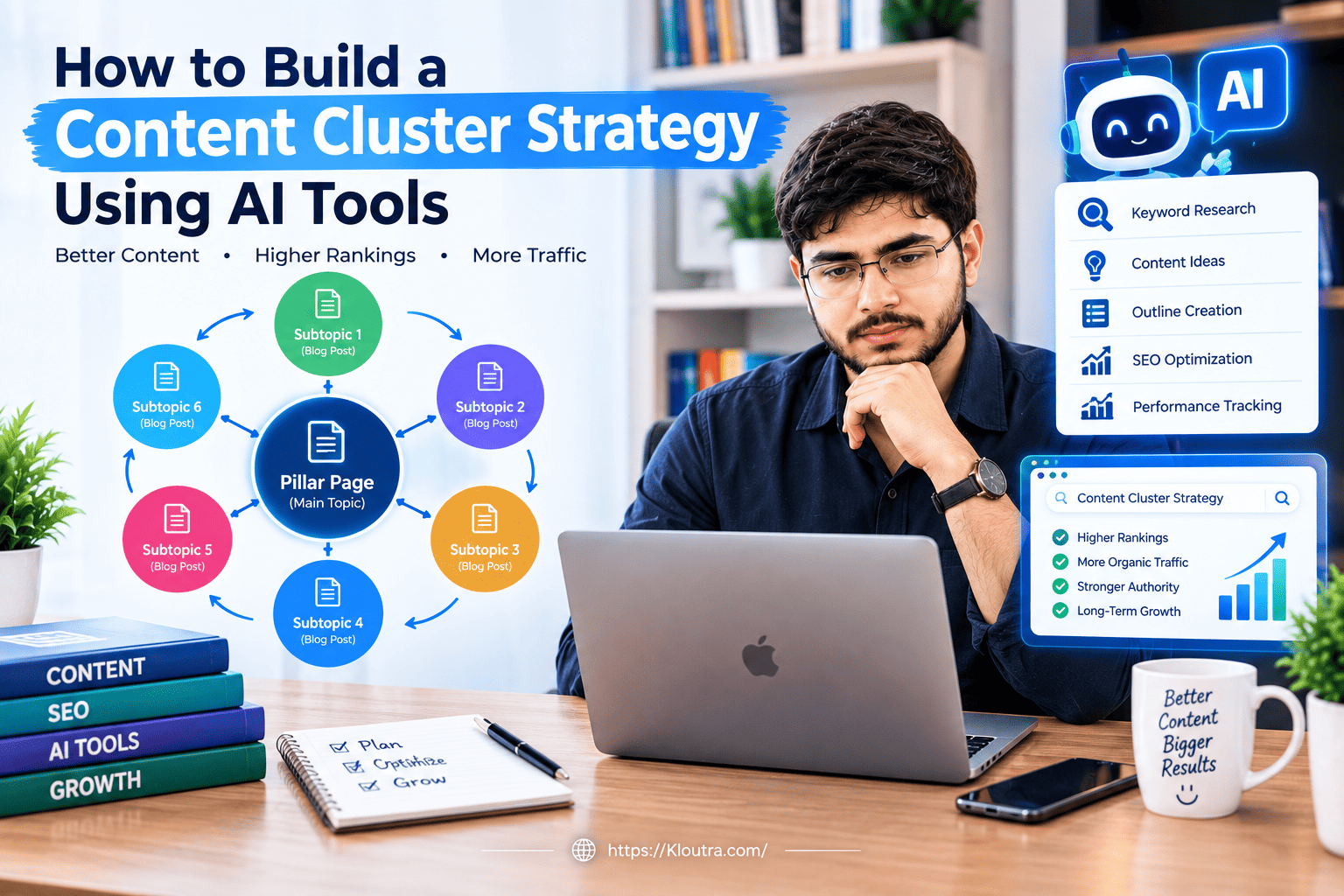
The strategy usually includes one main pillar page and several supporting articles. Each supporting article focuses on a specific part of the main topic.
How Pillar and Cluster Content Work
A pillar page covers a broad topic in a clear and useful way. Cluster pages cover smaller topics related to that main subject.
Internal links connect the cluster pages with the pillar page. This structure helps readers find related information more easily.
Why Use AI for a Content Cluster Strategy?
AI tools can speed up research and content planning. They can identify related topics and suggest useful content ideas. Generative AI for content marketing can also support content planning and idea generation.
AI can also help organize large lists of keywords and topics. However, you should review its suggestions before creating content.
AI for Topic and Keyword Research
AI tools can find related keywords, questions, and subtopics around your main topic. They can also help group similar keywords by topic or search intent. AI-powered SEO tools can also support keyword research and content planning.
Use these suggestions to build relevant content clusters. Always check keyword relevance and search results before choosing topics.
How to Build a Content Cluster Strategy With AI
Start with one broad topic that matches your website and audience. Then use AI tools to find related subtopics and questions.
Review the suggested topics before adding them to your content plan. Choose topics that provide useful information and have clear search intent.
Find Topics and Group Related Content
These tools can also reveal related topics and questions for further research. Group similar topics together based on their meaning and purpose.
Choose one broad topic as your pillar page. Use narrower topics as supporting cluster articles around it.
How AI Helps Identify Search Intent
Search intent describes what users want when they search for something. AI search engine optimization can help websites adapt to modern search experiences.
Common search intents include informational, navigational, commercial, and transactional searches. Understanding intent helps you create content that answers specific user needs.
Match Content With User Needs
Create content that directly answers the questions behind each search. Keep the information clear, useful, and relevant to the topic.
Review search results to understand what users expect from similar content. Then adjust your articles to match those expectations.
How to Create Pillar and Cluster Content
Start with a detailed pillar page that covers your main topic clearly. Then create smaller articles that explain specific parts of that topic.
Keep each article focused on one clear subject. Avoid creating several pages that target the same search intent.
Plan Useful Supporting Articles
Use AI tools to find questions and subtopics related to your pillar topic. Choose topics that add useful information instead of repeating existing content.
Give each supporting article a clear purpose and target keyword. This keeps your content cluster organized and useful.
How to Build Internal Links Between Content
Internal links connect related pages within the same website. They help readers discover more relevant information while browsing your content.
Add links where they provide useful context for the reader. Use descriptive anchor text that clearly explains the linked page.
Connect Cluster Pages With the Pillar Page
Link each supporting article back to the relevant pillar page. You can also connect closely related cluster articles together.
This creates a clear content structure across your website. It also helps search engines discover and understand related pages.
AI Tools for Content Cluster Strategy
Different AI and SEO tools can support different parts of content planning. Some help with keywords, while others help organize topics and content ideas.
Choose tools based on your research needs and workflow. Always review AI-generated suggestions before using them.
Keyword, SEO, and Content Planning Tools
AI writing tools can generate topic ideas and related questions quickly. SEO platforms can provide keyword data, competitors, and content research.
Use these tools together when building larger content clusters. Human review remains important for accuracy, relevance, and quality.
Common Content Cluster Mistakes to Avoid
Creating too many similar articles can make your content cluster confusing. Each page should cover a distinct topic or search intent.
Avoid choosing topics only because they have high search volume. Make sure each topic fits your audience and website.
Do not ignore internal linking between related pages. Clear links help readers discover useful information across your website.
Avoid adding irrelevant keywords just to increase keyword coverage. Keep your content focused on the main topic.
AI-generated ideas can also contain errors or repeated topics. Always review and refine AI suggestions before publishing them.
Conclusion
A content cluster strategy helps organize related topics around one main subject. AI tools can make topic research, planning, and keyword grouping faster.
Start with a clear pillar topic and create useful supporting articles. Connect related pages with internal links to build a clear website structure.
Always review AI suggestions before publishing your content. Focus on useful information, clear search intent, and relevant topics.
Disclaimer: This article is for general informational purposes only. AI tools and SEO platforms can provide different results based on their data and features. Always review AI-generated suggestions and verify important information before using it in your content strategy.