How to Choose the Right Skills for Your Resume in 2026
Staring at a blank resume and wondering what skills to list? You are not alone. In fact, most job seekers freeze at this exact step.
Picking the right skills for resume success is not about listing everything you know. Instead, it is about matching what you offer to what the employer actually needs. Do this well, and your resume gets noticed. Do it poorly, however, and it gets skipped in seconds.
In this guide, you will learn how to choose skills that actually get you interviews in 2026, with real examples, honest trade-offs, and links to trusted sources you can check yourself.
Why Your Resume Skills Section Matters More Than Ever
Many companies now use software to scan resumes before a human ever sees them. This software looks for specific keywords, and skills are often the most important ones.
If your skills section is vague or outdated, you might get filtered out automatically. So, a strong list of skills for resume screening is not optional anymore. It is a basic requirement.
Applicant Tracking Systems and Keywords
Applicant tracking systems, or ATS, scan resumes for keywords found in the job posting. For example, if the posting mentions “project management” and your resume says “organizing tasks,” the system may not connect the two.
The fix is simple. Read the job description closely, and then mirror the exact wording it uses, as long as it stays honest and accurate for your experience. Career resource sites like Indeed’s resume skills guide recommend placing your most job-relevant skills near the top of the section, since recruiters often scan resumes in seconds rather than reading them line by line.
Hard Skills vs Soft Skills: Know the Difference
Before you build your list, it helps to understand the two main categories. After all, employers look for a mix of both, not just one.
What Are Hard Skills for a Resume
Hard skills are specific, teachable abilities you can measure or prove. For instance, coding in Python, using Excel formulas, or speaking a second language all count as hard skills.
Usually, these hard skills for resume sections come from school, training, or certifications. Because they are easy to test in an interview, only list ones you can actually back up.
What Are Soft Skills for a Resume
Soft skills are more about how you work with others and handle situations. Communication, teamwork, and problem-solving are classic examples.
Soft skills for resume writing matter because most jobs need people who can collaborate well, not just people who know a tool. A brilliant coder who cannot work in a team, for example, can still struggle to keep a job.
Technical Skills for a Resume
Technical skills are a specific type of hard skill tied to tools, software, or systems. Knowing how to use Salesforce, Google Analytics, or AutoCAD, for instance, counts as a technical skill.
Technical skills for resume sections matter especially in fields like IT, engineering, marketing, and finance. When listing them, use the specific tool names instead of vague terms like “computer skills.”
Advantages and Disadvantages of Hard Skills vs Soft Skills
Neither skill type is automatically “better.” Each comes with its own strengths and its own limits, so it helps to weigh both before deciding what to emphasize.
Hard Skills: Pros and Cons
Advantages:
- Easy to prove with certificates, test scores, or portfolio work
- Simple for ATS software to match against keywords in a job posting
- Clear signal that you can perform a specific task from day one
Disadvantages:
- Can become outdated quickly as tools and software change
- Do not show how well you work with a team or handle pressure
- Listing a hard skill without real proficiency can backfire in an interview
Soft Skills: Pros and Cons
Advantages:
- Transferable across almost any job or industry
- Show employers how you will fit into their workplace culture
- Rarely become outdated the way software tools do
Disadvantages:
- Harder to prove on paper without a specific example or story
- Can sound generic if listed alone, without context (“hardworking,” “team player”)
- ATS software may struggle to score them as reliably as hard skills
The most balanced resumes usually combine a few strong hard skills with two or three soft skills backed by a real example. This mix gives employers both proof of ability and a sense of how you work.
Best Skills for Resume Success in 2026
Not every skill carries the same weight. Some skills open more doors than others, especially as workplaces keep changing.
In-Demand Skills for 2026
According to the World Economic Forum’s Future of Jobs Report, technological skills such as AI and big data, along with networks and cybersecurity, are projected to grow in importance faster than almost any other skill category over the next few years. At the same time, the report notes that human skills like creative thinking, resilience, and adaptability remain just as critical to employers.
Based on this trend, some of the in-demand skills for 2026 include:
- Working with AI tools for daily tasks
- Data analysis and basic data literacy
- Cybersecurity awareness
- Project management
- Adaptability and change management
- Clear written and verbal communication
Keep in mind that “in-demand” can shift as industries evolve. Therefore, always double-check current job postings in your field rather than relying only on general lists like this one.
Skills Employers Look For Across Industries
Regardless of the job, certain qualities show up again and again in what skills employers look for. These include reliability, time management, and the ability to solve problems without needing constant supervision.
Consider a nurse and a software developer. Although they need very different hard skills, both still rely on strong communication and the ability to stay calm under pressure.
How to Choose Skills to Put on a Resume
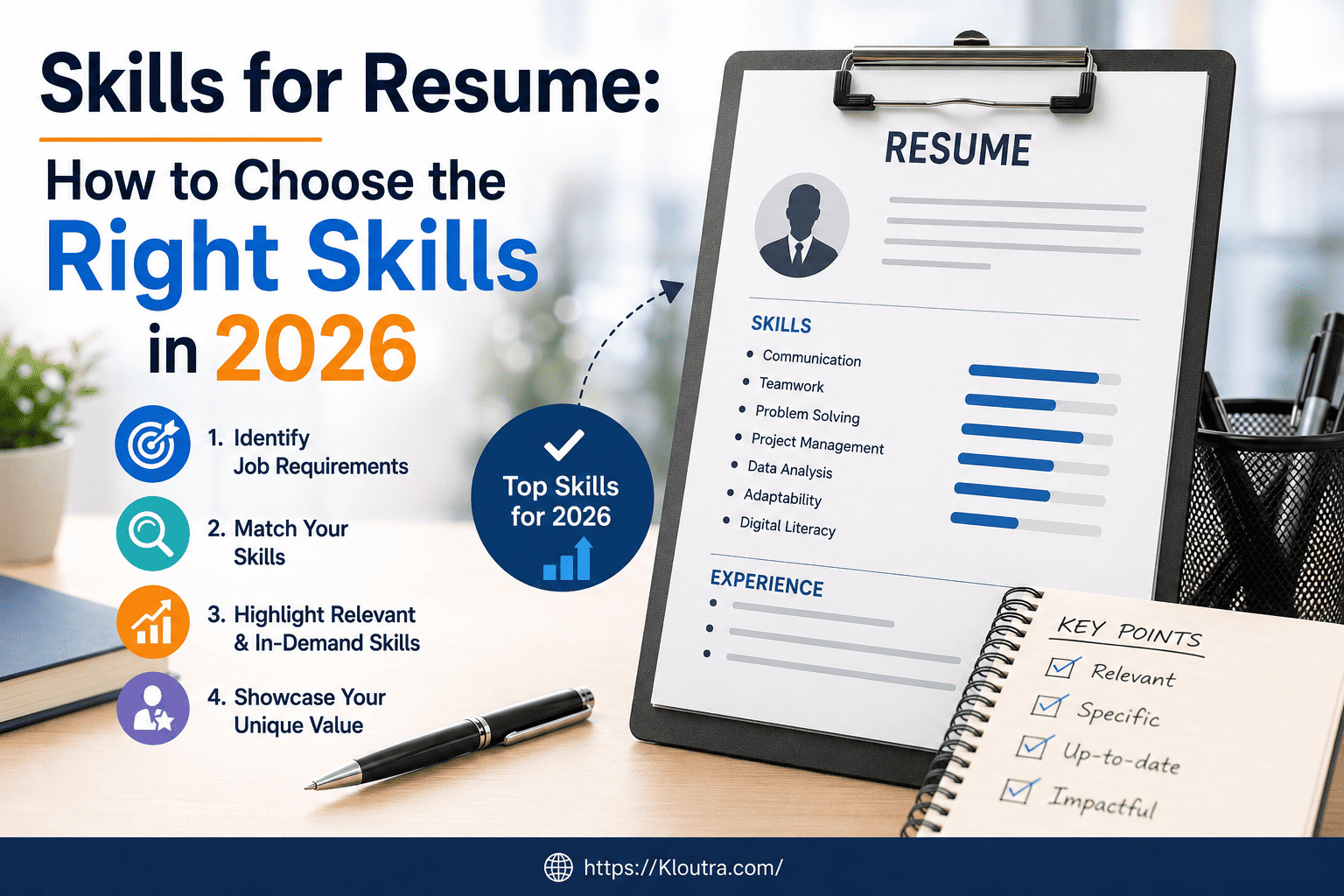
Now let’s get practical. Below is a simple process for figuring out which skills to put on a resume for any job you are applying to.
Step 1: Study the Job Description
First, highlight every skill word mentioned in the posting. This step gives you your first clue about what the employer values most.
Step 2: Match Your Real Experience
Next, go through your work history, school projects, and even volunteer work. Note where you actually used those highlighted skills.
Step 3: Be Honest About What You Can Prove
Never list a skill you cannot explain or demonstrate in an interview. Otherwise, if you say “advanced Excel” but freeze when asked about pivot tables, that gap will show fast.
Step 4: Prioritize Quality Over Quantity
Generally, a list of 8 to 12 relevant skills works better than a wall of 30 random ones. So, focus on what matters most for that specific role.
How to List Skills on a Resume
Where and how you place your skills matters just as much as which ones you choose. Unfortunately, a cluttered list is easy to skip over.
Choosing the Right Format
Most resumes benefit from a dedicated skills section near the top third of the page. This section should stay short and scannable, not full of long sentences.
If you are wondering how to list skills on a resume clearly, try grouping them into categories like “Technical Skills” and “Soft Skills.” As a result, a hiring manager can scan your list in just a few seconds.
Weaving Skills Into Your Work Experience
Do not stop at the skills section, though. Mention key skills again inside your job descriptions, tied to real results.
For example, instead of just listing “leadership,” write “Led a team of 5 to complete a project two weeks ahead of schedule.” This approach proves the skill instead of just naming it.
Resume Skills Examples by Job Type
Seeing real resume skills examples can make this whole process much clearer. Here are a few samples across different fields.
For a Marketing Role
- SEO and content strategy
- Social media management
- Google Analytics
- Copywriting
- Team collaboration
For a Customer Service Role
- Conflict resolution
- Active listening
- CRM software (like Zendesk or Salesforce)
- Multitasking
- Patience under pressure
For an Entry-Level or Student Resume
- Time management
- Basic Microsoft Office skills
- Adaptability
- Willingness to learn
- Group project experience
Even without much work history, students can still pull strong professional skills for resume sections from school projects, internships, and part-time jobs.
Common Mistakes to Avoid
A few small errors can weaken an otherwise strong resume. So, watch out for these.
Listing outdated software or tools nobody uses anymore makes your resume look old. Similarly, using vague words like “hardworking” without any proof behind them does not help you stand out.
Also, avoid copying an entire skills list from a website without checking if it truly fits your background. After all, employers can tell when a resume feels generic instead of personal.
FAQ
What are the top skills for resume writing in 2026?
The top skills for resume writing in 2026 include AI tool literacy, data analysis, adaptability, and strong communication. However, the exact list depends heavily on your industry and role.
How many skills should I put on a resume?
Most experts suggest listing between 8 and 12 skills. This range keeps your resume focused instead of overwhelming the reader with a long, unfocused list.
Should I include soft skills or only hard skills?
You should include both, since employers want proof you can do the job and work well with others. In short, a good resume balances hard skills for resume sections with a few key soft skills.
How do I know which skills to put on a resume for my industry?
Start by reading several job postings in your target field and noting which skills repeat the most. Usually, those repeated terms are the safest and most relevant choices.
Can I list skills I am still learning?
Yes, but be clear about your level. For example, you can add “familiar with” or “currently learning” next to a skill instead of implying full expertise you do not yet have.
Conclusion
Choosing the right skills for resume success comes down to honesty, relevance, and clarity. Study the job posting, match it to your real experience, and present it in a clean, scannable format.
Remember that hard skills prove what you can do, while soft skills show how you work with others. Together, they tell a complete story about you as a candidate.
So, take a few minutes today to update your skills section with these tips in mind. A small change here can make a real difference in getting your next interview.
Disclaimer: This article is for general guidance only and is not professional career or legal advice. Job market trends change often, so always verify current requirements with employers or official sources.