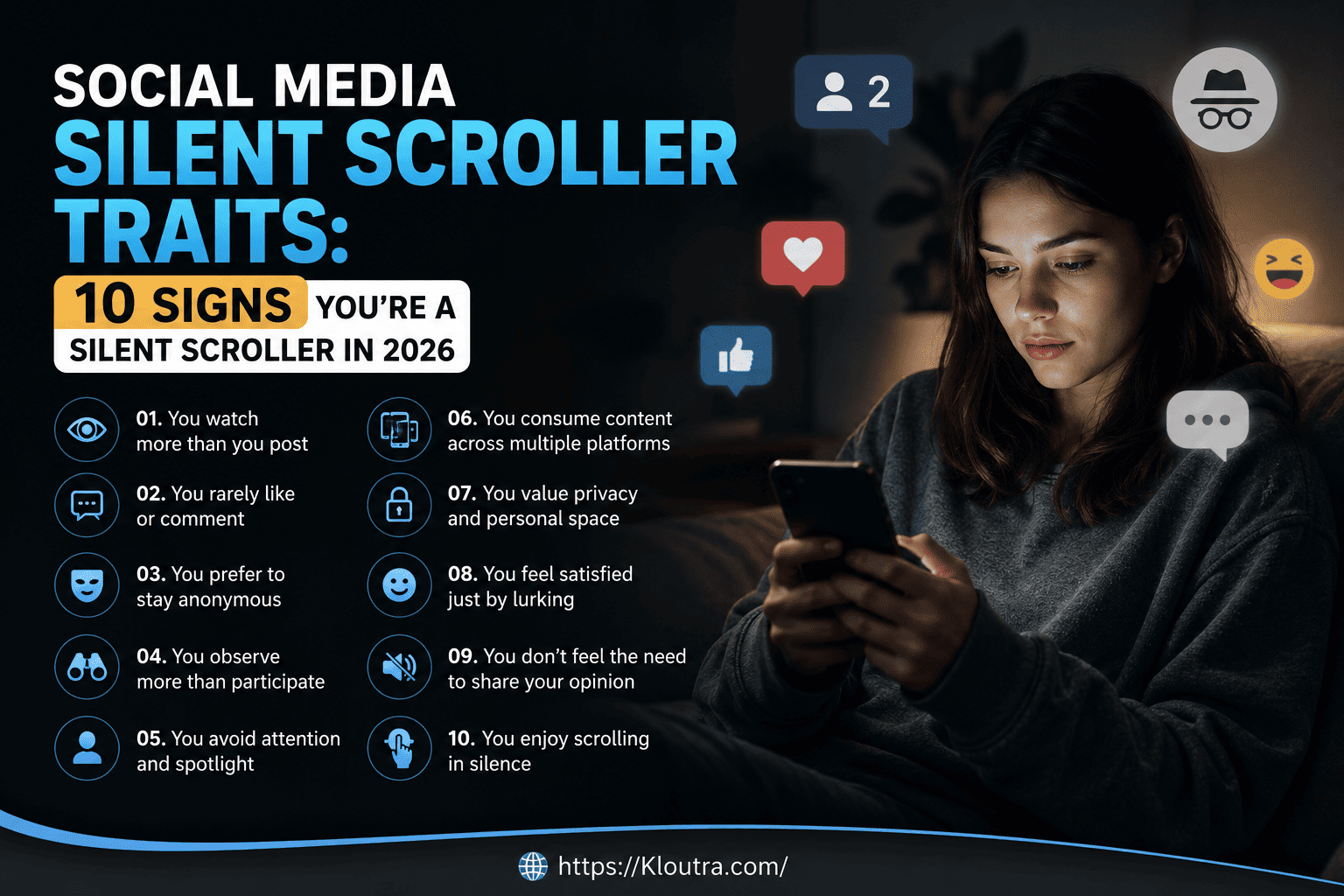
Social Media Silent Scroller Traits: 10 Signs You’re a Silent Scroller in 2026
Introduction
Ever scroll through Instagram for an hour, watch ten Stories, and laugh at a meme — then close the app without liking, commenting, or posting anything? That habit is one of the clearest social media silent scroller traits, and more people show it than you’d think.
A “silent scroller” is someone who consumes content on social media but rarely interacts with it. No likes. No comments. No posts of their own. Just watching from the sidelines.
This behavior is more common than most people think. Many social media users today spend hours scrolling but leave almost no digital footprint. In this article, we will break down what a silent scroller really is, why this happens, the pros and cons of this habit, and ten clear signs that you might be one yourself.
What Is a Silent Scroller?
A silent scroller is a person who spends time browsing social media but avoids active participation. They watch, read, and observe. However, they rarely hit like, leave a comment, or share a post.
This is different from being inactive. Silent scrollers are not away from the app. In fact, they might use it every single day. They just choose to stay invisible while doing it.
Silent Scroller Meaning in Simple Terms
Think of it like sitting in the back row of a classroom. You are present. You are listening. But you never raise your hand.
That is the silent scroller meaning in a nutshell. They are part of the audience, not part of the conversation.
Silent Scroller vs Social Media Lurker: Is There a Difference?
People often use these terms the same way. However, there is a small difference worth knowing.
The term “lurker” comes from early internet forums and chat rooms. A social media lurker meaning usually points to someone who reads posts or watches discussions without ever posting themselves.
A silent scroller is basically the modern version of a lurker, but on platforms like Instagram, TikTok, and X. The behavior is the same. Only the setting has changed, moving from forums to feeds.
This is not just a casual observation, either. Researchers at the Nielsen Norman Group have studied this pattern for years and found that in most online communities, a small share of users create almost all the content while the large majority only observe, a pattern often called the 90-9-1 rule. Silent scrollers are the modern, feed-based version of that same “majority who watch.”
Why Silent Scroller Behavior Has Become So Common
Social media platforms were built for sharing. Yet, over the years, more users have shifted toward quiet consumption. There are a few real reasons behind this shift.
1. Privacy Concerns
Many people worry about who sees their likes and comments. As a result, they scroll quietly instead of engaging publicly.
2. Content Overload
Feeds today are packed with videos, ads, and posts. With so much content, users often skim instead of stopping to react.
3. Fear of Judgment
Some users hesitate to comment because they worry about how others will respond. Staying silent feels safer.
4. Passive Entertainment Habits
Short-form video content, like Reels and TikToks, is designed for fast, passive watching. This naturally reduces the urge to engage.
None of these reasons are wrong or unusual. They simply explain why silent scroller behavior has grown so widely across age groups.
10 Signs You’re a Silent Scroller
Here are ten common social media silent scroller traits. You may relate to just one, or you may see yourself in all ten.
1. You Scroll for Hours but Rarely Like Anything
You can watch dozens of posts in one sitting. However, you rarely tap the like button, even when you enjoy the content.
2. You Read Comments More Than You Post Them
You often scroll through the comment section for entertainment. But typing your own comment feels unnecessary or uncomfortable.
3. You Watch Stories Without Reacting
You view almost every Story in your feed. Still, you skip past them without sending a reply or emoji.
4. You Rarely Post Original Content
Your profile might have very few posts, or none at all. You prefer to watch other people’s lives instead of sharing your own.
5. You Screenshot Instead of Sharing
When you find something funny or interesting, you take a screenshot. Then you send it privately instead of sharing it publicly.
6. You Follow Many Accounts but Interact with Few
Your following list may be long. However, you only truly engage with one or two close friends’ posts, if any at all.
7. You Avoid Public Opinions Online
You have thoughts on trending topics. Yet, you keep those opinions to yourself instead of posting them.
8. You Check Notifications but Rarely Trigger Them
You look at your notifications often. But you rarely do anything that would create a notification for someone else.
9. You Feel More Comfortable Watching Than Participating
Group chats, live videos, and comment threads feel more enjoyable to observe than to join. This is one of the most common silent scroller traits among younger users too.
10. You Use Social Media as Entertainment, Not Connection
For you, social media feels more like watching TV than talking to people. You consume it, but you rarely use it to build conversations.
Advantages and Disadvantages of Being a Silent Scroller
Silent scrolling is not simply good or bad. Like most habits, it comes with real trade-offs. Here is a fair look at both sides.
Advantages
- Lower stress and less pressure. You are not worried about how your posts will be judged or how many likes you will get.
- More privacy. Your opinions, photos, and activity stay off the public radar.
- Less time wasted crafting posts. You get to enjoy content without spending time writing captions or replies.
- Reduced comparison. You are less likely to fall into the trap of comparing your life to a curated highlight reel, since you are not chasing engagement yourself.
- Freedom to explore. You can follow niche topics or people without anyone tracking your interests through likes or comments.
Disadvantages
- Missed connections. Friends and family may not know you saw their post, which can make relationships feel one-sided.
- Reduced visibility. If you run a business page or personal brand, silent scrolling habits (not engaging with others) can limit your own reach and growth.
- Feeling left out. Since you rarely take part in conversations, you might feel disconnected from ongoing discussions or trends.
- Missed opportunities. Silence online can mean missed networking chances, especially on professional platforms.
- Possible isolation. If silent scrolling replaces real interaction entirely, it can add to feelings of loneliness over time.
Is Being a Silent Scroller a Bad Thing?
Not at all. Silent scroller behavior is not harmful by itself. Many people use social media this way simply because it fits their personality.
However, it is worth noticing if this habit is linked to something deeper, like social anxiety or a fear of being judged online. If scrolling silently replaces real connection completely, that might be worth reflecting on.
For most people, though, being a quiet observer online is just a normal part of modern social media user behavior. If you want to go deeper into how people behave differently across platforms, our guide on social media marketing covers how brands read and respond to these kinds of audience patterns.
How to Balance Silent Scrolling With Real Engagement
If you want to interact a bit more without feeling pressured, small steps work best.
- Start with one comment a day on a friend’s post.
- React to Stories with a simple emoji instead of a full reply.
- Share a post privately with one friend instead of posting publicly.
- Set a weekly goal, like posting once a week instead of daily.
These small habits can slowly shift your online behavior, without forcing you out of your comfort zone. If you manage Stories or engagement for a brand rather than a personal account, our Snaplytics review breaks down tools that help track this kind of silent audience activity.
FAQs About Silent Scroller Traits
What is a silent scroller?
A silent scroller is someone who browses social media often but rarely likes, comments, or posts. They consume content quietly instead of interacting with it publicly.
What is the silent scroller meaning on platforms like TikTok or Instagram?
On these platforms, it means watching videos or Stories without leaving a like, comment, or reply. The person stays active as a viewer but invisible as a participant.
Is silent scrolling the same as being a social media lurker?
Yes, largely. The social media lurker meaning and silent scroller meaning both describe people who observe online activity without engaging publicly. The term “silent scroller” is simply the newer, feed-based version of “lurker.”
Why do people show silent scroller behavior instead of engaging?
Common reasons include privacy concerns, fear of judgment, content overload, and comfort with passive watching. It is usually a personal habit, not a sign of something wrong.
Can silent scrolling affect mental health?
For most people, it is harmless and even relaxing. However, if it replaces real social connection entirely, it may be worth checking in on your overall online habits and wellbeing.
Conclusion
Silent scrolling is one of the most common patterns in social media user behavior today. If you noticed several social media silent scroller traits in this list, you are far from alone.
Many people prefer to watch quietly instead of posting loudly, and that is perfectly normal. However, if you ever want to feel more connected, small steps like one comment or one reaction a day can make a real difference.
Take a moment today. Try leaving just one comment on a post you enjoy. You might be surprised how it feels to step out of the silent scroll.
Disclaimer: This Social Media Silent Scroller Traits article is for general information only and is not professional or medical advice.

Related Posts

Inbound Marketing for Financial Services

Mobile App Development Tips for Beginners