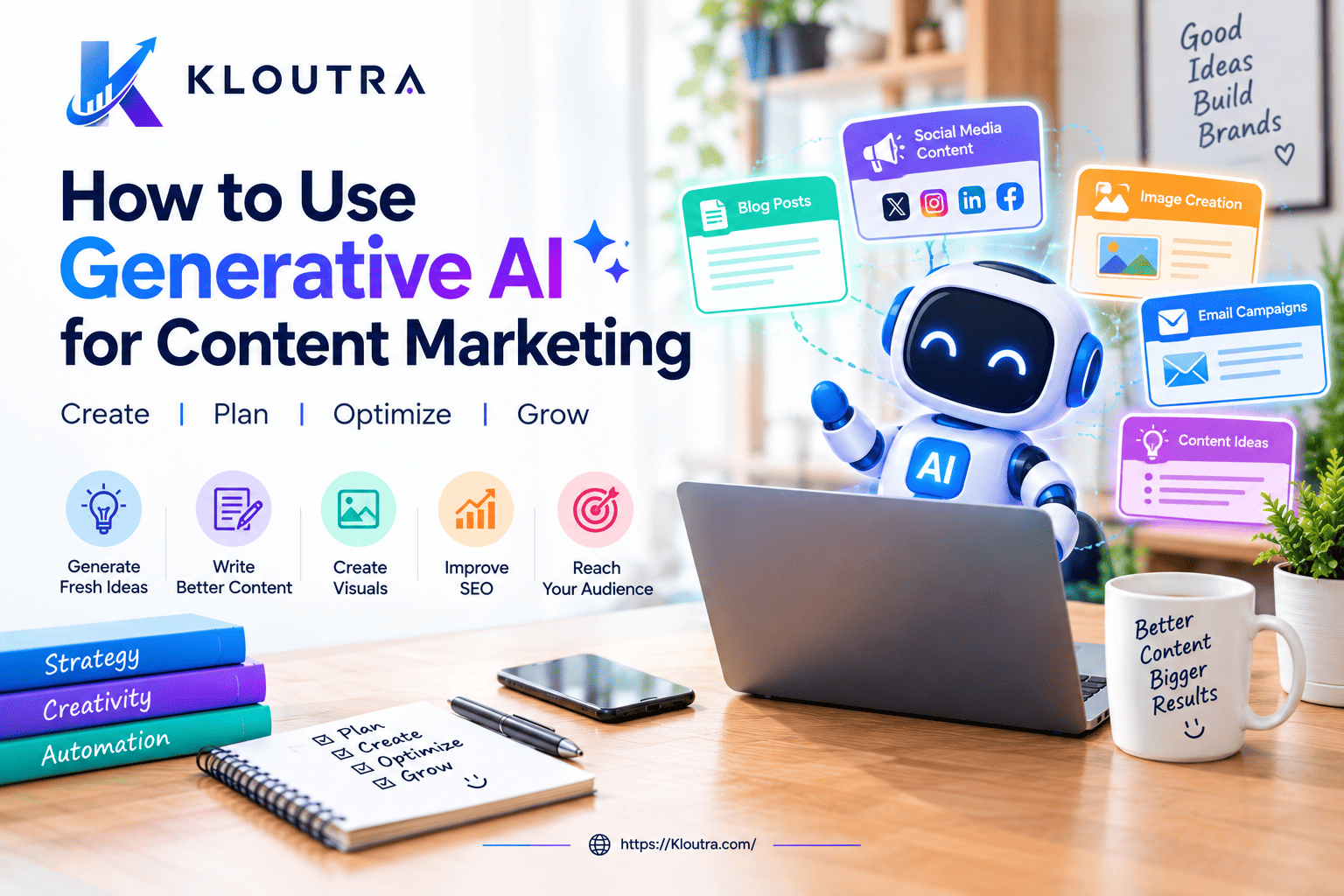
How to Use Generative AI for Content Marketing Workflow
Content marketing used to mean long nights, endless brainstorming, and a blinking cursor on a blank page. Today, things look different. A well-built generative AI for content marketing workflow has become one of the most talked-about ways for marketers to create more content, faster, without burning out their team.
But here’s the catch: using AI well is not as simple as typing a question and hitting “publish.” If you want a workflow that actually ranks, converts, and sounds like your brand, you need a plan.
In this guide, we’ll break down what a generative AI content marketing workflow really means, how to build one step by step, its real advantages and disadvantages, and how to avoid the common mistakes that make AI content feel flat, generic, or untrustworthy.
What Is a Generative AI Content Marketing Workflow?
Generative AI refers to tools that create new content — text, images, video, or audio — based on the prompts you give them. Tools like ChatGPT, Claude, and Gemini are common examples.
A generative AI content marketing workflow is simply the repeatable process a team follows to use these tools well — from brainstorming blog topics and drafting outlines, to writing first drafts, editing copy, and repurposing one article into ten different formats. Without a workflow, AI use stays random and inconsistent. With one, it becomes a reliable system your whole team can follow.
It’s important to understand one thing early on: AI is a production partner, not a replacement for your marketing team. The best results come from combining AI’s speed with human judgment, brand knowledge, and real expertise — the same qualities search engines look for when they evaluate content quality.
Why This Matters Right Now
Marketing teams are under constant pressure to publish more content across more channels. Blogs, social posts, emails, ad copy — the list never ends.
Generative AI in content marketing helps close that gap. It won’t replace strategy or creativity, but it can take over repetitive tasks so your team can focus on the parts that actually need a human touch.
Advantages and Disadvantages of Generative AI in Content Marketing
Before you build a full workflow around AI, it helps to weigh both sides honestly. Here’s a balanced look at what generative AI content creation does well, and where it still falls short.
Advantages of Using Generative AI in Content Marketing
1. Saves time on repetitive work. Instead of staring at a blank page, AI can generate topic ideas, outlines, and rough drafts in minutes. This gives your writers a starting point instead of a dead end.
2. Helps you publish more consistently. AI tools can help you keep a steady publishing schedule by speeding up drafting and editing, which is one of the biggest challenges in content marketing.
3. Makes content repurposing easier. A single blog post can become social media captions, an email newsletter, or a short video script. AI content repurposing turns one piece of content into many, without starting from scratch each time. (If you’re working on email specifically, see how to build an email marketing strategy for a fuller framework.)
4. Supports personalization at scale. Generative AI can help tailor messaging for different audience segments, industries, or stages of the buyer journey.
5. Speeds up SEO research and structure. AI tools can suggest headings, related keywords, and content gaps based on what’s already ranking, which speeds up early planning.
Disadvantages of Using Generative AI in Content Marketing
1. Can sound generic or robotic. Without proper prompting and editing, AI content often sounds flat, repetitive, or interchangeable with content from other brands.
2. Can produce inaccurate information. AI models can state incorrect facts with full confidence, sometimes called an AI “hallucination.” Every number, date, or claim needs to be checked.
3. Overreliance can hurt brand voice. If a team leans on AI for everything, the brand’s unique perspective and original thinking can start to disappear.
4. Raises data privacy concerns. Not all AI tools handle data the same way, so confidential business or customer information should never be entered into public AI tools without checking their privacy policy first.
5. Doesn’t replace real expertise. AI can summarize what already exists online, but it cannot replace first-hand experience, original research, or subject-matter expertise — the things that build genuine trust with readers.
In short: generative AI content marketing works best as an assistant, not an author. Weighing these pros and cons before you build a workflow will save you from common mistakes later.
How to Build Your Generative AI Content Marketing Workflow (Step by Step)
Now let’s get into the practical part. Here’s a simple, repeatable workflow you can follow to use generative AI for content marketing the right way.
Step 1: Start With Strategy, Not the AI Tool
Before you open ChatGPT or any other tool, define your goal. Who is this content for? What problem are you solving? What action do you want the reader to take?
AI cannot replace this thinking. If you skip strategy, you’ll end up with content that sounds fine but doesn’t achieve anything. Mapping this out in advance, such as with a content roadmap, keeps your AI-assisted content aligned with real business goals instead of random topics.
Step 2: Use AI for Brainstorming and Ideation
This is where generative AI shines the most. Feed it your topic, audience, and goal, and ask it to generate a list of content ideas or angles.
For example, instead of asking “give me blog ideas about skincare,” try something more specific: “Our audience is busy professionals in their 30s with sensitive skin. Suggest 10 blog topics that address their main skincare concerns.”
The more context you give, the better the ideas will be. This is the core of good AI content ideation.
Step 3: Build an Outline Before Writing
Once you have a topic, ask the AI to create a structured outline with headings and subheadings. This step alone can save hours of planning time.
A good outline should include:
- A clear H1 title
- Logical H2 and H3 sections
- Key points to cover under each section
- Space for examples or data
Step 4: Draft With AI, Then Edit With Humans
Let the AI generate a first draft based on your outline. Then, have a real person review it for accuracy, tone, and brand voice.
This human-AI collaboration is the part most marketers skip — and it’s the part that matters most. Raw AI output often sounds generic until a skilled editor shapes it.
Step 5: Fact-Check Everything
AI tools can produce confident-sounding statements that are simply wrong. This is sometimes called an AI “hallucination.”
Before publishing, verify every fact, statistic, and claim. Never publish a number or date generated by AI without checking it against a reliable source.
Step 6: Optimize for SEO and Readability
Once your draft is solid, review it for search intent. Does it fully answer the question a reader typed into Google? Are your headings clear? Is the keyword used naturally, not stuffed in?
This is also the stage to check readability. Break up long paragraphs, simplify complex sentences, and make sure the content flows well when read out loud.
Step 7: Repurpose the Content
Once your main piece is published, use AI to turn it into other formats. A blog post can become:
- A LinkedIn post
- A short email
- Three or four social media captions
- A script for a short video
This step alone can multiply the value of every piece of content you create.
Generative AI for SEO and Search Visibility
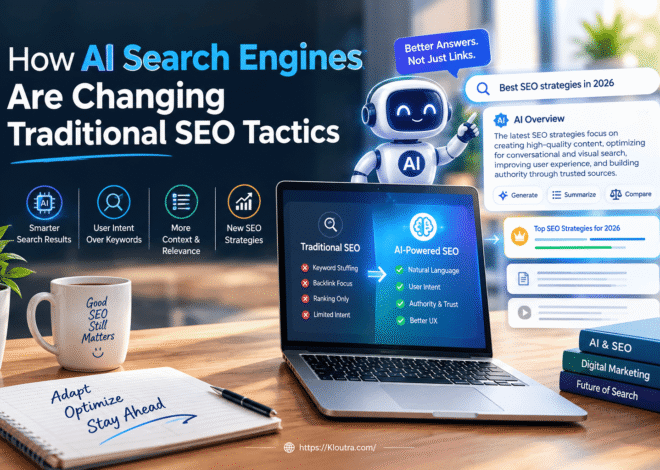
SEO is changing. It’s no longer just about ranking in traditional search results — it’s also about showing up in AI-powered answers and chat-based search tools. This is sometimes called generative engine optimization or answer engine optimization.
Here’s what still matters, AI or no AI:
- Original, helpful content. Search engines reward content that genuinely helps the reader, not content built only to rank.
- Clear structure. Well-organized headings help both readers and search engines understand your content.
- E-E-A-T signals. Experience, expertise, authoritativeness, and trust still matter. Real examples, expert input, and author credibility all help.
- Accurate, updated information. Outdated or incorrect facts hurt both your rankings and your credibility.
According to Google Search Central’s official guidance on AI-generated content, using AI to produce content is not against Google’s guidelines. What matters is whether the content is original, helpful, and demonstrates real expertise — not how it was produced. Using automation purely to manipulate rankings, however, is treated as spam.
In short: AI content SEO works when the content is genuinely useful, not just fast to produce. If you want a deeper look at optimizing for AI-driven search specifically, see this guide on AI SEO.
Best Practices for AI Content Marketing
If you want your AI content marketing efforts to actually work, keep these best practices in mind.
Train AI on Your Brand Voice
Generic prompts produce generic content. Give the AI examples of your past content, your tone guidelines, and your target audience so the output feels more like you.
Never Skip Human Review
Treat every AI draft as a rough draft, not a final product. A human editor should always check for tone, accuracy, and brand fit before anything goes live.
Be Transparent When It Matters
If your industry or audience expects disclosure about AI use, be upfront about it. Trust is hard to build and easy to lose.
Protect Sensitive Information
Avoid entering confidential business data, customer information, or unpublished financial details into public AI tools. Many of these platforms are not designed to keep such data private.
Track What’s Working
Not every AI-assisted piece will perform the same way. Keep notes on which prompts, tools, and formats deliver better results so you can refine your approach over time.
FAQ: Generative AI for Content Marketing
Does Google penalize AI-generated content?
No. Search engines do not penalize content simply because it was created with AI. What matters is whether the content is original, accurate, and genuinely useful to the reader, as confirmed in Google’s own guidance linked above.
What is the best AI tool for content marketing?
There isn’t one single “best” tool — it depends on your needs. Tools like ChatGPT and Claude work well for writing and brainstorming, while others focus on SEO research or grammar and editing.
Can generative AI replace content writers?
No. AI can speed up drafting, research, and repurposing, but it cannot replace human strategy, original expertise, or genuine creativity. The most effective teams use AI and human writers together.
How do I make AI content sound less robotic?
Give the AI detailed prompts with real examples, your brand tone, and your audience details. Then edit the draft yourself to add personality, specific examples, and a natural flow.
Is it safe to use AI for content marketing?
Generally yes, as long as you avoid entering confidential data and always fact-check the output before publishing. Treat AI as a drafting assistant, not a final authority.
Conclusion
A generative AI content marketing workflow is not about replacing your team — it’s about giving them a head start. Use it to brainstorm faster, draft quicker, and repurpose smarter, but never skip the human review that makes content trustworthy and on-brand.
Start small. Pick one part of your workflow, like outlining or repurposing, and test how AI fits in. Once you see what works, you can build a complete AI content marketing workflow that saves time without sacrificing quality.
Ready to put this into practice? Start with your next blog post: build the outline yourself, let AI help you draft it, and see the difference a thoughtful workflow makes.
Disclaimer: This guide is for general informational purposes. AI tools and search guidelines change often, so always verify current details before making business decisions.