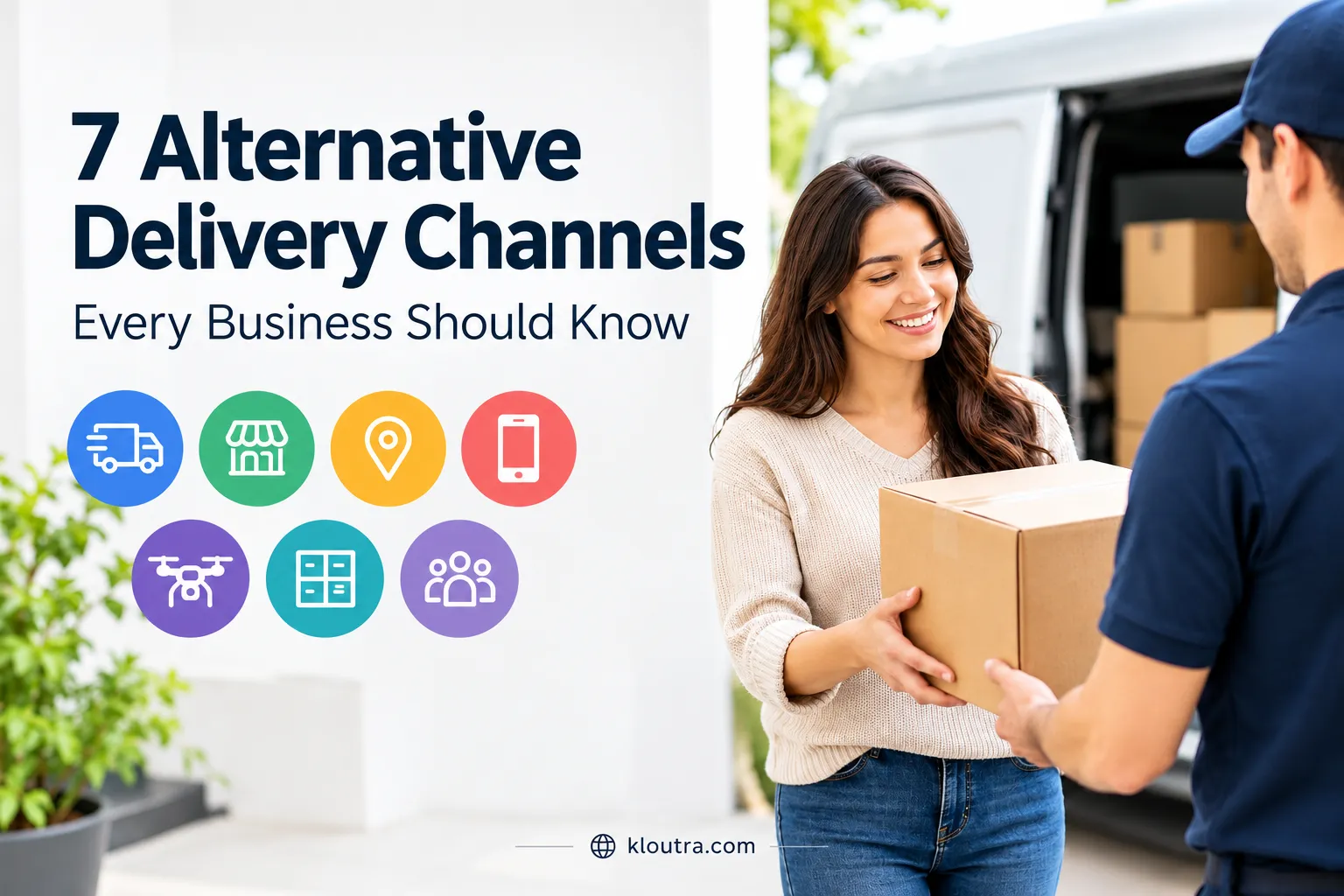
7 Alternative Delivery Channels Every Business Should Know
Traditional home delivery is no longer the only way businesses can reach their customers. Today, shoppers want more flexibility, faster service, and convenient ways to receive their orders. This has made alternative delivery channels an important part of modern business logistics.
But choosing a delivery option is not simply about sending packages faster. Businesses need to consider cost, customer preferences, delivery speed, and operational needs. Options such as click-and-collect, parcel lockers, pickup points, same-day delivery, and scheduled delivery can offer different benefits.
In this guide, we’ll explore 7 alternative delivery channels every business should know, how they work, and when each option can make sense for your business.
What Are Alternative Delivery Channels?
Alternative delivery channels are different ways businesses can deliver orders. They give customers more choice beyond standard home delivery. These options can include lockers, pickup points, stores, and alternate addresses. Customers can choose where and sometimes when they receive their orders. Businesses can use these channels to reduce missed deliveries and improve convenience. In 2026, parcel lockers and pickup locations remain important delivery options. DHL reports that 40% of businesses use lockers or parcel shops. These channels help businesses meet changing customer delivery expectations.
Why Businesses Are Moving Beyond Traditional Home Delivery
Traditional home delivery is convenient, but it does not suit every customer. Many shoppers now want more flexible delivery choices. They may prefer lockers, pickup points, stores, or different delivery times.
Delivery options can also affect whether customers complete an online purchase. DHL reports that 67% of shoppers have abandoned carts because of delivery options.
Businesses are responding by offering more ways to receive orders. These options can make delivery more convenient and reduce missed deliveries. They also help businesses meet different customer needs.
Flexible delivery is becoming more important as online shopping continues to grow. Businesses can use several delivery channels instead of relying on home delivery alone. This gives customers more control over their orders.
1. Click-and-Collect and Store Pickup
Click-and-collect lets customers order products online and collect them in-store. It is also known as buy online, pick up in-store (BOPIS). Customers choose a pickup location during checkout and select a nearby store. The business then prepares the order and sends a pickup notification.
This option gives customers more control over receiving their orders. They can avoid delivery waiting times and some shipping costs. Businesses can also reduce last-mile delivery costs through store pickup.
Store pickup can also bring online shoppers into physical stores. Some customers may browse or buy other products during pickup. Businesses need accurate stock information and clear pickup instructions. They also need simple processes for staff and customers.
2. Parcel Lockers and Automated Pickup Points
Parcel lockers give customers a secure place to collect their online orders. These lockers are often placed near homes, workplaces, stores, or public locations. Customers can collect packages when it suits their schedule. Many lockers also support pickup outside normal store hours.
The process is simple and usually uses a code or digital key. A courier places the package inside the selected locker. Customers receive a message when their order is ready. They then use the access code to collect their package.
Businesses can use lockers to group several deliveries at one location. This can make last-mile delivery more efficient. It can also reduce missed deliveries and offer customers more flexibility. DHL reports growing demand for out-of-home delivery options worldwide.
3. Crowdsourced and On-Demand Delivery
Crowdsourced delivery uses independent local drivers to deliver packages to customers. Businesses can use these drivers when regular delivery capacity becomes limited. On-demand delivery allows businesses to arrange deliveries when orders need quick service. This option can help during busy periods or sudden demand increases.
Businesses can use these services without maintaining a large delivery fleet. They can also support faster local deliveries in some areas. However, businesses should check delivery fees, coverage, and service quality first. These factors can vary between different delivery providers.
4. Same-Day and Instant Delivery
Same-day delivery means customers receive orders on the day they place them. Businesses often offer this service in selected cities or areas. Instant delivery aims to deliver orders within a much shorter time. It often works best when products are stored close to customers.
These options can help businesses serve customers who need products quickly. However, faster delivery usually needs strong local fulfillment and delivery networks. Businesses should also consider delivery costs, product availability, and customer demand. Same-day and instant delivery may not suit every location or product.
5. Scheduled and Time-Slot Delivery
Scheduled delivery lets customers choose a preferred delivery date. Time-slot delivery also lets them choose a delivery window. For example, customers can select morning or evening delivery. This gives customers better control over when orders arrive.
Businesses can plan deliveries around available routes and delivery capacity. They can also limit orders during busy delivery periods. This approach can help businesses manage operations more efficiently. It also gives customers clearer expectations and better delivery confirmation.
Scheduled delivery works well for groceries, furniture, gifts, and planned purchases. It may also suit customers who cannot receive packages anytime. Businesses should offer realistic delivery windows they can consistently meet.
6. Local Pickup Points and PUDO Networks
Local pickup points let customers collect orders from nearby locations. These locations can include shops, parcel stores, and lockers. Customers choose a pickup point instead of using their home address. They collect the package when it suits their schedule.
PUDO means Pick-Up and Drop-Off for parcels. These networks support both deliveries and returns at fixed locations. Businesses can send multiple parcels to one nearby pickup point. This can reduce repeated doorstep delivery attempts and improve delivery efficiency.
PUDO networks also give customers more delivery flexibility. They can collect packages without waiting at home for couriers. DHL reports growing demand for out-of-home delivery options worldwide.
7. Omnichannel Delivery and Ship-from-Store
Omnichannel delivery connects online orders with stores and warehouses. Businesses can fulfill orders from different locations. They can choose the location with available stock and suitable delivery options.
Ship-from-store uses store inventory to fulfill online customer orders. Store employees pick, pack, and ship products directly to customers. This can place products closer to customers and shorten delivery distances.
Businesses need accurate inventory data for this approach. They also need clear order-routing and store fulfillment processes. When managed properly, stores can support both in-store sales and online orders.
How to Choose the Right Delivery Channel for Your Business
Start by understanding what your customers expect from delivery. Consider speed, cost, convenience, and flexibility. Check your products, order sizes, and customer locations before choosing. You should also compare delivery fees, handling costs, and return expenses.
Choose options your business can manage reliably as orders increase. Test different channels and track delivery times, costs, and customer feedback. Look for channels that reduce missed deliveries and improve customer convenience. The right choice should support your customers and fit your business operations.
Alternative Delivery Channels: Pros and Cons
Alternative delivery channels give businesses more ways to serve their customers. These options include lockers, pickup points, store pickup, and scheduled delivery. They can improve convenience and reduce pressure on traditional home delivery. However, every option also has some costs and challenges.
Pros of Alternative Delivery Channels
One major benefit is greater flexibility for customers. Customers can choose where and when they receive their orders. Pickup points and lockers can help customers avoid waiting at home. They can also reduce problems caused by missed home deliveries. Research shows that alternative pickup points can improve delivery flexibility.
These channels can also help businesses manage delivery costs. Several packages can reach one pickup location together. This can reduce the number of individual doorstep stops. Parcel lockers can support this model by grouping deliveries at one location.
Alternative channels can also support faster delivery in some areas. Businesses can use local stores as fulfillment locations. They can offer same-day or scheduled delivery where demand supports it. This gives businesses more ways to match customer expectations.
Another benefit is better delivery coverage. Businesses can work with pickup networks across different areas. Customers can then choose locations that suit their daily routines. This can be useful for people who are rarely home.
Alternative channels can also support returns and exchanges. Some pickup locations accept returned products from customers. This can make the return process easier for both sides.
Cons of Alternative Delivery Channels
These delivery options also create new challenges for businesses. Pickup networks require suitable locations and reliable operating systems. Businesses may also need partnerships with stores or logistics providers.
Customers must usually travel to lockers or pickup points themselves. This may reduce convenience for some customers. Heavy or oversized products may also work poorly with lockers. Some locker systems have limits on parcel size and weight.
Businesses also need accurate inventory and delivery information. Poor coordination can create delays or unavailable pickup options. Staff must understand how each delivery method works. Customers also need clear instructions for collecting their orders.
Costs can also vary between delivery channels. A cheaper delivery method may need more customer effort. Faster options can also require stronger local delivery networks. Businesses should compare total costs before choosing an option.
Overall, alternative delivery channels offer useful benefits for modern businesses. They can improve flexibility, reduce failed deliveries, and support better delivery planning. However, businesses should choose options that fit their products and customers. The best approach often combines several delivery channels instead of one.
How Delivery Options Can Improve Customer Experience
Flexible delivery options make online shopping easier for customers. People have different schedules, locations, and delivery needs. Giving them more choices lets them choose what works best. Options can include home delivery, pickup points, lockers, and scheduled delivery.
Clear tracking also makes customers feel more confident about their orders. Delivery updates help customers know when their package will arrive. Customers can also change delivery dates when plans change. These options can reduce missed deliveries and make delivery less stressful.
Easy returns can make the overall shopping experience even better. Customers value simple ways to return products they do not want. Pickup points and lockers can offer convenient return choices. When delivery and returns feel simple, customers can trust the business more.
The Future of Alternative Delivery Channels in 2026 and Beyond
Alternative delivery channels will become more flexible in the coming years. Customers want delivery options that fit their daily routines. Out-of-home delivery is already growing across many markets. Nearly three in ten shoppers use out-of-home delivery locations today.
Parcel lockers and pickup points will likely become more common. They give customers more control over when they collect orders. Businesses can also use them to reduce failed delivery attempts. Nearly one-quarter of global businesses plan pickup point investments.
Technology will also shape how businesses manage alternative delivery channels. AI can help businesses plan routes and manage changing demand. Real-time data can also improve delivery updates and customer communication. Recent logistics trends show stronger use of AI and connected systems.
Faster delivery will continue to matter for some customers and products. Instant delivery is already changing shopping habits in some markets. However, speed will not be the only priority for businesses. Cost, reliability, convenience, and sustainability will also remain important.
Sustainability will also influence future delivery choices. More businesses will look for cleaner delivery methods and better route planning. DHL reports growing demand for greener logistics from shoppers. This could increase interest in shared delivery networks and pickup locations.
Overall, businesses will need more than one delivery option. Different customers will want different speeds, locations, and collection methods. Companies that offer useful choices can create a smoother shopping experience. The future will focus on flexible, connected, and customer-friendly delivery.
Frequently Asked Questions
What are alternative delivery channels?
Alternative delivery channels give customers more ways to receive their orders. Examples include lockers, pickup points, store pickup, and scheduled delivery.
Why are alternative delivery channels important?
They give customers more flexibility and control over their deliveries. They can also reduce missed deliveries and improve the shopping experience.
Are parcel lockers becoming more popular?
Yes, parcel lockers are becoming more common in many markets. They offer convenient pickup without requiring customers to stay home.
Do customers prefer home delivery or pickup options?
Home delivery remains the most common choice for many shoppers. However, out-of-home delivery continues to grow across global markets.
Can alternative delivery channels reduce delivery costs?
They can reduce costs by grouping several orders at one location. The actual savings depend on volume, location, and delivery network efficiency.
How do alternative delivery channels improve customer experience?
They let customers choose delivery methods that fit their daily routines. This can make deliveries easier, clearer, and more convenient.
Will AI change alternative delivery channels?
AI can help businesses improve routing, planning, and delivery decisions. Logistics companies are already using AI for operational improvements.
What should businesses consider before choosing a delivery channel?
Businesses should consider cost, speed, product size, and customer preferences. They should also check their delivery network and operational capacity.
What is the future of alternative delivery channels?
Future delivery will likely offer more choice and flexible pickup options. Businesses will also use technology to improve speed and delivery planning.
What is the cheapest alternative to home delivery?
Pickup points are often one of the cheapest delivery alternatives. They let carriers deliver many parcels to one location. This reduces the number of individual doorstep stops.
Parcel lockers can also lower delivery costs through grouped deliveries. However, costs depend on location, parcel volume, and network setup. Businesses should compare total costs before choosing an option.
How does crowdsourced delivery work?
Crowdsourced delivery connects businesses with independent drivers through online platforms. Drivers use their own cars, bikes, or other vehicles.
The business sends the order to the platform. The platform finds an available driver nearby. The driver accepts the order, collects the package, and delivers it.
This model helps businesses manage local and same-day deliveries. It can also provide extra delivery support during busy periods.
Which delivery channel is best for small businesses?
Pickup points can suit small businesses with limited delivery budgets. They group orders and reduce individual delivery stops.
Local couriers also work well for businesses serving nearby customers. The best option depends on cost, speed, location, and customer needs. Offering two delivery options can give customers more flexibility.
Final Thoughts
Alternative delivery channels give businesses more ways to serve their customers. They can offer pickup points, parcel lockers, scheduled delivery, or local delivery. Each option can suit different products, locations, and customer needs. These choices can also make deliveries easier and more convenient.
Businesses should choose delivery channels based on costs and customer preferences. Flexible options can help reduce missed deliveries and improve the overall experience. Offering more than one option gives customers greater control over their orders. As online shopping grows, flexible delivery will become even more important.
Disclaimer
The information in this article is provided for general informational purposes only. Delivery costs, services, availability, and customer preferences may vary by business and location. Always check with your delivery provider before making business decisions based on this information.