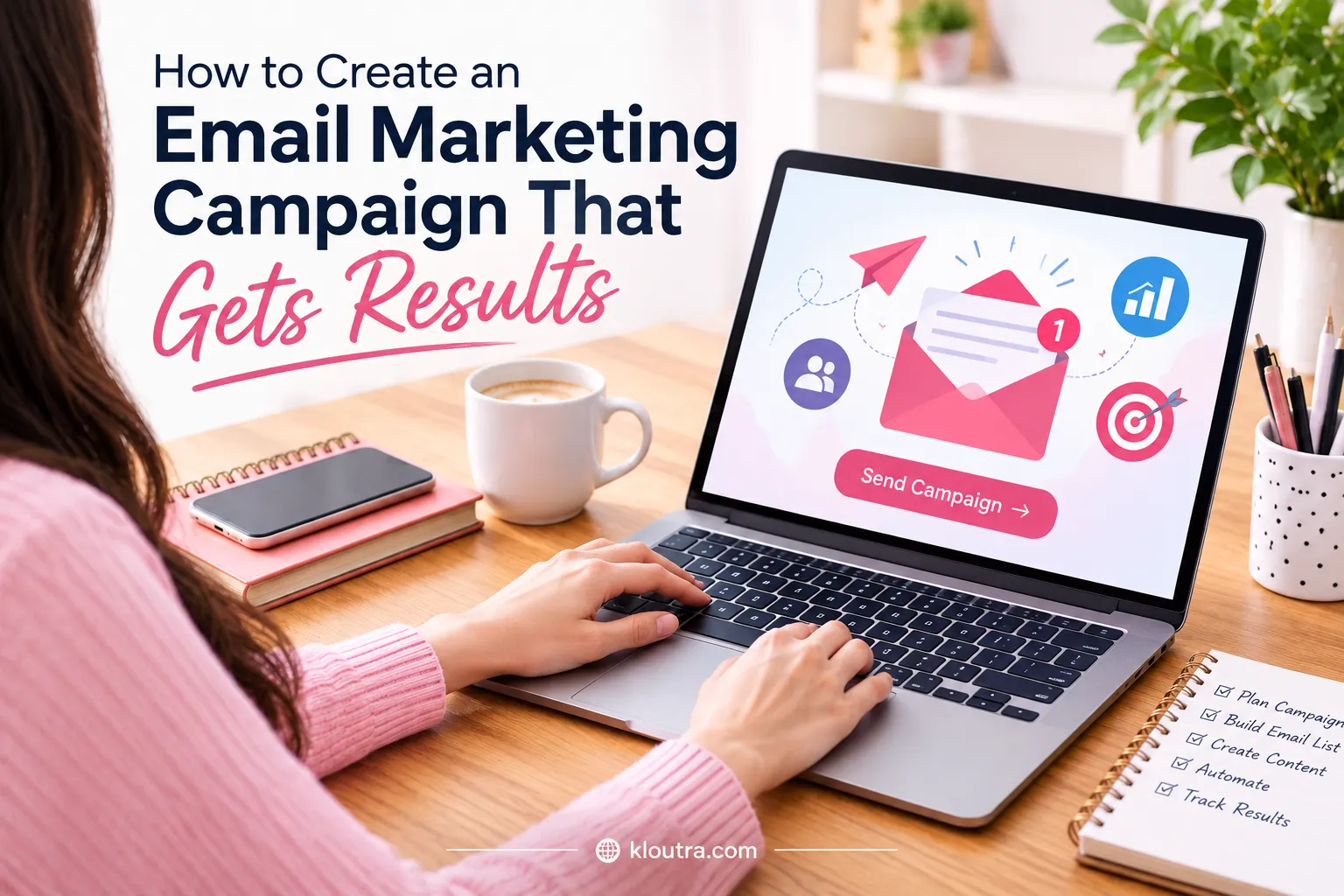
How to Build an Email Marketing Strategy That Gets Results
Your inbox is probably full right now. So is everyone else’s.That’s exactly why most emails get ignored, deleted, or sent straight to spam. If you want your messages to actually get opened and clicked, you need a real email marketing strategy — not just a random newsletter sent once a month. In this guide, you’ll learn how to build an email campaign strategy that brings real results, step by step, without the confusing jargon.
Whether you’re a small business owner, a student learning digital marketing, or a professional trying to grow an audience, this article will walk you through the process in plain, simple language.
What Is an Email Marketing Strategy?
An email marketing strategy is a plan for how you’ll use email to reach your audience, build trust, and get them to take action. That action could be buying a product, signing up for a webinar, or simply reading your latest blog post.
Think of it like planning a road trip. You wouldn’t just drive without a destination. Similarly, sending emails without an email marketing strategy usually leads nowhere — low open rates, no clicks, and wasted effort.
A good strategy answers three simple questions:
- Who are you emailing?
- What do you want them to do?
- How will you measure if it worked?
What Makes a Good Email Marketing Campaign?
Not every email is a “campaign.” A campaign is a series of emails working together toward one goal, not just a single message sent once.
A good email marketing campaign has a few things in common, no matter the industry:
- A clear goal – Every email pushes the reader toward one action, like buying, clicking, or replying.
- The right audience – The email goes to people who actually care about the message, not your whole list at once.
- A strong subject line – It gets opened because it feels personal or useful, not spammy.
- Simple, focused content – One idea per email, explained clearly, without extra noise.
- A clear next step – One button or link that tells the reader exactly what to do next.
- Something to measure – A way to check if it actually worked, like opens, clicks, or sales.
If your campaign is missing even one of these, results usually suffer. For example, a beautifully designed email with no clear call-to-action often gets read and forgotten, simply because the reader doesn’t know what to do next.
How Email Campaigns Fit Into Your Marketing Strategy
Email doesn’t work alone. It’s one piece of a bigger marketing puzzle that usually includes social media, your website, and sometimes ads.
Here’s a simple way to think about it: social media and ads often bring people to you for the first time. Email is what keeps them close after that first visit, since it lands directly in a place people check daily.
For example, someone might find your business through an Instagram post, visit your website, and sign up for your email list. From there, email becomes the tool that nurtures them — sharing tips, offers, and updates — until they’re ready to buy.
This is why your email marketing strategy should never sit in isolation. It should connect to what you’re doing on social media, your blog, and even customer support, so the message feels consistent everywhere.
Advantages and Disadvantages of an Email Marketing Strategy
Like any marketing tool, email comes with real trade-offs. Weighing both sides honestly helps you set expectations before you commit time and budget to it.
Advantages of Email Marketing
- You own the channel. No platform can shut it down, change its algorithm, or take your subscribers away from you, unlike a social media following.
- Cost-effective. Sending an email costs far less than most paid advertising, especially once your list is already built.
- Highly measurable. Open rates, click rates, and conversions show you exactly what’s working and what needs to change.
- Personalization at scale. You can tailor messages based on what someone bought, clicked, or browsed before.
- Direct access. Your message lands in the inbox instead of competing with ads and other posts in a crowded feed.
- Builds long-term relationships. Regular, useful emails keep your brand in a subscriber’s mind and support loyalty over time.
Disadvantages of Email Marketing
- Takes time to grow. Building a quality, permission-based list doesn’t happen overnight, and shortcuts usually backfire.
- Deliverability isn’t guaranteed. Even permission-based emails can land in spam folders if your sending habits or content trigger spam filters.
- List decay. People change jobs, switch addresses, or lose interest, so lists naturally shrink without regular maintenance.
- Compliance responsibility. You’re legally required to manage consent and honor opt-outs under rules like GDPR or CAN-SPAM, which takes ongoing attention.
- Risk of over-emailing. Sending too often, or sending irrelevant content, can push subscribers to unsubscribe or simply stop opening your emails.
None of these downsides cancel out the benefits. They’re simply things to plan for as part of a realistic email marketing strategy, not reasons to avoid building one.
Types of Email Marketing Campaigns
Not all emails serve the same purpose. Knowing the different types helps you plan a more complete email campaign strategy instead of sending random messages. Below are the main categories you’ll come across, along with when to use each one.
Newsletter Campaigns
These are regular emails, often weekly or monthly, sharing updates, tips, or news. They keep your brand fresh in the reader’s mind without asking for anything in return every time. Newsletters work best when they give real value, not just a list of your own promotions.
Promotional Campaigns
These emails focus on a specific offer, sale, or discount. They usually include a clear deadline to create gentle urgency, along with one strong call-to-action button. Promotional emails work well in small doses — too many, and subscribers start tuning them out.
Automated (Triggered) Campaigns
These emails send automatically based on a person’s action. A welcome email after sign-up or a reminder after an abandoned cart are common examples. Once set up, they run in the background without extra work, which makes them one of the most efficient types to build early. If you’re comparing tools for setting these up, our marketing automation coverage looks at platforms built for exactly this kind of work.
Transactional Campaigns
These are emails tied directly to an action someone already took, like an order confirmation, a shipping update, or a password reset. They’re not usually thought of as “marketing,” but they get opened at very high rates, which makes them a good spot to add a small extra tip or related product suggestion.
Drip (Nurture) Campaigns
A drip campaign is a set sequence of emails sent over days or weeks, usually to guide someone from “just curious” to “ready to buy.” For example, a new subscriber might get an introduction email on day one, a helpful tip on day three, and a soft offer on day seven. This slowly builds trust instead of asking for a sale right away.
Re-Engagement (Win-Back) Campaigns
These target subscribers who used to open your emails but have gone quiet. A simple “we miss you” message, sometimes paired with a small incentive, can bring some of them back. If they still don’t respond after a couple of attempts, it’s usually better to remove them from your list.
Milestone and Anniversary Campaigns
These emails celebrate a specific date, like a customer’s sign-up anniversary or birthday. They feel personal because they’re tied to the individual, not a general sale, and they often include a small reward like a discount code.
Curated Content Campaigns
Instead of writing everything yourself, these emails collect useful links, articles, or resources — your own or from other trusted sources — into one helpful roundup. They work well for brands trying to be seen as a helpful voice in their industry, not just a seller. Our content marketing section covers how to plan and write content people actually want to read.
Types of Manual Email Campaigns
Manual campaigns need a human to write and send them each time, unlike automated ones that run on their own. They’re more work, but they allow for timely, personal messages. Common manual campaigns include:
- One-time announcements – Product launches, event invites, or company news
- Seasonal campaigns – Holiday offers or seasonal tips tied to a specific time of year
- Personal check-in emails – Reaching out to a specific group with a direct, human tone
- Survey or feedback emails – Asking customers directly about their experience
- Apology or correction emails – Addressing a mistake, like a pricing error or delayed shipment, in an honest and direct way
Manual campaigns take more effort, but they often feel more genuine since they’re written for a specific moment, not a general trigger.
How to Build Your First Email Campaign (Step by Step)
Now that you understand the types, here’s how to actually build one from scratch.
Step 1: Define Your Goal First
Every successful email campaign strategy starts with a clear goal. Without one, you’re just sending words into the void.
Common goals include getting more sales, growing website traffic, building trust with new subscribers, or re-engaging customers who haven’t bought in a while. Pick one goal per campaign, and let it guide every decision after this point.
Step 2: Build (and Clean) Your Email List
Your email list is the foundation of everything. However, a big list of uninterested people is worse than a small list of engaged ones.
Never buy email lists. It sounds tempting, but it damages your sender reputation and often breaks email marketing laws like the CAN-SPAM Act in the US or GDPR in Europe. Instead, grow your list through a sign-up form on your website, a free resource offered in exchange for an email, or social media links directing people to subscribe. If you want a deeper look at how permission-based lists actually work, our guide on what a mailing list is covers the basics in plain language.
Every few months, remove subscribers who haven’t opened your emails in a long time. This keeps your list healthy and improves overall performance.
Step 3: Segment Your Audience
Not everyone on your list wants the same thing. A new subscriber and a loyal customer of five years shouldn’t get the exact same email.
Simple segments to start with include new subscribers versus long-time subscribers, past buyers versus people who never purchased, and people who clicked your last email versus those who ignored it. This small change alone often boosts results because the content feels relevant, not generic.
Step 4: Write the Email Itself
This is where most of the real work happens. Even the smartest email marketing strategy fails if the email itself is boring or confusing.
Your subject line works like a book cover — it decides whether someone opens the email at all. Keep it short, honest, and curiosity-driven, and avoid words that scream “spam.”
Inside the email, write like you’re talking to one person, not a crowd. Stick to one main message, and always include one clear call-to-action, since too many buttons or links confuse readers.
Step 5: Choose the Right Timing and Frequency
Sending too many emails annoys people. Sending too few makes them forget you exist. Most brands find a healthy rhythm somewhere between one email per week and two per month, adjusting based on how subscribers respond.
Watch your unsubscribe rate closely. If it spikes after a certain type of email or frequency, that’s useful feedback worth listening to.
Step 6: Test, Measure, and Optimize
You can’t improve what you don’t measure. Email campaign optimization means using real data to make better decisions over time, instead of guessing.
Track your open rate, click-through rate, conversion rate, and unsubscribe rate. Benchmarks vary a lot by industry, so a large platform’s published benchmark data is a more useful comparison point than a single fixed number. Then run A/B tests, changing one element at a time — like the subject line or the call-to-action wording — so you know exactly what made the difference.
Best Email Marketing Campaign Examples by Category
Seeing real categories of email campaign ideas makes it easier to plan your own. Here are ten reliable examples, grouped by what they’re meant to achieve.
For welcoming new subscribers:
- Welcome email series – Introduce your brand and set expectations right after sign-up.
- “Getting started” guide email – Help new subscribers use your product or service quickly.
For driving sales: 3. Abandoned cart reminder – Gently remind shoppers about items left behind. 4. Limited-time offer email – Create urgency around a sale with a clear deadline. 5. Product recommendation email – Suggest items based on past browsing or purchases.
For building trust: 6. Educational tips email – Share one useful, practical tip related to your product or industry. 7. Customer story or testimonial email – Show real results from real people.
For keeping subscribers engaged: 8. Newsletter roundup – Share recent blog posts, updates, or news in one simple email. 9. Re-engagement email – Reach out to inactive subscribers with a simple “we miss you” message.
For gathering feedback: 10. Survey or feedback request – Ask customers directly what they think, and use it to improve.
You don’t need to use all ten at once. Start with two or three that match your current goal, then expand as you learn what your audience responds to.
Common Mistakes to Avoid in Email Marketing
Even with a solid plan, a few small mistakes can quietly hurt your results. Here are the ones worth watching for.
Sending without a mobile-friendly design. Many people check email on their phones, not a computer. If your email looks broken or hard to read on a small screen, most readers will simply delete it.
Using a “no-reply” email address. This tells subscribers you don’t actually want to hear from them. Using a real address, even one monitored by a small team, feels more human and can improve trust.
Ignoring your unsubscribe list. Continuing to email people who’ve opted out isn’t just annoying — it can also break email laws in many countries. Always respect unsubscribe requests immediately.
Focusing only on selling. If every single email pushes a sale, subscribers start to feel used rather than valued. Mixing in helpful, non-salesy content keeps the relationship healthy.
Skipping the test send. A broken link or a typo in the subject line can undo hours of work. Always send a test email to yourself before sending it to your full list.
FAQ: Email Marketing Strategy Questions Answered
How often should I send marketing emails?
There’s no universal number, but most businesses send somewhere between weekly and twice a month. Pay attention to your open and unsubscribe rates, and adjust based on how your specific audience responds.
What is a good open rate for email marketing?
Open rates vary widely by industry, so there’s no single “good” number that applies everywhere. Instead of comparing yourself to outside benchmarks, track your own emails over time and aim to improve gradually.
Do I need expensive software to start email marketing?
No. Many email marketing platforms offer free plans for small lists, which is enough to test your email marketing strategy before investing in paid tools. As your list grows, you can upgrade to features like automation and advanced segmentation.
How do I avoid my emails going to spam?
Avoid spammy words, don’t buy email lists, and always give people an easy way to unsubscribe. Additionally, ask subscribers to add your email to their contacts, which signals to email providers that your messages are wanted.
What’s the difference between manual and automated email campaigns?
Manual campaigns are written and sent by a person each time, while automated campaigns trigger on their own based on a subscriber’s action, like signing up or abandoning a cart. Most businesses use a mix of both for the best results.
Conclusion: Start Small, Stay Consistent
Building a strong email marketing strategy doesn’t happen overnight, and that’s okay. Start with a clear goal, grow your list the right way, and write emails that feel like they’re written for one real person.
From there, keep testing, keep measuring, and let the data guide your next move. Small, consistent improvements to your email campaign strategy add up over time, often leading to far better results than one perfect campaign ever could.
If you’re ready to put this into action, start by picking one campaign type from this guide and sending it this week.
Disclaimer: This article is for general informational purposes only and isn’t legal or financial advice. Email marketing laws such as CAN-SPAM and GDPR, along with typical open rates and platform features, can change over time, so confirm current requirements and numbers with an official source or professional before launching a campaign.