What Is a Scheme Management App? A Complete Guide
What Is a Scheme Management App?
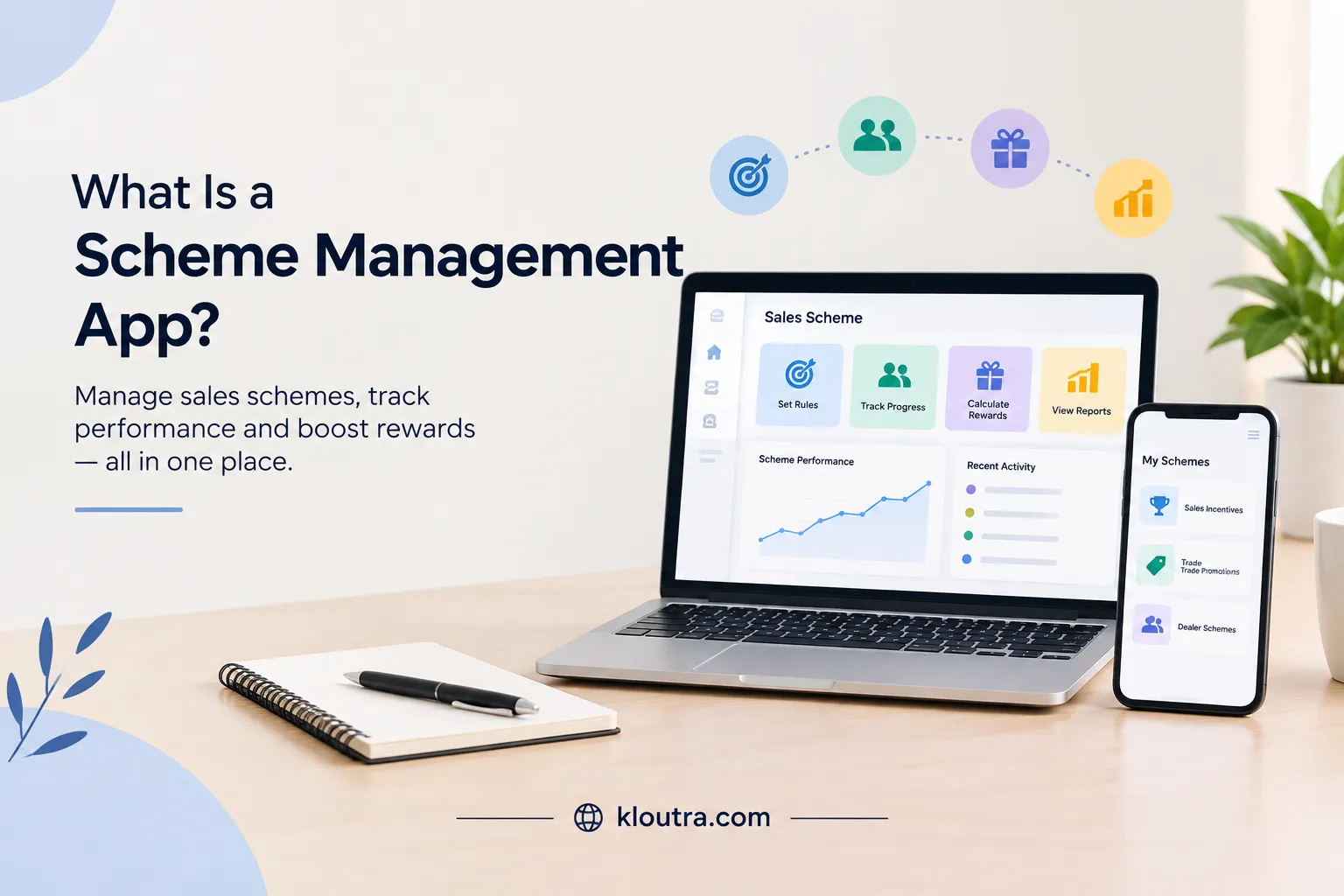
A scheme management app helps businesses create, manage, and track sales schemes. These schemes can include incentives, rebates, discounts, and rewards.
Businesses can set scheme rules, eligibility requirements, targets, and time periods. The app then helps track performance against those rules.
How Does a Scheme Management App Work?
First, a business creates a scheme and defines its rules. The app then applies those rules to relevant sales data. It can calculate incentives or rebates when targets or conditions are met. Teams can also track scheme performance and manage claims from one system.
What Is a Scheme Management App Used For?
A scheme management app helps businesses manage different sales and promotional programs. Businesses commonly use these apps across sales and distribution channels.
Sales Incentives and Rewards
Businesses use schemes to reward sales teams and channel partners. Rewards can depend on sales volume, targets, or other measurable results. The app tracks progress and calculates eligible incentives based on set rules.
Businesses can also manage different targets and reward levels within one system.
Trade Schemes and Promotions
Companies use trade schemes to offer discounts, free goods, or promotional incentives. These schemes can depend on products, quantities, stores, territories, or dates.
A scheme management app can apply these rules during sales transactions. It can also track scheme performance and promotional results over time.
Dealer and Distributor Schemes
Manufacturers and brands often run schemes for dealers and distributors. These may include volume incentives, rebates, discounts, and target-based rewards.
The app can track eligibility, claims, incentives, and settlement details.
Key Features of a Scheme Management App
A scheme management app brings scheme setup, tracking, calculations, and reporting together. Modern platforms also support claims, approvals, settlements, and audit records.
Scheme Creation and Rule Configuration
Businesses can create schemes with specific rules and conditions. These rules can include targets, products, dates, slabs, and reward amounts. Some platforms let teams change rules without developer support.
Eligibility and Scheme Mapping
The app determines which partners or sales teams qualify. Businesses can assign schemes to specific products, users, dealers, or distribution levels. This helps apply the right scheme to the right participants.
Automated Incentive Calculations
The system calculates incentives using the configured scheme rules. It can handle targets, slabs, percentages, bonuses, and other reward structures.
Claims and Settlement Management
Some platforms validate claims against sales or transaction data. They can also support approval workflows and settlement processes. This creates a clearer record from claim submission to final payment.
Real-Time Scheme Tracking
Businesses can monitor scheme progress as new sales data arrives. Partners may also see their current targets, achievements, or reward levels. Real-time tracking helps teams understand performance during active schemes.
Reports and Performance Analytics
Reporting tools show scheme performance, costs, payouts, and partner activity. Dashboards can help teams compare results across products, territories, or partners.
Audit Trails and Data Validation
Modern systems can record scheme changes, approvals, claims, and payout history. Data validation can also detect duplicate or invalid transactions. These records help teams review decisions and resolve disputes.
Benefits of Using a Scheme Management App
A scheme management app helps businesses manage sales schemes with less manual work. It also improves visibility, calculations, tracking, and reporting across sales teams.
Reduces Manual Scheme Management
The app automates many tasks involved in managing sales schemes. Teams spend less time maintaining spreadsheets and checking calculations manually. This reduces administrative work and keeps scheme data organized.
Improves Calculation Accuracy
This reduces errors caused by manual calculations and spreadsheet updates. Businesses can also maintain clearer records of payouts and adjustments.
Helps Track Scheme Performance
These reports can show participation, payouts, sales results, and other metrics. Teams can use this information to review scheme performance more easily.
Scheme Management App vs. Excel
| Feature | Scheme Management App | Excel |
|---|---|---|
| Scheme Setup | Uses configured rules for different schemes. | Teams create and maintain rules manually. |
| Incentive Calculations | Automates calculations based on scheme rules. | Users often manage formulas and calculations manually. |
| Scheme Tracking | Provides centralized tracking and performance visibility. | Users track progress across spreadsheets and files. |
| Data Management | Keeps scheme information in one system. | Data can become spread across multiple workbooks. |
| Updates | Changes can apply through configured system rules. | Users must update relevant sheets and formulas. |
| Reporting | Provides dashboards and reports for scheme performance. | Users usually create reports from spreadsheet data. |
| Claims Management | Can support claim validation, approvals, and settlements. | Claims usually require separate manual tracking. |
| Scalability | Supports structured management as scheme volume grows. | Larger and more complex workbooks become harder to manage. |
| Audit Trail | Can record changes, approvals, and transaction history. | Tracking changes depends on Excel features and user practices. |
A scheme management app is designed specifically for structured scheme processes. Excel can still work for simpler schemes with limited data and users.
How to Choose a Scheme Management App
Choosing a scheme management app depends on your business needs and daily processes. Focus on features that solve your actual scheme management requirements. Avoid choosing software based only on the number of available features.
Check Scheme and Incentive Features
Make sure the app supports the scheme types your business uses. Check for targets, slabs, rebates, discounts, rewards, and incentive rules.
The system should let you create different rules for different schemes. It should also support eligibility conditions and changing scheme requirements. This gives your team more control over scheme management.
Look for Integrations
Check whether the app connects with your existing business systems. Common integrations include ERP, CRM, accounting, and distribution systems.
Good integrations help transfer sales data without repeated manual entry. They can also keep customer, product, and transaction data connected.
Review Reporting and Analytics
Choose an app with clear dashboards and useful performance reports. Reports should help you track sales, targets, payouts, claims, and incentives.
Look for filters that help teams review specific products or partners. Detailed reports can also help identify scheme results and spending patterns.
Check Security and Scalability
Review user permissions and access controls before choosing the software. Check whether the platform provides audit records and protects business data.
Scalability also matters when your business handles more schemes and transactions. The app should support growing users, data volumes, and business requirements.
Frequently Asked Questions
What is a scheme management app?
A scheme management app helps businesses create, manage, and track sales schemes. It can handle incentives, rebates, discounts, targets, claims, and settlements.
Businesses can manage these activities from one central system.
Who uses scheme management software?
Manufacturers, brands, distributors, and sales teams commonly use this software. It can also support dealer and retailer incentive programs. The exact users depend on how each business manages its sales channels.
Can a scheme management app calculate incentives automatically?
Yes, many scheme management apps can calculate incentives automatically. The system applies configured rules, targets, slabs, and reward conditions.
Can it manage dealer and distributor schemes?
Yes, many platforms support dealer and distributor scheme management. They can track eligibility, sales performance, claims, incentives, and settlements. Some systems also provide partner access to scheme and performance information.
Can scheme management software integrate with ERP systems?
Yes, many platforms can integrate with ERP and distribution systems. These integrations can bring sales and transaction data into the scheme system. The available integrations depend on the software and its API capabilities.
Final Thoughts
A scheme management app helps businesses manage sales schemes more efficiently. It can handle rules, incentives, claims, settlements, and performance tracking. The right software can reduce manual work and improve calculation accuracy. It can also give teams clearer visibility into scheme performance.
Kloutra’s Suggestion To Read
- What Is an Application Acceleration Manager? A Simple 2026 Guide
- Kogniz Contact Tracing 2026: Features, Benefits & How It Works
Disclaimer
This article is for general informational purposes only. Software features, integrations, pricing, and capabilities can vary by provider. Always review the official product details before choosing a scheme management app for your business.