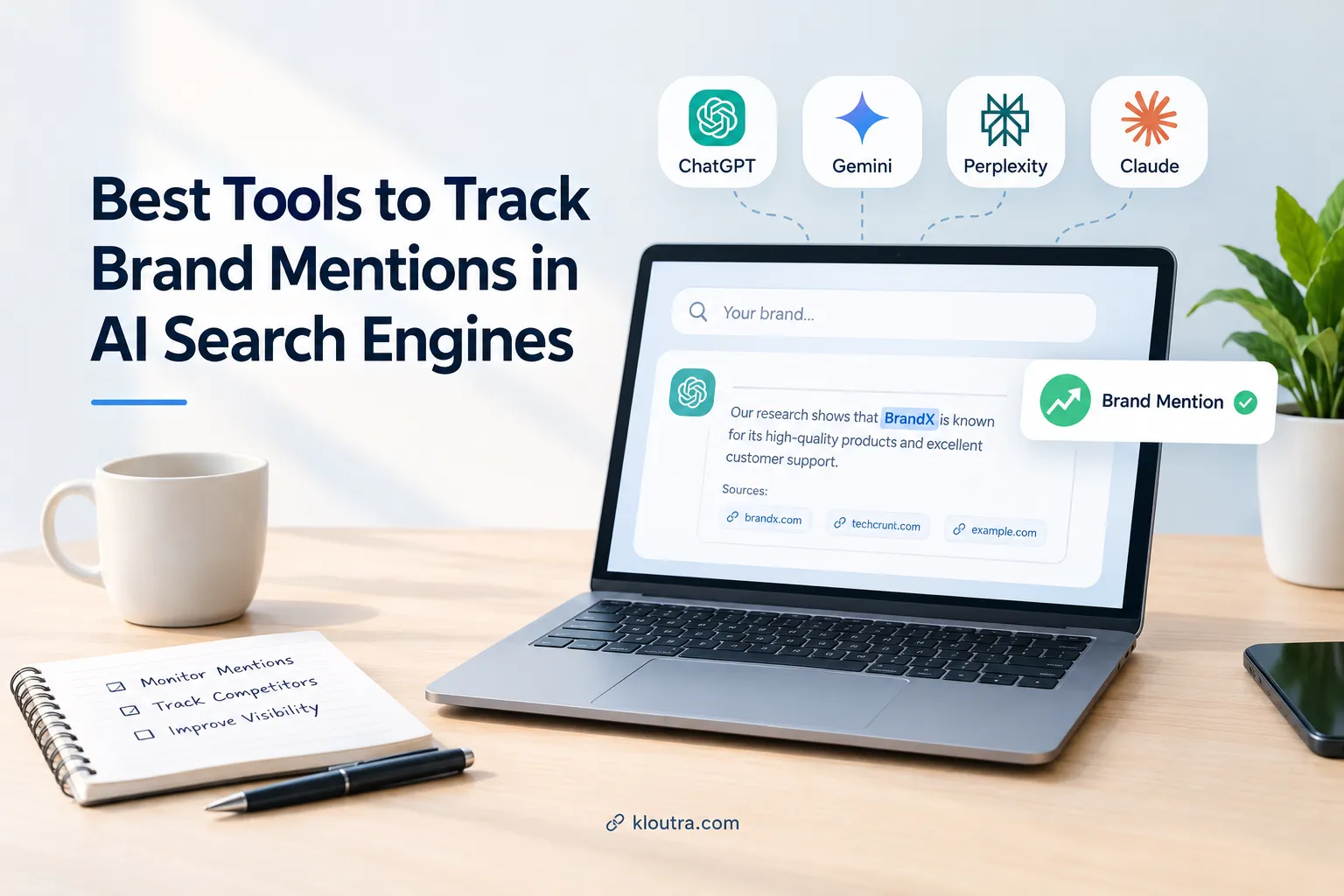
Best Tools to Track Brand Mentions in AI Search Engines
Introduction
AI search engines are changing how people discover brands, products, and services. Many people now use ChatGPT, Gemini, and Perplexity to find answers. Your brand may appear in these answers without earning a website click.
Tracking these mentions helps you see how AI platforms describe your business, which competitors they mention, and which sources they use for their answers. Specialized tools make it easier to monitor these changes over time. This guide covers the best tools, their key features, and how to choose one for your needs.
How Do AI Brand Monitoring Tools Work?
These tools show how AI platforms answer questions about brands. You start by adding your brand name, competitors, and related search questions. The tool then runs queries across supported AI platforms.
It tracks when your brand appears in AI answers. Some tools also show the websites AI uses as sources and compare your brand with competitors. You can check the results in reports and dashboards. Most tools run checks regularly to show changes in your brand’s visibility. Since AI answers can change, the results may not always be the same. Tracking different questions helps you see how your brand appears across various topics.
7 Best Tools to Track Brand Mentions in AI Search Engines
AI visibility tools help businesses track how AI platforms talk about their brands. They also show which competitors are mentioned, which sources AI uses, and how brand visibility changes over time.
1. Profound
Profound helps businesses understand how AI platforms talk about their brands. Its Answer Engine Insights tracks brand mentions, visibility, and sentiment in AI-generated answers. It also identifies sources that AI platforms use when creating responses. Teams can compare their visibility with competitors and review changes over time.
Profound also offers prompt monitoring and recommendations to guide optimization work. It suits brands that need detailed AI search research and reporting.
2. Otterly.AI
Otterly.AI tracks brand visibility across seven major AI search experiences. These include ChatGPT, Google AI Overviews, Google AI Mode, Gemini, Perplexity, Copilot, and Claude. It monitors brand mentions and identifies websites cited in AI answers. Its reports also compare competitors and track visibility changes. Content audits help teams find opportunities to improve their website content. Otterly.AI suits marketers who want monitoring and practical optimization guidance.
3. Peec AI
Peec AI focuses on measuring brand performance across AI search platforms. It tracks three key metrics: visibility, position, and sentiment. Visibility shows how often AI answers mention your brand. Position indicates where your brand appears in those answers.
Sentiment helps you understand whether AI describes your brand positively or negatively. You can also compare competitors and review frequently cited sources. Peec AI suits marketing teams that want clear performance data.
4. Ahrefs Brand Radar
Ahrefs Brand Radar helps you research how brands appear in AI-generated answers. Its AI Visibility Index searches a large database of search-backed prompts. You can compare brands, explore mentions, and identify frequently cited pages. The tool also offers Custom Prompts for tracking specific buyer questions. Ahrefs connects AI visibility research with SEO and content research. This makes it useful for teams already working with Ahrefs.
Official website: https://ahrefs.com/brand-radar
5. Semrush AI Visibility Toolkit
Semrush AI Visibility Toolkit helps businesses measure their presence in AI search. Its Visibility Overview provides an AI Visibility Score and performance trends. You can examine brand mentions, cited pages, citations, and competitor visibility. Prompt research helps identify questions where your brand could appear. The toolkit also includes AI-focused website readiness checks. It suits marketers who want AI visibility data alongside their SEO workflows.
Official website: https://www.semrush.com/kb/1626-ai-visibility-features
6. Scrunch AI
Scrunch helps businesses monitor and improve their visibility across AI platforms. It tracks brand mentions, citations, competitors, and prompt-level performance. You can review which sources influence AI answers about your business. Its reporting also highlights changes across topics and regions. Scrunch offers AI traffic monitoring to help teams understand how AI agents visit websites. Its Agent Experience Platform also focuses on delivering website content in formats AI agents can use. It suits businesses seeking both visibility insights and website optimization.
7. SE Ranking
SE Ranking’s AI Results Tracker shows how brands appear in AI-generated search results. It covers ChatGPT, Gemini, Perplexity, Google AI Overviews, and Google AI Mode. You can monitor brand mentions, compare competitors, and examine cited sources. The tool organizes insights into rankings, competitors, and sources. SE Ranking also offers an API for teams needing structured AI visibility data. This makes it useful for SEO agencies and businesses tracking client performance.
Official website: https://seranking.com/
How to Track Brand Mentions Across AI Search Engines
Tracking brand mentions helps you understand how AI platforms present your business. Follow these steps to monitor your visibility and identify areas for improvement.
1. Choose the AI Platforms
Start by selecting the platforms your customers use most. These may include ChatGPT, Gemini, Perplexity, Claude, and Google AI search features. Platform coverage varies between monitoring tools, so check their supported services first.
2. Create a List of Relevant Prompts
Write questions your potential customers might ask AI tools. Include product comparisons, service recommendations, and questions about your industry. For example, a customer might ask, “What are the best email marketing tools?” Use questions that match your products and target audience.
3. Track Your Brand Mentions
Enter your brand name and selected prompts into a monitoring tool. The tool checks supported AI platforms and records your brand’s appearances. You can also test prompts manually and record the results in a spreadsheet. Keep your questions consistent to make comparisons more useful.
4. Check Citations and Sources
Look at the sources AI platforms provide with their answers. Record whether they cite your website or other relevant websites. These sources can help you identify content that supports your brand’s visibility. Remember, a brand mention does not always include a website citation.
5. Compare Your Brand With Competitors
Check which competitors appear alongside your brand in AI answers. Review the sources cited when competitors receive recommendations. This can reveal websites and topics worth exploring for your content strategy. However, competitor mentions alone do not explain why AI selected them.
6. Monitor Changes Over Time
Repeat your checks using the same prompts and platforms. Record changes in mentions, citations, and competitor visibility. AI answers can vary, even when you ask the same question. Regular checks help you identify trends instead of relying on one result.
7. Improve Your Content Based on Results
Use your findings to identify missing information on your website. Create helpful content that answers real customer questions clearly. Keep product details, business information, and important facts accurate. Review relevant third-party sources and update outdated pages when necessary.
How to Choose the Right Tool for Your Business
The best AI visibility tool depends on your business goals and budget. Before choosing one, compare its features, platform coverage, and reporting options.
1. Identify Your Main Goal
First, decide what you want to track. You may want to monitor brand mentions, website citations, or competitor visibility. Some businesses also need content recommendations and website audits. Choose a tool that supports your main goals.
2. Compare Pricing and Limits
Set a budget before comparing different tools. Check the number of prompts, brands, and platforms included in each plan. Also, review tracking frequency and additional charges. A cheaper plan may not cover all your needs.
3. Choose Based on Your Business Size
Small businesses may need simple tracking and clear reports. Marketing agencies may need competitor comparisons and reports for multiple clients. Larger companies often need advanced analytics, team access, and custom reporting. Choose features that match your team’s workload.
4. Test the Reporting Features
Check whether you can review the original AI answers. This makes it easier to understand the results. A single visibility score rarely tells the whole story.
5. Try the Tool Before Committing
Use a free trial or demo when the provider offers one. Test a few questions related to your business. Check whether the results provide useful and relevant information. Review the available features before paying for a subscription.
Frequently Asked Questions
Can You Track Brand Mentions in ChatGPT?
Yes, tools like Profound, Otterly.AI, and Peec AI help track brand mentions in ChatGPT. They show when your brand appears in AI-generated answers and help you understand how often people may see your brand.
Are There Free AI Brand Monitoring Tools?
Yes, some tools offer free trials or limited plans to help you monitor brand visibility. These options are useful for testing features before choosing a paid plan that fits your needs.
How Often Should You Monitor AI Search Visibility?
Monthly checks are useful for tracking long-term trends, while weekly monitoring can help you stay ahead of competitors. Regular reviews also help you identify changes in brand mentions and improve your content strategy.
Conclusion
Tracking brand mentions in AI search engines helps you understand your online visibility. These tools show when AI platforms mention your brand or competitors. They can also reveal which sources support AI-generated answers.
Review your results regularly and improve your content where needed. Focus on useful content, accurate information, and your customers’ questions.
Disclaimer:
Tool features, pricing, and AI platform coverage may change over time. Always check each tool’s official website for the latest details. AI search results can vary, and no tool guarantees brand mentions or improved visibility.