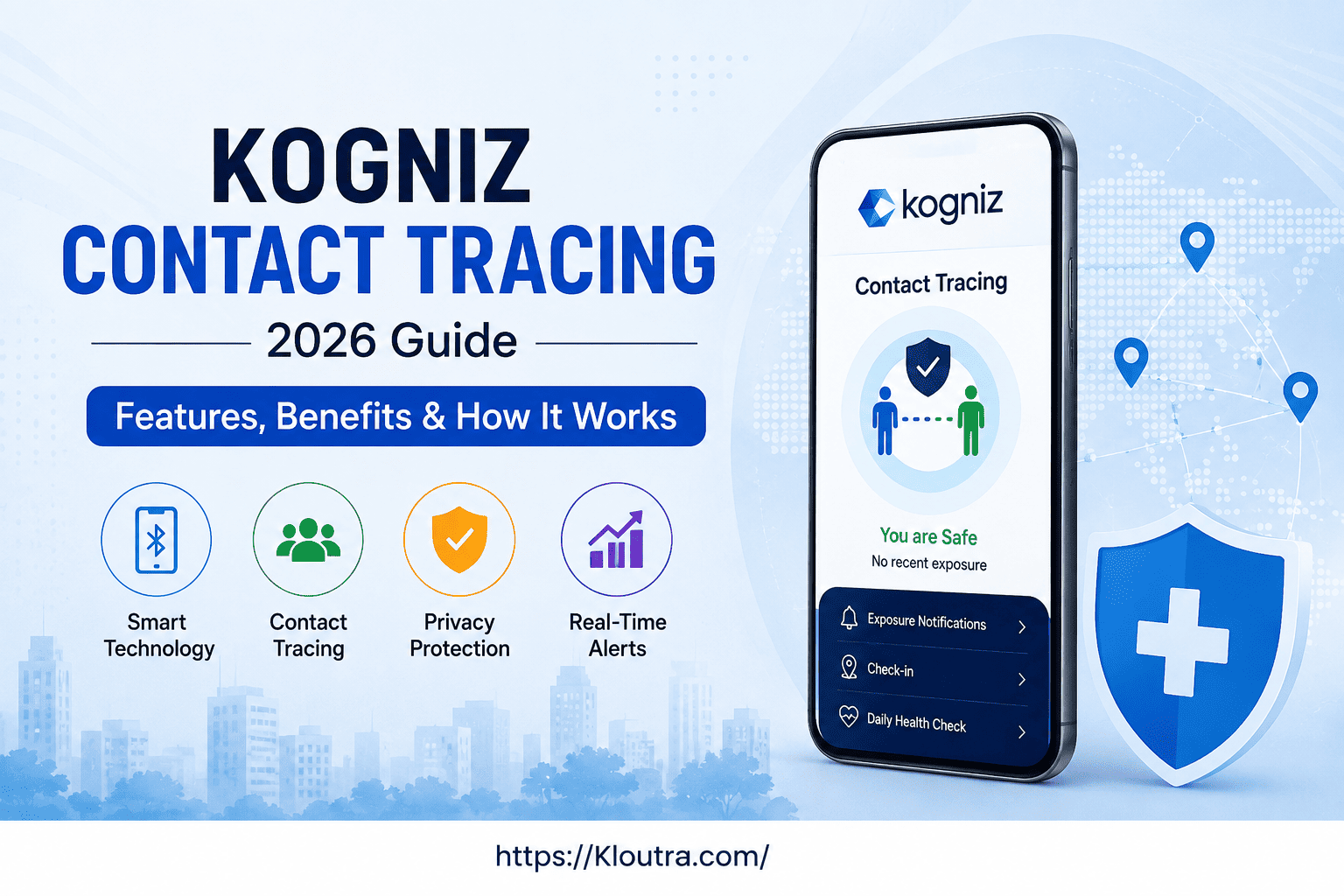
Kogniz Contact Tracing 2026: Features, Benefits & How It Works
Kogniz contact tracing is an AI-powered approach that helps workplaces identify who may have been exposed to a contagious illness. Instead of relying only on interviews and guesswork, it uses digital data — from cameras or wearable tags — to help safety teams understand where people were and who they were near.
Imagine someone at your workplace tests positive for a contagious illness. Who did they sit near? Who did they talk to in the break room? How long were they close together?
A few years ago, answering these questions could take hours of interviews. Today, Kogniz contact tracing can help provide this information much faster.
This article explains what Kogniz contact tracing is, how it works, its main features, and its real advantages and disadvantages in 2026. Whether you’re a facilities manager, an HR professional, or simply curious about digital contact tracing, you’ll find clear, fact-checked answers here.
What Is Kogniz Contact Tracing?
Kogniz is a workplace safety company that builds AI-powered tools for things like incident detection, weapon detection, and health-related monitoring. One part of its platform, Kogniz AssureAI, focuses on contact tracing. You can review Kogniz’s own description of the tool on its official contact tracing solutions page.
In simple terms, Kogniz contact tracing software helps organizations figure out who may have been exposed to someone with a confirmed or suspected illness. It does this by using either existing security cameras or small Bluetooth devices, depending on which setup a company chooses.
How This Fits Into Public Health Practice
Contact tracing itself is not a new idea — it’s a long-standing public health method used to slow the spread of infectious disease. According to the CDC’s official explainer on contact tracing, the process involves identifying, assessing, and managing people who were exposed to someone with a disease. Kogniz essentially automates parts of this traditional process using AI and sensor data.
Why Contact Tracing Still Matters in 2026
Contact tracing became a household term during the COVID-19 pandemic. However, the need for it didn’t disappear once the pandemic slowed down.
Workplaces, schools, hospitals, and event venues still deal with flu outbreaks, norovirus, and other contagious illnesses every year. For teams with limited staff, a fast and accurate way to trace exposure saves time and reduces the spread. That’s the gap Kogniz contact tracing solutions aim to fill.
How Kogniz Contact Tracing Works
Kogniz offers two main approaches to contact tracing. Understanding both helps you see how flexible the platform is.
1. Camera-Based Contact Tracing
This method uses computer vision, which is a type of AI that “reads” video footage.
Here’s the basic process:
- An employee reports a confirmed or probable case of an infectious illness.
- An authorized administrator identifies that person in the Kogniz system.
- The AI reviews footage from existing security cameras to spot who was nearby, and for how long.
- The system generates a report listing possible close contacts.
- Safety teams then notify those individuals and decide on next steps.
The advantage here is that most organizations already have security cameras installed. This often removes the need to buy new hardware, which lowers cost and speeds up setup.
2. Wearable and Gateway-Based Contact Tracing
The second method relies on physical devices instead of cameras. Kogniz offers small Bluetooth tags, sometimes shaped like a tile or a watch, that employees wear or carry.
These tags communicate with each other and with Kogniz gateways placed around a building. When two tags stay close together for a set amount of time, the system logs it as a contact event. This approach works well in spaces with limited camera coverage, such as warehouses or outdoor work sites.
Which Method Should You Choose?
- Camera-based tracing suits offices, retail stores, and buildings that already have cameras.
- Wearable-based tracing suits large facilities, factories, or job sites where cameras don’t cover every corner.
Some organizations even combine both, depending on their layout and budget.
Key Features of the Kogniz Platform
Kogniz packs several features into its contact tracing tools. Here are the ones that matter most.
AI-Powered Detection
This is the core of the camera-based system. Instead of a person scrubbing through hours of footage, the AI scans video automatically and flags proximity events. This alone can turn a task that took hours into one that takes minutes.
Real-Time Alerts
When a possible exposure event is found, Kogniz can send instant notifications through SMS or email. Speed matters here — the faster a team knows about a risk, the faster they can respond.
Centralized Dashboard
All contact tracing data lives in one dashboard. Safety teams can see reports, past cases, and trends without digging through spreadsheets or separate systems.
Customizable Reporting
Every organization has different needs. Kogniz allows teams to adjust reports based on location, time window, or department, which makes the data easier to act on.
Integration With Existing Systems
Kogniz is built to work alongside security systems and safety tools a company already uses. This reduces the friction of adopting a brand-new platform from scratch. If your organization is also evaluating how new AI tools fit into existing workflows, our guide on AI transformation and governance covers the planning side of adopting AI systems like this one.
Privacy-Conscious Controls
Because contact tracing involves tracking people’s movements, privacy is a real concern. Kogniz includes access controls so only authorized staff can view sensitive contact tracing data. For a broader look at data privacy and exposure risks tied to workplace monitoring tools, see our safety and privacy guide.
Advantages and Disadvantages of Kogniz Contact Tracing
Every tool has trade-offs. Here’s a clear, side-by-side look at what Kogniz does well and where it has limits.
Advantages
- Faster investigations. The AI pulls data directly from cameras or wearable tags instead of relying on interviews and memory.
- More accurate records. Logged proximity events tend to be more reliable than notes based on someone’s recollection.
- Lower hardware costs in many cases. The camera-based option can use security cameras a business already owns.
- Reduced manual workload. Safety teams don’t need to review hours of footage by hand.
- Better cross-team communication. A shared dashboard keeps security, HR, and facilities on the same page.
- Fits into a broader safety platform. Organizations already using Kogniz for things like mask compliance or hazard detection can add contact tracing without learning a whole new system.
Disadvantages
- Camera coverage limits accuracy. If an area has no camera coverage, the AI can’t track movement there — blind spots stay blind spots.
- Wearables add a hardware dependency. Tags need to be charged, distributed, and worn consistently to work well.
- Privacy policy still matters. Access controls help, but they don’t replace clear internal rules about who can view tracking data and why.
- Setup takes real planning. Mapping zones, configuring cameras or gateways, and training staff takes upfront time — it isn’t a same-day activation.
- Pricing and features can shift. As with most software platforms, exact costs and feature sets may change, so current details should be confirmed directly with the vendor.
Kogniz vs. Traditional Contact Tracing
| Factor | Traditional Contact Tracing | Kogniz Contact Tracing |
|---|---|---|
| Speed | Slow, relies on interviews | Fast, automated within minutes |
| Accuracy | Depends on human memory | Based on actual proximity data |
| Labor needed | High — manual review | Lower — AI handles detection |
| Hardware needed | None extra | Often uses existing cameras, or wearables |
| Documentation | Manual notes | Structured digital reports |
This comparison shows why many organizations have moved away from purely manual contact tracing solutions and toward AI-assisted contact tracing software 2026 buyers are exploring.
Frequently Asked Questions
Is Kogniz contact tracing only for COVID-19?
No. While Kogniz became popular during the pandemic, the same technology can be applied to any contagious illness situation, including flu outbreaks or norovirus cases in a workplace.
Does Kogniz need new cameras to work?
Not necessarily. The camera-based option is designed to work with security cameras a business already has, which helps lower setup costs.
How accurate is AI-based contact tracing?
Accuracy depends on factors like camera placement and coverage. In well-covered areas, the AI can identify proximity events reliably, but blind spots or poor camera angles can limit results.
Can employees opt out of wearable contact tracing tags?
Wearable and privacy policies vary by organization, since Kogniz is a business tool and each company sets its own internal rules. It’s best to check with your employer’s specific policy if this applies to you.
Is Kogniz contact tracing expensive?
Pricing depends on the size of the organization, the method chosen (camera-based versus wearables), and which features are included. Contacting Kogniz directly is the best way to get current, accurate pricing.
Conclusion
Kogniz contact tracing brings AI into a process that used to depend entirely on manual work and memory. By using either existing security cameras or Bluetooth wearables, it helps safety teams find possible exposure events faster and with more accurate records.
The platform’s mix of real-time alerts, centralized dashboards, and customizable reporting makes it a practical option for workplaces that need reliable digital contact tracing. Still, no system replaces good judgment — pairing this technology with clear privacy policies and thoughtful planning gets the best results.
If your organization is weighing contact tracing solutions for 2026, it’s worth reaching out to Kogniz directly for a demo and current pricing to see if it fits your specific setup.
Disclaimer: This article is for general information only. It is not medical, legal, or professional advice. Verify current features and pricing directly with Kogniz before making any decisions.

Related Posts
Chosenly Company Type: Services, Features & Business Model

Mobile App Development Tips for Beginners