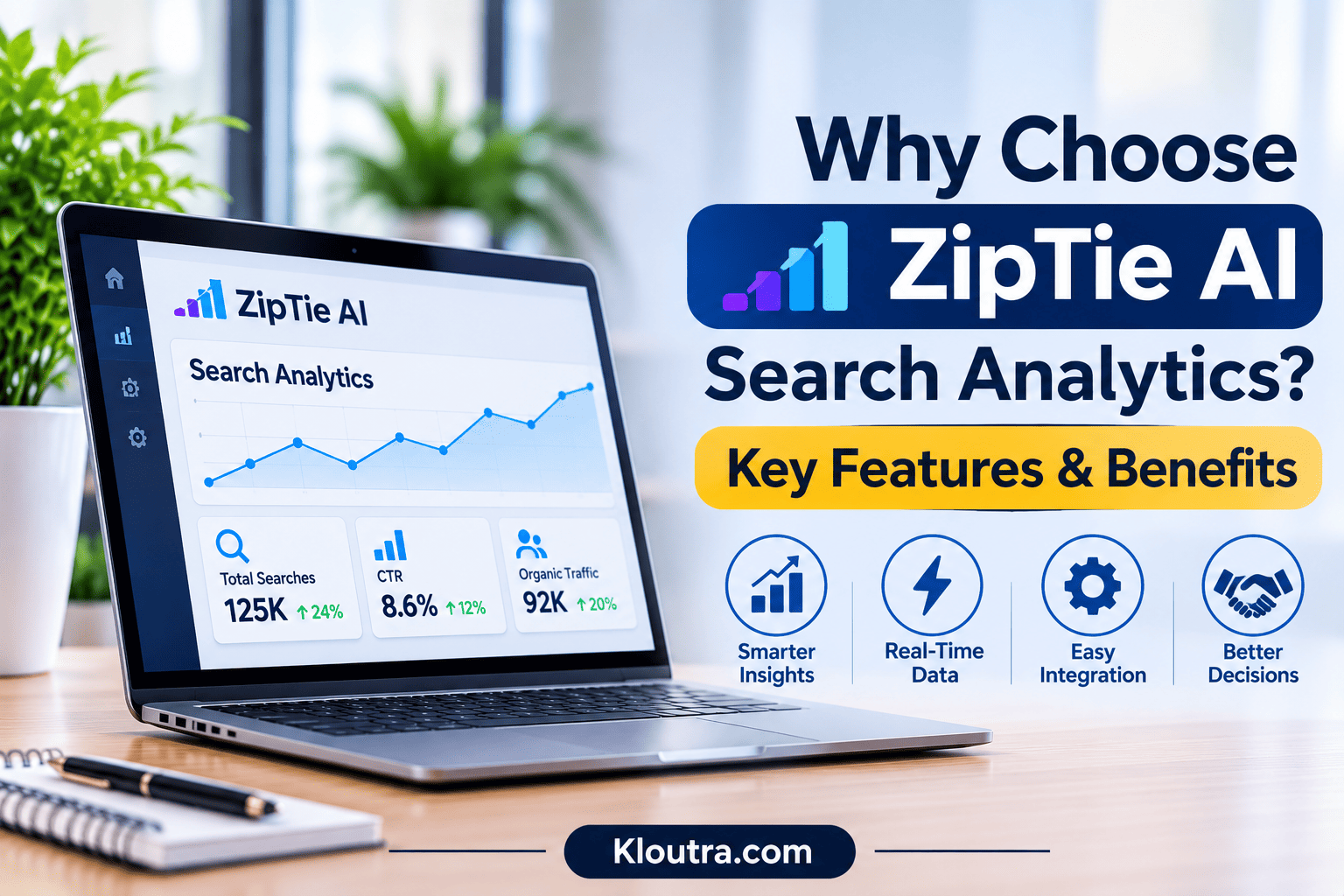
Why Choose ZipTie AI Search Analytics? Key Features & Benefits
AI search engines are changing how people discover brands and businesses. But how can you know if these platforms mention your brand? If you’re comparing AI search tracking tools, ZipTie is worth a close look. ZipTie helps track brand mentions, website citations, sentiment, and competitor activity across AI platforms.
In this guide, you’ll learn about ZipTie’s key features, benefits, limitations, and uses. You’ll also see how it compares with traditional SEO tools and whether it’s worth using.
What Is ZipTie AI Search Analytics?
ZipTie AI Search Analytics is a platform that tracks brand visibility across AI search engines. It helps businesses understand how AI tools mention and recommend their brands. The platform monitors seven AI search platforms, including ChatGPT, Google AI Overviews, and Perplexity. It also supports Google AI Mode, Microsoft Copilot, Bing AI Overview, and Google Gemini.
ZipTie tracks brand mentions, citations, and sentiment in AI-generated answers. It also shows which competitors appear in those answers. This information helps businesses understand their AI search presence. They can also find areas where their brand needs more visibility.
How Does ZipTie AI Search Analytics Work?
ZipTie works by checking how AI search engines answer selected questions. It collects these answers and studies how they mention different brands.
Here is how its process works:
Prompt Setup: Users create projects and choose relevant questions (called prompts) about their business. ZipTie can also suggest prompts through its Project Wizard.
AI Search Monitoring: The platform sends selected prompts to enabled AI search engines. Checks run daily, weekly, or monthly.
Answer Analysis: ZipTie checks whether answers mention or cite a brand. It also examines how AI describes that brand.
Performance Tracking: The platform organizes results into reports and AI Success Scores. Users can review changes across prompts and search engines.
Action Planning: Its Action Center organizes visibility gaps and suggested next steps. Users can use these findings to plan improvements.
This process helps businesses track their AI search visibility over time. They can see what changes and identify areas for improvement.
Why Choose ZipTie AI Search Analytics?
AI search is changing how people discover brands and products. Businesses need to know how AI tools describe their brands. ZipTie makes this easier by tracking brand mentions, citations, and competitors. It also helps users understand their AI search performance. Its reports show where a brand appears and where visibility is missing. This information helps businesses make better content and marketing decisions.
ZipTie is useful for SEO professionals, marketers, and business owners. It brings important AI search data together in one place. Users can then find opportunities to improve their online presence.
Key Features of ZipTie AI Search Analytics
ZipTie offers several features for tracking AI search performance. Here are its main features and how they help users.
AI Search Visibility Tracking
ZipTie tracks how often AI search engines mention your brand. It monitors platforms like ChatGPT, Perplexity, and Google AI Overviews. Users can track selected questions, also called prompts.
The platform checks how different AI engines answer those questions. It then shows where the brand appears in those answers. This helps businesses understand their visibility across AI search platforms. They can also track changes over time.
Brand Mentions and Citation Monitoring
Brand mentions and citations help measure AI search visibility. However, they show two different things. A mention means an AI answer names your brand. A citation means an AI answer links to your website.
ZipTie tracks both signals across selected prompts and AI engines. It also records the sentiment behind brand mentions. This helps users understand how AI describes their businesses.
AI Success Score
The AI Success Score gives users a quick view of performance. It uses a score ranging from 0 to 100.
ZipTie calculates this score using three main signals:
Mentions Rate: How often AI answers mention your brand.
Sentiment: How positively or negatively AI describes your brand.
Citations Rate: How often AI answers cite your website.
Users can track this score across prompts and AI engines. This makes it easier to notice changes in visibility over time.
Competitor Visibility Analysis
ZipTie helps businesses compare their AI visibility with competitors. Its Competitors module shows which brands appear in tracked answers.
Users can compare brands through mentions and citations. They can also see which websites AI engines use as sources. This information helps businesses find visibility gaps. It also shows where competitors receive more attention.
AI Search Performance Reports
ZipTie provides dashboards and reports for tracking AI search performance. Users can review important metrics in one place.
Its reports cover mentions, citations, sentiment, and competitor activity. The LLM Trends module also compares performance across AI engines.
Users can explore individual answers behind reported numbers. They can also export data into CSV, Excel, and PDF formats.
Content Optimization Recommendations
Tracking AI visibility is useful, but knowing what to improve matters too. ZipTie helps users identify gaps through its Action Center. The Action Center organizes important issues into a ranked list. For example, it can highlight missing brand mentions or lost visibility.
ZipTie also offers page audits for selected website pages. These audits suggest possible content improvements based on tracked prompts. Its optional Content Generation add-on can create content briefs and drafts. However, users must review and publish the content themselves. ZipTie does not make changes directly to your websites.
Main Benefits of Using ZipTie AI Search Analytics
ZipTie helps businesses understand their presence in AI search results. It turns AI search data into useful information. Here are its main benefits.
Understand Your AI Search Visibility
ZipTie shows how often AI search engines mention your brand. It helps you see where your business appears in AI answers. You can track visibility across supported AI platforms. This makes it easier to understand your brand’s current position. You can also monitor changes over time.
Find Content and Citation Opportunities
ZipTie helps identify prompts where your brand receives fewer mentions. It also shows when AI answers cite other websites instead. These findings can reveal useful content opportunities. You can improve existing pages or create relevant new content. This may help your website become a useful source for AI answers.
Monitor Competitors in AI Search
ZipTie lets you compare your brand with competing businesses. You can see which competitors appear in tracked AI answers. It also helps you identify websites that receive AI citations. This information shows where competitors gain more visibility. You can use these findings to improve your content strategy.
Make Better SEO Decisions
ZipTie provides data about mentions, citations, and brand sentiment. These insights help you understand your AI search performance. You can use this information to review your content strategy. It also helps you identify areas that need improvement. This supports better decisions about your SEO and marketing efforts.
ZipTie AI Search Analytics vs. Traditional SEO Tools
ZipTie and traditional SEO tools track different parts of online visibility. Traditional tools focus mainly on search engine results. They track keyword rankings, website traffic, backlinks, and technical issues.
ZipTie focuses on how AI search engines mention brands. It tracks brand mentions, website citations, and competitor visibility. Both types of tools provide useful information for SEO work.
Here is a simple comparison:
| Comparison | ZipTie AI Search Analytics | Traditional SEO Tools |
|---|---|---|
| Search Visibility Tracking | Tracks brand visibility in AI-generated answers. | Tracks website rankings in search engine results. |
| Brand Mentions | Monitors brand mentions across supported AI platforms. | May track brand mentions through separate monitoring features. |
| Citation Monitoring | Tracks website citations in AI-generated answers. | Tracks backlinks and referring domains. |
| Competitor Analysis | Compares brand mentions and citations in AI answers. | Compares keyword rankings, backlinks, and website performance. |
| Performance Measurement | Measures AI visibility, mentions, citations, and sentiment. | Measures rankings, organic traffic, backlinks, and other SEO metrics. |
Which One Should You Choose?
Choose ZipTie if you want to monitor your brand’s AI search visibility. It helps you understand how AI platforms mention and cite your website.
Choose traditional SEO tools for regular search engine optimization. They help track keyword rankings, organic traffic, backlinks, and technical issues. You can also use both tools together. This gives you a broader view of traditional and AI search performance.
Pros and Cons of ZipTie AI Search Analytics
ZipTie offers useful features for tracking AI search visibility. However, it may not suit every business or marketing team. Consider its main advantages and limitations before choosing it.
Pros
Tracks AI Search Visibility: Shows how AI platforms mention your brand.
Monitors Brand Citations: Helps you see when AI answers cite your website.
Tracks Competitors: Lets you compare your visibility with competing brands.
Provides Useful Reports: Brings important AI search data into clear reports.
Supports Better Planning: Helps identify visibility gaps and content opportunities.
Tracks Multiple AI Platforms: Monitors brand presence across supported AI search engines.
Cons
Limited Traditional SEO Data: It does not replace tools for keyword research or backlink analysis.
Paid Plans: Access to its features may require a paid subscription.
Tracking Depends on Prompts: Results depend on the questions selected for monitoring.
AI Results Can Change: Different answers may appear across checks.
No Guaranteed Visibility Growth: Tracking and recommendations do not guarantee better AI visibility.
Learning Takes Time: New users may need time to understand its reports and metrics.
Who Should Use ZipTie AI Search Analytics?
ZipTie is useful for people who want to track brand visibility across AI search platforms. Different professionals can use its data for different purposes.
SEO Professionals: They can monitor AI visibility, mentions, citations, and competitors. This helps them understand changes beyond traditional search rankings.
Digital Marketing Agencies: Agencies can track AI search performance for client brands. They can also use reports to review progress.
Content Marketing Teams: These teams can find content gaps and citation opportunities. They can use these insights when planning new content.
Business Owners and Brands: They can see how AI tools describe their businesses. This helps them understand their online presence and competitors.
Overall, ZipTie suits teams that want to measure AI search visibility. It works best alongside traditional SEO tools.
Is ZipTie AI Search Analytics Worth Using?
ZipTie AI Search Analytics is worth considering for businesses tracking AI search visibility. It helps users understand how AI platforms mention and cite their brands. Its tracking features can also reveal competitor activity and content opportunities. These insights can support better SEO and marketing decisions.
However, ZipTie does not replace traditional SEO tools. It focuses on AI search performance rather than complete SEO management. Its value also depends on your budget and business needs. If you want to monitor your brand across AI search platforms, ZipTie is worth exploring. But businesses focused only on traditional Google rankings may need other tools.
Conclusion
ZipTie AI Search Analytics helps businesses understand their visibility across AI search platforms. It tracks brand mentions, website citations, sentiment, and competitor activity. These insights can help users find content opportunities and improve their marketing strategies.
However, ZipTie does not replace traditional SEO tools. It works best alongside them. If you want to understand how AI search engines present your brand, ZipTie is worth exploring.
Frequently Asked Questions
What is ZipTie AI Search Analytics used for?
ZipTie tracks how AI search engines show and describe your brand. It monitors brand mentions, website citations, sentiment, and competitors. This helps businesses understand their visibility in AI search results.
Which AI search engines does ZipTie monitor?
ZipTie monitors seven AI search platforms:
- ChatGPT
- Google AI Overviews
- Perplexity
- Google AI Mode
- Microsoft Copilot
- Bing AI Overview
- Google Gemini
Available platforms may change over time.
Can ZipTie track brand mentions and citations?
Yes. ZipTie tracks when AI answers mention your brand. It also identifies when those answers cite your website. You can review sentiment and the responses behind each result.
Is ZipTie suitable for SEO professionals?
Yes. SEO professionals can use ZipTie to monitor AI search visibility. It also helps them compare competitors and find content opportunities. This information can support their SEO and content strategies.
Does ZipTie offer a free trial?
Yes. ZipTie offers a seven-day free trial without requiring a payment card. It includes 25 daily prompts across ChatGPT, Google AI Overviews, and Google AI Mode.
Can ZipTie replace traditional SEO tools?
No. ZipTie focuses on AI search visibility and brand performance. Traditional SEO tools track rankings, backlinks, and organic search traffic. Using both can provide a broader view of search performance.
Disclaimer: This article provides general information about ZipTie AI Search Analytics. Features, pricing, and platform support may change over time. Check ZipTie’s official website for the latest details before making a decision.