What Is a Content Roadmap? How It Works & Why It Matters
Ever published content for months with no clear direction, only to realize none of it connects? You are not alone. Without a content roadmap, most teams create content first and figure out the strategy later. This usually backfires.
A content roadmap fixes this problem before it starts. It is a plan that shows what content you will create, when you will publish it, and why each piece matters.
This guide breaks down what a content roadmap is, how it works, and why it matters for anyone who creates content regularly. You will also get a simple template, real examples, the advantages and disadvantages of using one, and a repurposing tip most guides skip.
What Is a Content Roadmap?
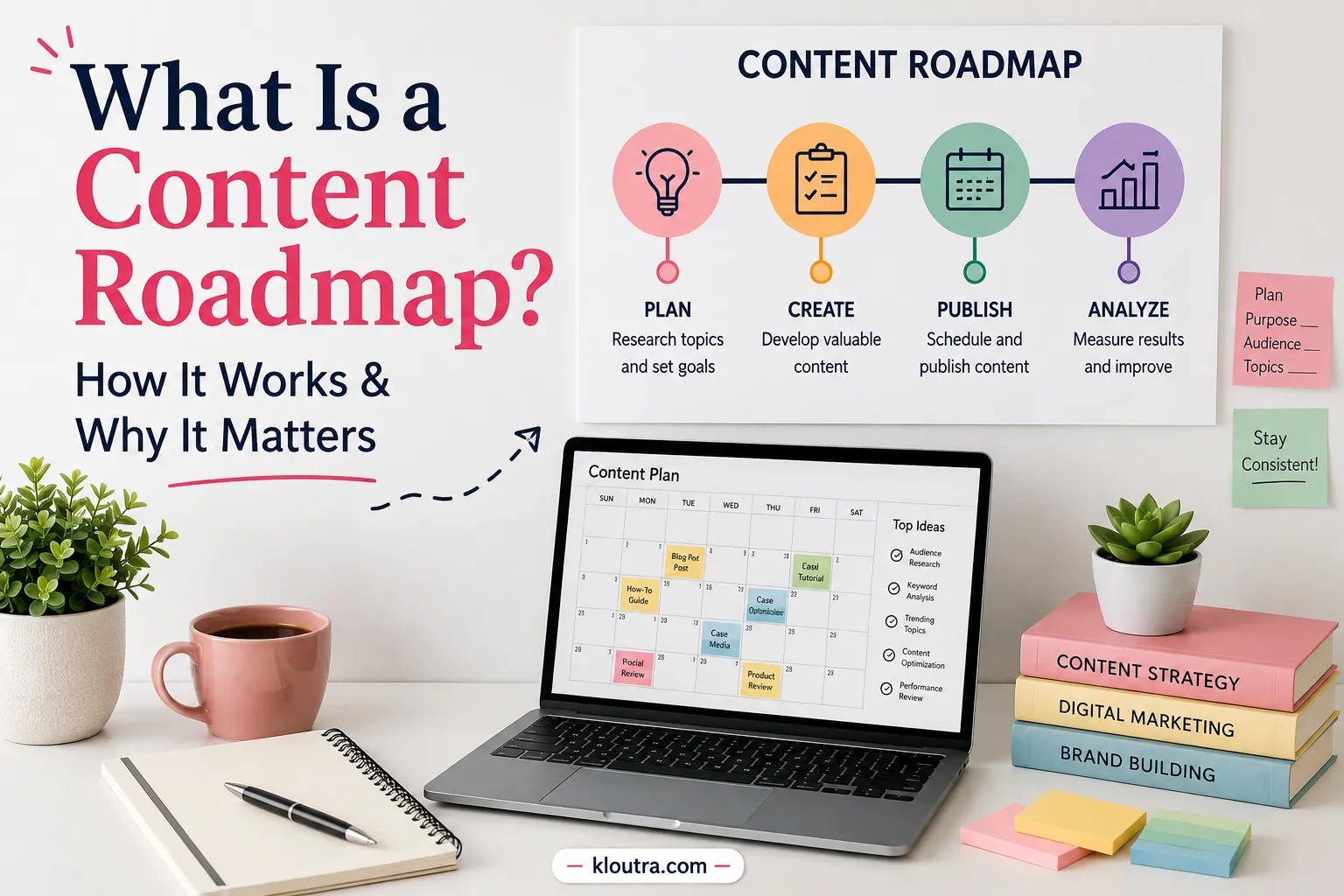
A content roadmap is a visual plan that outlines your content goals, topics, timelines, and the team members responsible for each piece. Think of it like a map for a road trip. You know your destination, the stops along the way, and roughly when you’ll reach each one.
Without a roadmap, content creation turns into guesswork. As a result, you publish whatever feels urgent that week. With one, however, every piece of content has a clear purpose tied to a bigger goal.
According to HubSpot’s content marketing guide, a documented strategy is what sets businesses up for predictable, scalable, and cost-effective traffic and leads, instead of one-off wins that disappear once you stop paying for them. A roadmap is how that strategy gets turned into a working plan your team can actually follow.
How a Content Roadmap Differs from a Content Calendar
People often confuse a content roadmap with a content calendar. In reality, though, they serve different purposes. A content calendar is a short-term schedule, and it tells you what gets published on which date.
A content roadmap sits above the calendar. It covers the bigger picture: quarterly themes, campaign goals, and long-term topics. The calendar is the “when.” The roadmap is the “what” and “why.” Content Marketing Institute describes this same distinction, noting that a roadmap focuses on broad initiatives and objectives, while a calendar handles the tactical, day-to-day details of getting individual pieces published.
Why a Content Roadmap Matters
A content roadmap matters because it turns scattered ideas into a focused strategy. Without one, teams often produce content that looks busy but doesn’t move the needle.
Here’s what a solid content roadmap strategy actually does for you:
- It keeps your content aligned with business goals, not just trending topics.
- As a result, teams avoid duplicate work on similar topics.
- It also makes it easier to spot content gaps before they become a problem.
- Finally, it gives stakeholders a clear view of what’s coming and why.
For example, imagine a small marketing team writing blog posts based on whatever competitor content they saw that morning. Without a roadmap, their content has no throughline. With one, every post ties back to a specific goal, like ranking for a keyword cluster or supporting a product launch.
Advantages and Disadvantages of a Content Roadmap
A content roadmap is a useful tool, but it isn’t free of trade-offs. So, here’s a balanced look at both sides before you commit to building one.
Advantages
- Clearer direction. Every piece of content has a stated purpose, so your team spends less time guessing what to write next.
- Better resource use. Teams avoid duplicate topics and wasted effort because everyone can see what’s already planned.
- Easier stakeholder buy-in. Leadership and other departments get a simple, visual way to see what content is coming and why it matters.
- Faster gap-spotting. Tagging content by funnel stage or theme makes it obvious when you’re overloading one area, like awareness content, and neglecting others.
- More consistent output. A roadmap smooths out the panic-publish cycle, since content is planned months ahead instead of decided the night before.
Disadvantages
- Upfront time investment. Building a proper roadmap takes real planning time, which can feel like a delay when you’re used to publishing reactively.
- Risk of rigidity. Teams that treat the roadmap as fixed can miss timely opportunities, like a trending topic or a sudden algorithm shift.
- Requires regular upkeep. A roadmap left untouched for a year quickly becomes outdated and loses its value.
- Not useful without follow-through. A roadmap only helps if the team actually references it and updates the calendar to match. Otherwise it becomes a document nobody opens.
- Harder for very small teams. Solo creators or tiny teams may find a full roadmap process heavier than they need, at least at first.
The takeaway: a content roadmap pays off when it’s built with the right amount of detail for your team’s size and revisited often enough to stay useful.
Key Elements of a Content Roadmap
A good content roadmap isn’t just a list of blog titles. It includes several moving parts that work together.
Goals and Objectives
Every roadmap should start with clear goals. Are you trying to increase organic traffic? Generate leads? Build brand awareness? Your goals shape everything else on the roadmap.
Content Themes and Topics
Instead of random topics, group your content into themes. For example, a software company might build themes around “onboarding,” “integrations,” and “customer success stories.” This keeps content focused and easier to plan.
Buyer’s Journey Stage
A detail many roadmaps miss is mapping content to where the reader is in their decision process. People generally move through three stages: awareness, consideration, and decision, a framework Semrush’s guide to the buyer’s journey breaks down in more detail.
At the awareness stage, someone is just noticing a problem. A blog post or a short social video works well here. At the consideration stage, they’re comparing options, so guides, comparison posts, or webinars fit better. At the decision stage, they want proof, so case studies, testimonials, or product demos do the heavy lifting.
Tagging each roadmap item with its funnel stage helps you spot gaps fast. If everything you’ve planned is awareness-level content, you may be attracting readers but never guiding them toward a decision.
Timelines and Milestones
A roadmap needs rough timeframes, even if they’re not exact publish dates. Quarterly or monthly milestones work well here. This is different from a content calendar, which gets far more specific.
Owners and Responsibilities
Someone needs to be responsible for each piece of content. Without clear ownership, or a system for scheduling who owns what, tasks fall through the cracks, especially on larger teams.
Distribution Channels
A content roadmap should also note where content will live. Will it be a blog post, a video, a newsletter, or all three? Planning this early avoids last-minute scrambling.
How to Create a Content Roadmap
Building a content roadmap doesn’t need to be complicated. Here’s a straightforward process that works for teams of any size.
Step 1: Define Your Goals. Start by asking what you want your content to achieve. Vague goals like “get more traffic” are a starting point, but try to make them specific. For example, “increase organic traffic to the pricing page by focusing on comparison content.”
Step 2: Audit Existing Content. Before creating anything new, look at what you already have. An audit shows you what’s working, what’s outdated, and where the gaps are. This step alone often reveals opportunities you didn’t know existed.
Step 3: Identify Themes and Topics. Based on your goals and audit, group potential topics into themes. This keeps your content roadmap strategy organized instead of feeling like a random grab bag of ideas.
Step 4: Set Realistic Timelines. Map out roughly when each theme or topic cluster will be tackled. Avoid overloading any single month. It’s better to publish consistently than to burn out your team in week one.
Step 5: Assign Ownership. Decide who writes, edits, designs, and publishes each piece. Clear ownership prevents the classic problem of everyone assuming someone else is handling it.
Step 6: Review and Adjust Regularly. A roadmap isn’t set in stone. Revisit it monthly or quarterly to adjust for new priorities, algorithm changes, or shifting business goals.
Content Roadmap Template You Can Use
You don’t need fancy software to start. A simple content roadmap template can be built in a spreadsheet or a project management tool. At minimum, include these columns:
- Content title or topic
- Theme or category
- Buyer’s journey stage (awareness, consideration, decision)
- Target keyword (if applicable)
- Goal (traffic, leads, awareness, etc.)
- Owner
- Target publish month or quarter
- Distribution channel
- Status (planned, in progress, published)
This basic structure works whether you’re a solo blogger or managing a content team. As your needs grow, you can add columns for performance metrics or approval stages, or move to a dedicated tool built for tracking progress.
Content Roadmap Examples
Seeing a content roadmap in action makes the concept easier to grasp. Here are a few simplified examples across different use cases.
Example 1: SaaS Company Launch. A software company preparing for a product launch might build a roadmap around three themes: problem awareness, product education, and customer proof. Month one focuses on blog posts about the problem their tool solves. Month two shifts to product-focused content. Month three brings in case studies and testimonials.
Example 2: Personal Blog Growth. A blogger aiming to grow traffic might organize their roadmap around seasonal content, evergreen guides, and trending topics. For instance, a food blogger could plan holiday recipes for November and December, while filling other months with evergreen recipe guides that bring steady traffic year-round.
Example 3: E-Commerce Content Calendar Support. An online store might build a roadmap tied to product launches and sales events. Content themes could include buying guides, gift guides, and comparison posts, all timed to support upcoming promotions.
Build Content Repurposing Into Your Roadmap
Most teams don’t have the time or budget to create brand-new content for every single channel. This is where repurposing comes in. It deserves its own place on your roadmap.
Instead of planning one piece of content per topic, plan one core piece and a few smaller spin-offs. For example, a long blog post can become a short video summary, a handful of social media posts, and a section in your email newsletter.
Add a column to your roadmap template that notes which pieces will be repurposed and into what format. This turns one hour of planning into weeks of usable content, without adding extra research time.
Repurposing also helps you reach people who prefer different formats. Some readers want a full guide, others want a two-minute video, and others just skim a social caption. A roadmap that accounts for this from the start saves you from scrambling to repurpose content after the fact.
Common Mistakes to Avoid
Even with the best intentions, teams often stumble when building a content roadmap. Here are a few pitfalls to watch for.
Don’t skip the goal-setting step. Jumping straight to topic ideas without clear goals leads to content that feels aimless later on.
Avoid overloading your timeline, too. Cramming too many pieces into one month often leads to rushed, lower-quality content.
Similarly, don’t plan every piece for the same buyer’s journey stage. A roadmap full of only awareness content, or only decision-stage content, leaves gaps in your funnel.
Finally, don’t treat the roadmap as permanent. Markets change, and a roadmap that isn’t reviewed regularly quickly becomes outdated.
FAQ: What Is a Content Roadmap?
What is the difference between a content roadmap and a content strategy? A content strategy is the overall plan for why and how you create content, including goals and audience research. A content roadmap is the practical tool that maps out what content you’ll create and when, based on that strategy.
How often should I update my content roadmap? Most teams review their content roadmap strategy monthly or quarterly. This allows enough time to see results while staying flexible enough to adjust for new priorities.
Do I need special software to build a content roadmap? No. A simple spreadsheet works fine for most individuals and small teams. Project management tools like Trello, Asana, or Notion can help as your content operation grows.
Can a solo content creator use a content roadmap? Yes. Even solo bloggers or creators benefit from mapping out themes and timelines. It helps avoid burnout and keeps content focused instead of reactive.
What should be included in a content roadmap template? At minimum, include the content topic, theme, buyer’s journey stage, goal, owner, target publish date, and distribution channel. You can expand this with performance tracking as your needs grow.
Conclusion
A content roadmap turns random content ideas into a focused plan with real direction. It connects your day-to-day content work to bigger business goals, so nothing gets created just for the sake of staying busy.
Whether you’re a solo blogger or part of a large marketing team, the process stays the same: set clear goals, audit what you have, organize into themes, map content to the buyer’s journey, and revisit the plan regularly.