What Is a Service Delivery Platform?
What Is a Service Delivery Platform?
A service delivery platform is software that helps organizations manage and deliver services. It can bring service requests, workflows, resources, and customer information together.
In IT, these platforms can support service requests, workflows, monitoring, and performance tracking. Some platforms also connect with other business systems through integrations.
The term is also used in telecommunications. There, a service delivery platform can support service creation, orchestration, and communication between systems.
How Does a Service Delivery Platform Work?
A service delivery platform usually connects different steps in the service process. It starts when a user or customer submits a service request. The platform can route that request to the right team or workflow. Teams can then track progress, update records, and complete required tasks.
Many platforms also automate routine actions and connect with existing systems. These connections help teams share data without entering it repeatedly.
For example, an IT team may receive a support request through its service portal. The platform can assign the request, track its status, and record the resolution. Some systems focus on IT services, while others support broader service operations.
Key Features of a Service Delivery Platform
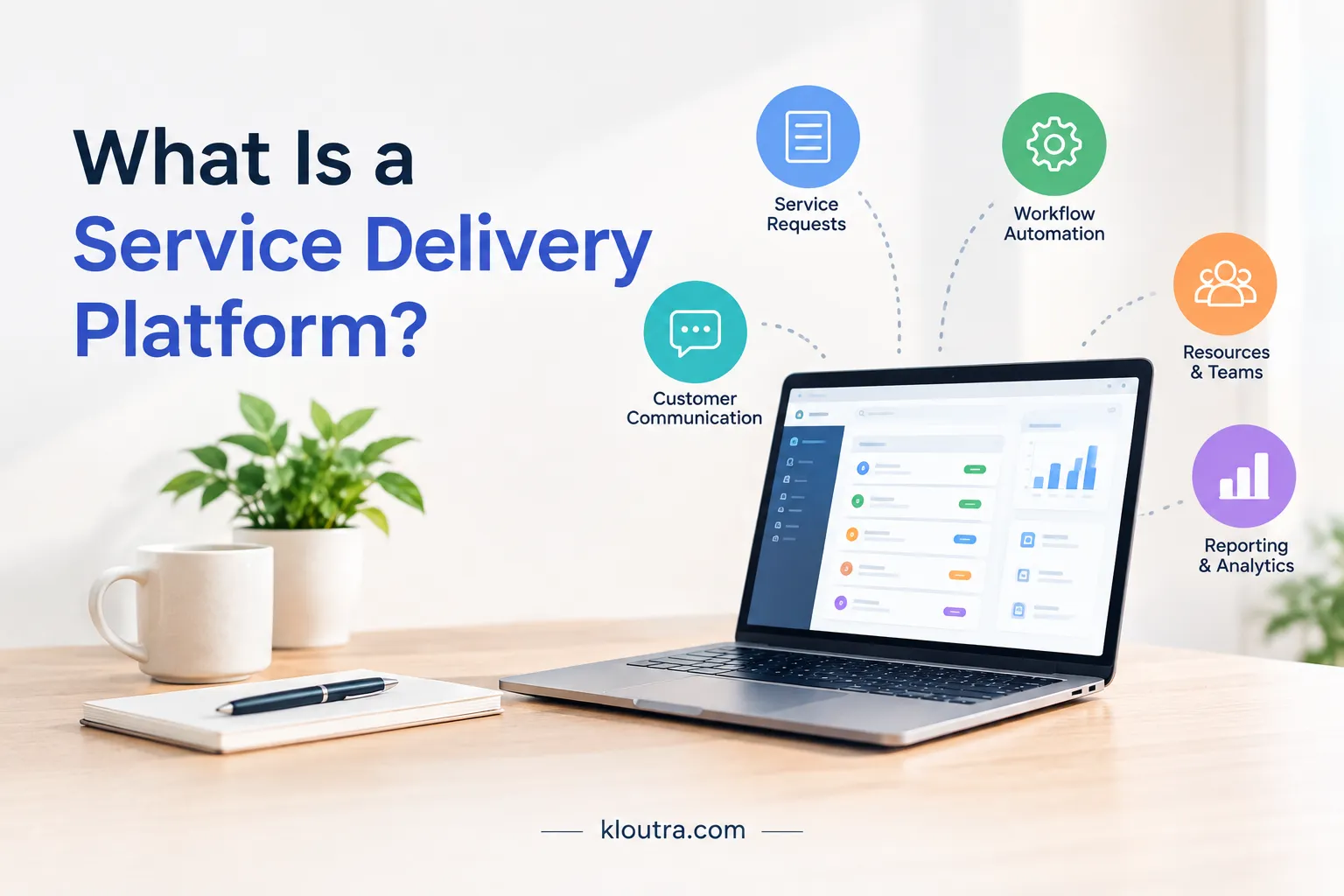
A service delivery platform brings several service operations into one system. Most platforms manage requests, workflows, resources, communication, and performance.
Service Request Management
Service request management helps teams receive and organize incoming requests. Users can submit requests through portals, forms, or other channels.
The platform can categorize requests and route them to the right team. Teams can track each request from submission through completion.
Workflow Automation
Workflow automation handles repetitive steps within service processes. It can assign tasks, trigger approvals, and send automatic notifications.
This reduces manual work and helps teams follow consistent processes. Some platforms also support AI-assisted automation for certain tasks.
Scheduling and Resource Management
Scheduling features help teams organize people, tasks, appointments, and available resources. They help managers review workloads and assign work effectively. Some platforms also support resource planning based on current workloads.
Customer Communication and Service Tracking
Service platforms help teams keep customers updated throughout the service process. They can provide status updates, notifications, and communication tools.
Customers may also track requests through a self-service portal.
Reporting and Analytics
Reporting tools help teams understand service performance and workload trends. Dashboards can display service levels, request volumes, and other data.
Teams can use these insights to identify delays and improve workflows. Some modern platforms also provide real-time analytics and automated insights.
What Are the Benefits of a Service Delivery Platform?
A service delivery platform helps teams manage service work in one organized system. It can improve visibility, reduce repetitive tasks, and support smoother workflows.
The actual benefits depend on the platform, setup, and type of service.
Faster Service Delivery
Automated steps can also reduce delays in routine processes. This makes it easier to identify pending work and respond on time.
Better Resource Management
Service delivery platforms can show workloads, assignments, and available resources. Managers can use this information when planning and assigning service work.
Better visibility can help teams avoid duplicate assignments and uneven workloads.
Improved Customer Experience
Customers can receive clearer information about their service requests. Many platforms also provide self-service options for common requests. Customers may check request status without contacting support repeatedly. This can make the service process easier to follow.
Less Manual Work
Automation can handle repetitive tasks within a service workflow. These tasks may include request routing, notifications, approvals, and status updates.
Employees can then focus more attention on tasks that need human judgment. Automation can also make routine processes more consistent across teams.
Who Uses Service Delivery Platforms?
Service delivery platforms are used by businesses that provide ongoing services. They help teams organize requests, tasks, resources, and customer communication.
IT and Managed Service Providers
IT teams use service delivery platforms to manage support requests and technical services. They can track incidents, service requests, maintenance work, and other IT tasks.
Managed service providers can use these platforms to manage services for multiple customers. Teams can organize customer requests, assign work, and monitor service progress from one system.
Field Service Businesses
Field service businesses use these platforms to coordinate work outside the office. Examples include repairs, maintenance, installations, and inspections.
The platform can help schedule jobs and assign them to field workers. Teams can also update job status and record important service details.
Professional Service Teams
Professional service teams use these platforms to manage client work and service requests. Examples include consulting firms, agencies, and other specialized service providers.
They can organize tasks, track deadlines, and monitor ongoing work. This helps teams keep client services organized without managing everything manually.
ervice Delivery Platform vs. Service Management Software
Both tools help teams manage services, but their focus can differ. The main difference is their scope and purpose.
| Feature | Service Delivery Platform | Service Management Software |
|---|---|---|
| Main focus | Managing and delivering services | Managing overall service operations |
| Service requests | Handles and tracks service requests | Manages requests within broader processes |
| Workflows | Automates service delivery tasks | Supports different service management workflows |
| Resource management | Helps assign people and resources | May include resource planning and management |
| Incident management | May support incident tracking | Commonly includes incident management |
| Reporting | Tracks service delivery and performance | Reports across multiple service processes |
| Scope | Focuses on service delivery | Covers a broader range of service management |
The two can overlap, and some modern platforms provide both capabilities.
How AI Is Changing Service Delivery Platforms
AI is changing how service delivery platforms manage daily tasks and customer requests. It can automate routine work, organize requests, and provide faster responses. AI can also help teams find information and suggest useful solutions quickly.
Some platforms use AI to improve scheduling and resource management. AI can also spot patterns that may help teams identify problems earlier. However, human support still matters for complex or sensitive issues.
What to Consider When Choosing a Service Delivery Platform?
Choose a platform that matches your current and future business needs. Consider integrations, security, automation, and reporting before making your choice.
Integrations and Scalability
Check whether the platform connects with your existing business tools. Also, make sure it can handle future growth. Consider data volume, integration limits, and expected user growth.
Security and Access Controls
Look for strong security features and clear access controls. Users should only access information they actually need. Check permissions, authentication, encryption, and compliance options before choosing.
Automation and Reporting
Look for workflows that handle routine tasks automatically. Reporting tools should also show useful service data and performance trends.
Frequently Asked Questions
Is a Service Delivery Platform the Same as CRM Software?
No, they usually serve different purposes. CRM software mainly manages customers, leads, sales, and relationships. Service delivery platforms focus more on delivering and managing services. Some platforms can combine CRM and service features.
Can a Service Delivery Platform Automate Tasks?
Yes, many platforms can automate routine service tasks. These may include notifications, workflows, scheduling, and customer follow-ups. The available automation depends on the platform and its features.
Can Small Businesses Use a Service Delivery Platform?
Yes, small businesses can use these platforms to organize service operations. The right choice depends on team size, workflow, budget, and needs. Small teams can also choose simpler platforms with fewer features.
Final Thoughts
A service delivery platform helps teams manage services from one central place. It can organize requests, workflows, resources, and service information. The right platform should match your team’s needs and existing systems.
Disclaimer
This article provides general information about service delivery platforms. Features and capabilities can vary between different software providers. Always check the provider’s official documentation before making a purchase or business decision. We do not guarantee specific results from using any particular platform.