How to Use AI Tools for Email Marketing Personalization
Introduction
AI email marketing personalization helps businesses create more relevant messages for customers. AI tools can analyze customer data, preferences, and behavior to personalize email content and improve campaign performance.
In this guide, you will learn how AI tools personalize email campaigns. You will also discover useful strategies, popular tools, 2026 trends, and best practices for effective email personalization.
What Is AI Email Marketing Personalization?
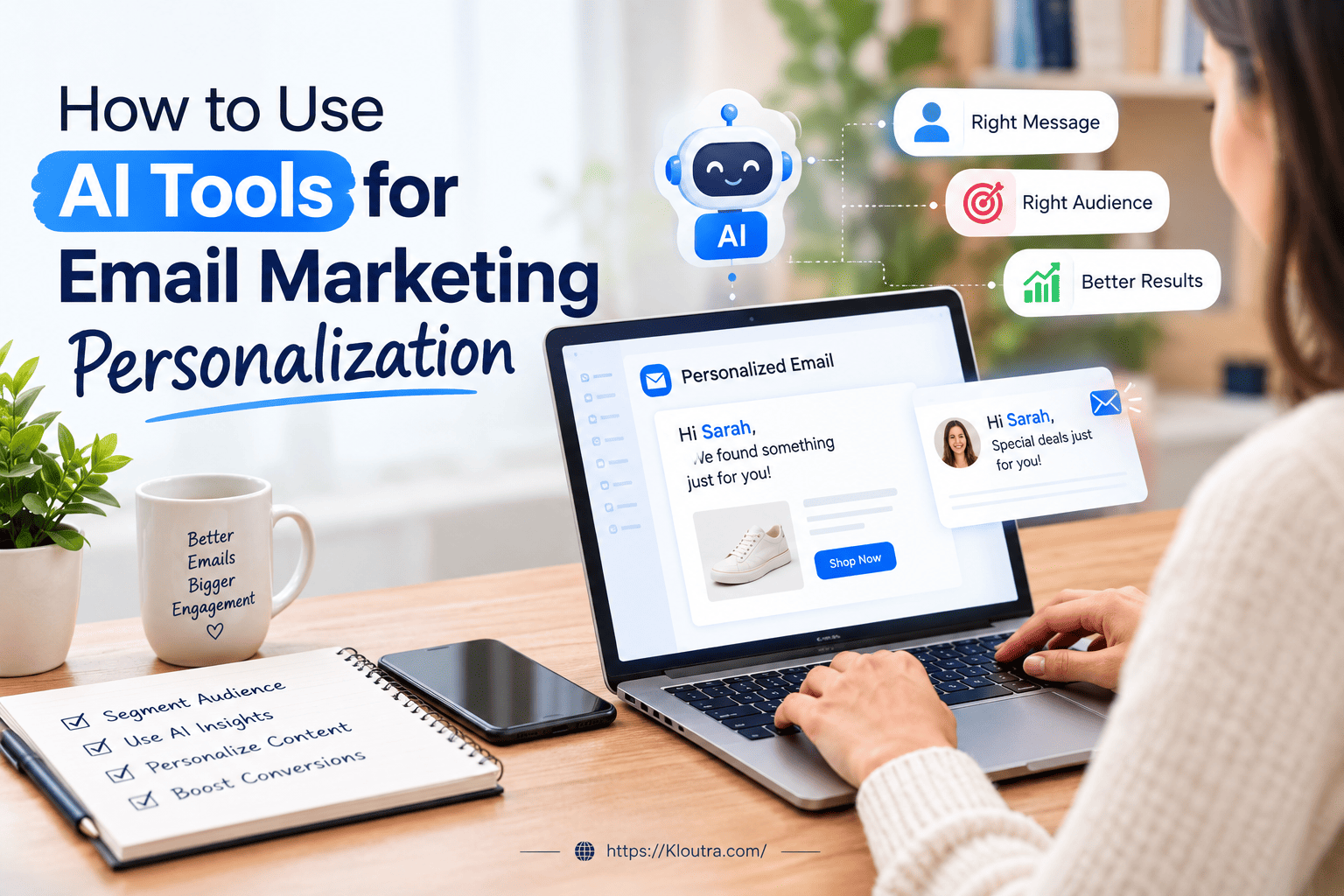
AI email marketing personalization uses AI to tailor emails for different recipients. It uses customer data, behavior, and engagement history to create more relevant messages.
Unlike basic personalization, AI can adjust several email elements. These can include content, subject lines, offers, and delivery times.
How AI Personalizes Emails
AI tools analyze customer data from email and marketing platforms. They can use browsing activity, purchases, preferences, and past email engagement.
AI can then create different messages for different customers. For example, recent buyers may receive product suggestions based on past purchases.
Benefits of AI Personalization
AI personalization helps marketers create relevant emails at a larger scale. It also reduces the manual work needed to create different email versions.
It can also help marketers improve targeting and delivery timing. However, results depend on accurate data, good segmentation, and proper testing.
How AI Tools Personalize Email Campaigns
AI tools can personalize email campaigns using customer data and behavior. They can adjust the audience, message, and delivery time for each campaign.
Customer Segmentation
AI can group customers based on shared traits and behaviors. These groups may include interests, purchases, engagement, or customer lifecycle stages.
Marketers can then send more relevant emails to each group. AI can also update segments as customer behavior changes.
Personalized Content
AI can create or adjust email content for different recipients. It can personalize subject lines, body text, calls to action, and other elements.
For example, an email can reflect a customer’s interests or recent activity. This makes the message more relevant than a single generic email.
Smart Send Times
AI can analyze when individual customers usually open or click emails. It can then recommend or select better delivery times for those recipients.
This approach can be more useful than using one fixed time. However, marketers should still test results and consider campaign timing needs.
How to Use AI for Email Personalization
Analyze Customer Data
Start by collecting useful customer data from your marketing channels. This can include purchases, website activity, and email engagement.
AI tools can analyze this data and identify customer interests. Use these insights to create more relevant email marketing strategies.
Create Personalized Emails
Use AI tools to create email content for different customer groups. AI can help personalize subject lines, body text, offers, and calls to action.
Always review AI-generated content before sending it to customers. Make sure the message matches your brand voice and customer needs.
Automate Email Campaigns
AI can help automate emails based on customer actions and engagement. For example, a customer can receive an email after viewing or buying a product.
Automated workflows can also adjust messages based on customer behavior. This helps businesses personalize campaigns without creating every email manually.
Best AI Email Marketing Strategies
Personalized Subject Lines
AI tools can create subject lines based on customer data and campaign goals. They can also generate different versions for testing.
Keep subject lines clear and relevant to your email marketing strategy. Avoid adding personal details that customers did not expect.
Behavior-Based Emails
Behavior-based emails respond to actions taken by customers. Common triggers include purchases, website visits, and abandoned shopping carts.
AI can use these signals to select relevant messages and content. This approach helps businesses respond while customer interest is still active.
Product Recommendations
AI can recommend products based on browsing and purchase behavior. It can also use related products and customer interest patterns.
For example, customers may receive recommendations related to previous purchases. This makes product emails more relevant to individual customer interests.
Best AI Tools for Email Marketing Personalization
AI email marketing tools can help with writing, automation, personalization, and analytics. Different tools focus on different parts of email marketing.
AI Email Writing Tools
AI writing tools can create subject lines, email copy, and content variations. They help marketers create drafts faster and maintain consistent messaging.
Always review AI-generated content before sending emails. Human review helps keep the message accurate and natural.
Email Automation Tools
Automation tools can trigger emails based on customer actions and lifecycle stages. They can also manage personalized workflows and audience segments.
Popular platforms include HubSpot, Klaviyo, and ActiveCampaign. Their available AI features vary by platform and plan.
AI Analytics Tools
AI analytics tools can analyze email engagement and campaign performance. They can help marketers identify patterns and improve future campaigns.
Some platforms connect email results with customer and revenue data. This helps teams understand how campaigns perform across the customer journey.
AI Email Marketing Trends in 2026
AI email marketing is moving toward more automated and personalized campaigns. Current tools increasingly combine content generation, prediction, automation, and analytics.
Generative AI for Emails
Generative AI can create subject lines, email copy, and content variations. Marketers can use generative AI for content marketing to support content creation and campaign goals.
AI can speed up content creation, but human review remains important. Marketers should check accuracy, tone, and brand consistency before sending.
Predictive Personalization
Predictive AI uses customer data to estimate future actions or preferences. It can support audience targeting, send-time choices, and personalized messaging.
These systems work better when businesses have reliable historical data. Poor or limited data can reduce the quality of AI predictions.
Real-Time Content
Real-time personalization changes email content using current customer information. This can include recent activity, preferences, or changing customer behavior.
Some AI platforms can tailor email elements for individual recipients. This approach helps businesses keep messages relevant as customer behavior changes.
Best Practices for AI Email Personalization
Use Relevant Customer Data
Use customer data that directly supports your email personalization. This may include purchases, interests, and email engagement.
Keep customer information accurate and update it when details change. Good data helps AI create more relevant email experiences.
Keep Emails Natural
AI-generated emails should sound clear, helpful, and natural. Always review AI content before sending it to customers.
Avoid using personal details that feel unexpected or unnecessary. Keep the message relevant to the customer’s relationship with your brand.
Protect Customer Privacy
Collect and use customer data according to applicable privacy laws. Tell customers how you use their personal information.
Provide a clear way for recipients to stop marketing emails. Rules can vary by country, so follow the laws that apply.
Frequently Asked Questions
How does AI personalize email marketing?
AI analyzes customer data and email behavior to personalize messages. It can adjust content, subject lines, timing, and offers.
Can AI improve email engagement?
AI can help improve engagement by making emails more relevant and timely. It can optimize content, audience targeting, and sending times.
However, results depend on data quality, campaign strategy, and proper testing. AI does not guarantee higher engagement for every campaign.
What are the best AI tools for email personalization?
The right tool depends on your email marketing needs and existing software. HubSpot, Mailchimp, Klaviyo, and ActiveCampaign offer AI-related email features.
Look for tools that support personalization, automation, analytics, and customer data integration.
Conclusion
AI email personalization helps businesses create more relevant messages for customers. AI can analyze customer data, behavior, and engagement patterns.
Start with accurate data and clear personalization goals. Then use AI to improve content, timing, and customer targeting. Always review AI-generated emails before sending them. Also, protect customer data and respect privacy requirements.
Disclaimer: This article is for informational purposes only. AI tools, features, pricing, and email marketing practices may change over time. Always verify current information with the official tool provider before making business or marketing decisions. You are responsible for following applicable privacy, data protection, and email marketing laws.