What Is KIA DMS? Everything You Need to Know in 2026
Ever heard someone at a Kia dealership mention “the DMS” and wondered what they meant? You’re not alone. KIA DMS stands for Kia Dealer Management System, and it’s the software that keeps a Kia dealership running behind the scenes.
If you’ve searched for KIA DMS meaning, you might expect a “document management” tool. That’s not it here. In the auto industry, and specifically for Kia dealerships, DMS refers to dealer operations software — the system that handles sales, service, parts, accounting, and customer records all in one place.
In this guide, we’ll break down what KIA DMS actually does, how it works, its main features, and why it matters. Whether you’re a dealership employee, a Kia franchise owner, or just curious about how modern car dealerships operate, this article covers everything you need.
Disclaimer: This guide is for general information only and isn’t affiliated with or endorsed by Kia Corporation or Kia America. For official details, contact Kia or your dealership’s DMS provider directly.
What Is KIA DMS?
KIA DMS is short for Kia Dealer Management System. It’s a software platform used by Kia dealerships to manage their day-to-day business operations.
Think of it as the digital backbone of a dealership. Instead of tracking sales, repair orders, and inventory on paper or in scattered spreadsheets, dealership staff log everything into one connected system.
KIA DMS Meaning in Simple Terms
In plain English, a Dealer Management System is like an all-in-one operating system for a car dealership. It combines several departments — sales, service, parts, and accounting — into a single software environment.
So when someone searches for “what is KIA DMS,” the short answer is this: it’s the software Kia dealers use to run their business smoothly, from the moment a customer walks in to the moment their car leaves the service bay.
Is KIA DMS One Single Product?
Here’s something worth knowing. Kia dealers aren’t locked into one specific DMS brand. Several DMS providers are certified to work with Kia dealership operations, including names like Autosoft and Tekion, among others in the industry. For example, Tekion announced a certified DMS partnership with Kia Canada in 2025, giving Canadian Kia dealers another cloud-based platform option alongside longtime providers.
This means “KIA DMS” isn’t necessarily one piece of software owned by Kia itself. Instead, it refers to the category of dealer management software that Kia dealerships use, often built by third-party technology companies that meet Kia’s operational standards. This matches how the wider auto industry defines the term: according to Dealertrack, a Cox Automotive company, a dealer management system is software that “connects every department in your dealership” through real-time accounting and reporting, regardless of which car brand a dealership sells.
How KIA DMS Works
A Dealer Management System connects different departments in a dealership. It helps information move between them automatically. Here’s a simple look at how it works.
Centralized Data Entry
When a customer buys a car, books a service appointment, or orders a part, that information gets entered into the DMS once. From there, other departments can access it without duplicate paperwork.
For example, if a sales advisor logs a new vehicle sale, the accounting team can see that transaction immediately. There’s no need to re-enter the same details twice.
Real-Time Updates Across Departments
Because everything lives in one system, updates happen in real time. If a part gets used in the service department, inventory numbers update automatically.
This connection saves time and reduces mistakes. Staff don’t need to contact other departments to check if something is available or finished.
Integration With Other Tools
Modern DMS platforms often integrate with additional dealership tools, such as customer relationship management (CRM) software and data-mining or equity-mining platforms. These integrations help dealers identify customers who might be ready to buy or trade in a vehicle, based on things like mileage, loan balance, and service history. If you want a broader look at how connected platforms like this work outside the auto industry, our business software coverage breaks down similar tools used across other industries.
Key Features of KIA DMS
A good Dealer Management System handles many tasks. Here are the main features you will usually find.
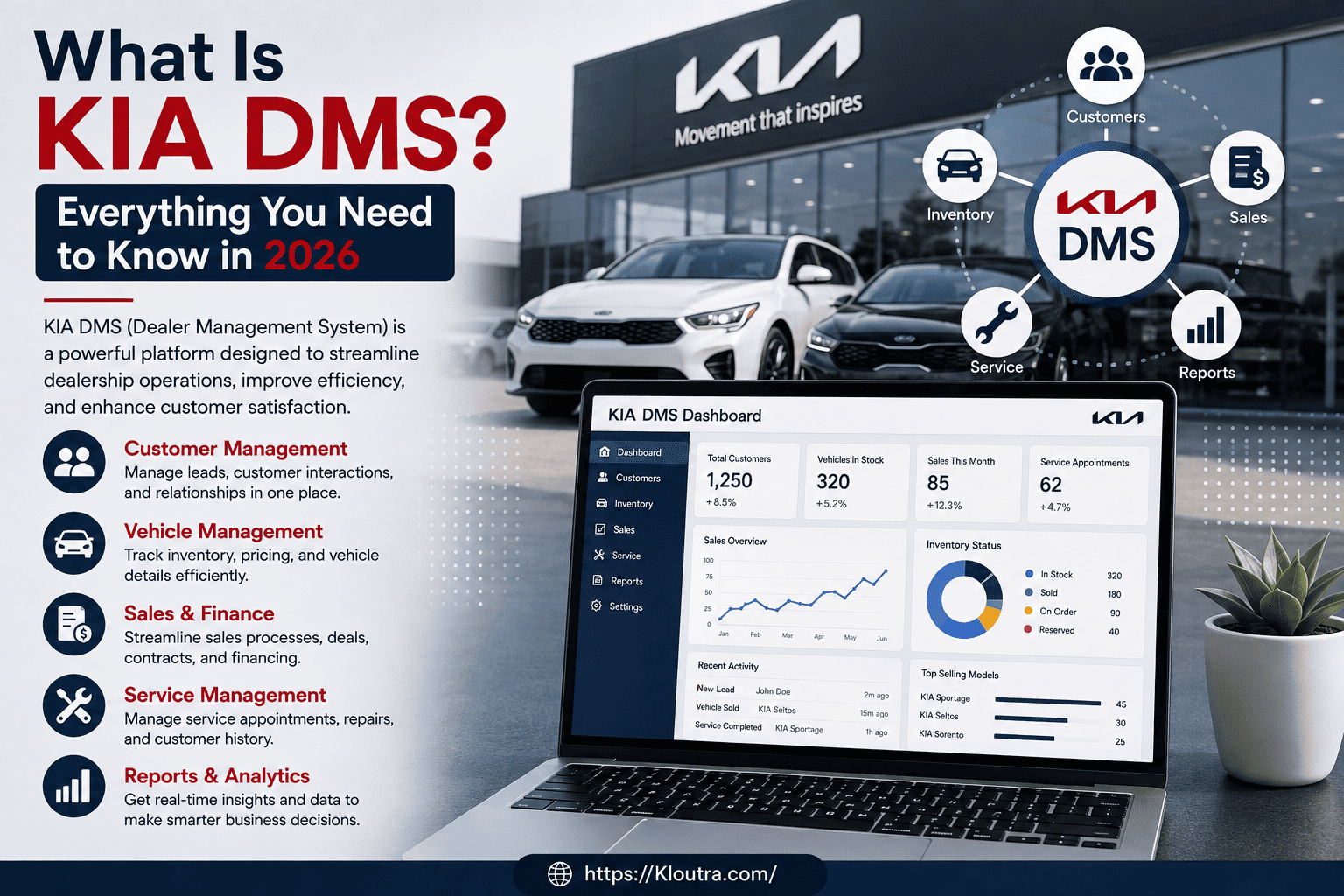
Sales Management
The sales module tracks vehicle inventory, deal structures, financing details, and customer information. It helps sales teams manage leads from first contact to final paperwork.
Service Management
This part of the DMS handles service scheduling, repair orders, technician assignments, and warranty claims. It’s what a service advisor uses when you drop your car off for maintenance.
Parts and Inventory Management
Dealerships need to track thousands of parts. The DMS keeps count of what’s in stock, what’s been ordered, and what needs to be reordered, so technicians aren’t left waiting on missing parts.
Accounting and Financial Reporting
Every transaction, big or small, needs to be recorded correctly. The DMS handles accounting functions like invoicing, payroll support, and financial statements, giving dealership owners a clear view of their business performance.
Customer Data Management
A DMS stores customer records, including purchase history and service visits. This data helps dealerships follow up with customers at the right time, such as reminding them about a service appointment or reaching out when they’re due for a new vehicle.
Reporting and Analytics
Most DMS platforms include dashboards and reports that show sales trends, service volume, and overall dealership performance. Owners and managers use this data to make informed decisions instead of relying on guesswork. These dashboards work on the same basic principle as many general SaaS tools businesses use to track performance, just built specifically for dealership data.
Advantages and Disadvantages of KIA DMS
Why do Kia dealerships rely so heavily on DMS software, and what are the trade-offs? Here’s a balanced look at both sides.
Advantages of KIA DMS
Saves time with fewer manual tasks. Instead of juggling separate systems for sales, service, and accounting, staff work within one connected platform. This cuts down on repetitive data entry and paperwork.
Improves customer retention. By tracking customer data like vehicle mileage and ownership length, dealerships can reach out with relevant offers at the right moment. For instance, some dealers have used DMS-connected tools to spot customers ready to trade in their vehicle, leading to extra sales they might otherwise have missed.
Reduces errors. When data is entered once and shared across departments, there’s less room for mistakes like duplicate records or missed appointments.
Supports better decision-making. With built-in reporting, dealership managers can see what’s working and what isn’t. That means smarter staffing, inventory, and marketing decisions.
Helps dealers stay compliant. Financial and sales reporting features help dealerships keep accurate records, which matters for audits, taxes, and manufacturer requirements.
Disadvantages of KIA DMS
Switching providers is a big commitment. Moving from one DMS to another usually means months of data migration, staff retraining, and temporary disruption. Most dealerships stick with the same provider for years simply because switching is costly and time-consuming.
Monthly costs add up. DMS software isn’t free, and pricing can climb once add-ons like advanced analytics, payroll integration, or extra user seats get factored in. Smaller dealerships need to weigh these costs against the efficiency gains.
Learning curve for new staff. A DMS covers many departments and functions, so new employees often need real training before they can use it confidently, which takes time away from daily tasks.
Dependence on the vendor’s uptime. Since most modern DMS platforms are cloud-based, a vendor outage or internet issue can temporarily slow down sales, service, or accounting work until the system is back online.
Not every provider connects equally well with every tool. Some DMS platforms have more open integrations than others. If a dealership wants to add a specific CRM or marketing tool, it’s worth checking compatibility first, since some providers charge extra or restrict data access for third-party connections.
KIA DMS Login and Portal Access
If you’re a dealership employee looking for a KIA DMS login or portal, keep in mind that access depends on which DMS provider your specific dealership uses. Since Kia dealerships can choose from different certified DMS vendors, login credentials and portal links come directly from that vendor, not from a single universal “Kia DMS” website.
Separately, Kia also offers a Kia Digital Program for dealers, which includes tools like data mining, digital advertising, and website services. This is a different system from a dealership’s core DMS, though the two can work together.
If you’re unsure which DMS your dealership uses, the best step is to check with your dealership’s IT contact or general manager, since credentials and support channels vary by provider.
KIA DMS for Dealers: Why It Matters in 2026
As dealership operations grow more digital, having a reliable DMS is no longer optional. In 2026, customers expect faster service, accurate quotes, and quick answers, and dealerships need software that keeps pace.
Modern DMS platforms are increasingly cloud-based, offering real-time data access from any device. This shift allows dealership staff to check inventory, update customer records, or review reports without being tied to one desktop computer.
Additionally, DMS platforms are integrating more closely with data analytics tools. This helps dealers spot sales opportunities earlier, such as identifying a customer whose lease is ending soon or who has built up equity in their current vehicle. Similar customer outreach, built around email and multi-channel follow-up, is common outside the auto world too; our guide on what a mailing list is covers the same underlying idea of using existing customer data to time outreach well.
An independent industry breakdown from Corpay makes a similar point: a DMS is very good at recording what happens inside the dealership, but dealers increasingly pair it with other specialized tools to cover gaps, like payments, marketing, or advanced analytics, that the core DMS wasn’t built to handle alone.
Because technology changes quickly, it’s worth noting that specific features, providers, and integrations available to Kia dealers may evolve over time. Dealers should check directly with Kia or their DMS provider for the most current options.
Frequently Asked Questions
What does DMS stand for in KIA DMS?
DMS stands for Dealer Management System. In the context of a Kia dealership, it refers to the software used to manage sales, service, parts, and accounting operations, not a document management system.
Is KIA DMS the same for every dealership?
Not exactly. Kia dealerships can choose from different certified DMS providers, so the exact software and interface may vary from one dealership to another.
Can customers access KIA DMS?
No. A Dealer Management System is an internal tool used by dealership staff. Customers don’t log into it directly, though the data it stores may be used to send you service reminders or offers.
How do I log into KIA DMS?
Login access depends on which DMS provider your dealership uses. Contact your dealership’s management or IT support for the correct login portal and credentials.
Why do Kia dealers use a DMS instead of separate software for each department?
A single DMS connects sales, service, parts, and accounting so information flows automatically between departments. This reduces manual work, prevents duplicate data entry, and gives managers a complete view of the business in one place.
Conclusion
So, what is KIA DMS? It’s the Dealer Management System that Kia dealerships rely on to handle sales, service, parts, accounting, and customer data, all from one connected platform. Rather than being a single Kia-branded product, it’s a category of certified software that keeps dealership operations running smoothly.
For dealership staff, understanding how the DMS works can make daily tasks easier and customer service faster. For curious readers, it’s a good example of how much technology sits behind a simple visit to your local Kia dealer.
If you found this guide helpful, check out our other articles on dealership technology and automotive software to learn more about how modern car dealerships operate behind the scenes.