What Is Humi? Complete Guide to Humi in 2026
Running a small business means doing many different jobs at the same time. Payroll, employee files, time-off requests — it piles up fast. That is where Humi comes in.
Humi is a Canadian HR software platform. It helps small and medium-sized businesses manage their employees in one place. Instead of juggling spreadsheets, email threads, and sticky notes, you get one dashboard for HR, payroll, and benefits.
Editor’s note (important update): As of September 2025, Humi fully rebranded to Employment Hero in Canada. Employment Hero acquired the company. Existing customers still use the “Humi by Employment Hero” name. New sign-ups and product pages now sit under the Employment Hero brand. We kept the “Humi” name in this review since that’s still how most people search for it. We wanted to flag this upfront so you’re not confused if the site you land on says Employment Hero.
This guide covers what the platform does, its main features, pricing, a full breakdown of the pros and cons, and whether it’s worth it in 2026.
How We Reviewed This
We based this review on publicly available information. Sources include Humi’s official site, Employment Hero’s product and pricing pages, third-party software directories, and independent user reviews. Humi and Employment Hero did not pay us for this review. We don’t have a hands-on trial account of our own. Where we couldn’t verify a claim independently, like exact current pricing, we say so and point you to the source. See our full disclaimer at the bottom.
What Is Humi?
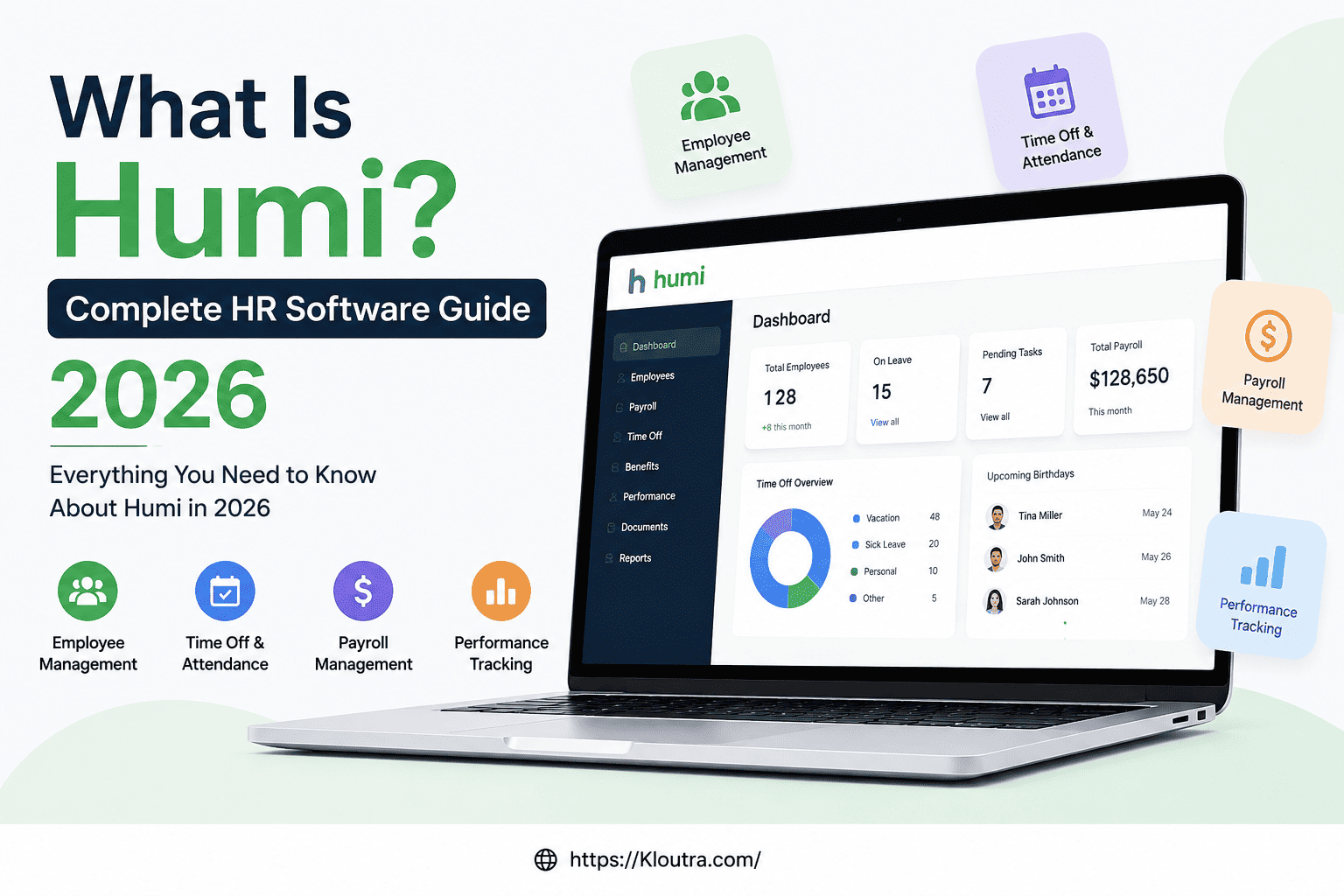
Humi is a cloud-based HR platform. Canadian businesses built it, and Employment Hero now runs it. It brings together the everyday tasks of running a workplace. Think of it as a filing cabinet, a payroll clerk, and an HR assistant, all rolled into one piece of software.
Who Built It, and Who Is It For?
Canadian founders built the company for Canadian businesses. It focuses heavily on tax rules and provincial employment laws. It works best for small to medium-sized companies in industries like technology, professional services, retail, and non-profits.
The software scales whether you have a handful of employees or a few hundred. It isn’t built for huge enterprises with thousands of staff across multiple countries, though. Employment Hero itself is a bigger, multi-country platform. It operates across the UK, Australia, New Zealand, Singapore, Malaysia, and Canada. The Humi-branded Canadian product stays SMB-focused.
Key Features Worth Knowing
Employee Database
Every employee’s contact details, job history, and compensation information sit in one searchable spot. You won’t need to dig through old email chains to find someone’s start date.
Payroll Processing
This is one of the platform’s biggest strengths. It calculates taxes and deductions automatically and handles direct deposits. It’s built around Canadian tax compliance. For example, it automates T4 preparation and CRA remittances. This matters because employers must file T4 slips with the CRA by the end of February each year. Automating that step saves hours of manual work during tax season.
Benefits Administration
Employees enroll in health insurance and retirement plans through their own self-service portal. This cuts down on paperwork for HR. It also gives staff more control over their own coverage.
Time Tracking and Time Off
Employees request vacation or sick leave through the app, and managers approve it with a click. The system keeps a clear record. There’s no confusion about who took what leave and when.
Onboarding Tools
New hires get a customizable checklist. It walks them through paperwork and setup tasks. This helps people feel productive faster, instead of spending their first week filling out forms.
Performance Management
Managers set goals, run reviews, and collect feedback inside the platform. This keeps performance conversations organized instead of scattered across emails and notebooks.
Recruiting and Applicant Tracking
The platform also offers tools to post job openings and track applicants through the hiring pipeline. This helps if you’re growing your team and need a simple way to manage candidates.
Advantages and Disadvantages
No HR platform fits every business perfectly. Here’s a straight breakdown of where Humi/Employment Hero holds up and where it doesn’t.
Advantages
- Strong Canadian tax and compliance focus — the payroll engine is built around Canadian rules (CPP, EI, provincial tax, T4 filing). This gives it a real edge over US-built HR tools adapted for Canada.
- All-in-one platform — HR, payroll, benefits, time-off, onboarding, and recruiting live in one dashboard instead of five disconnected tools.
- Clean, easy-to-use interface — multiple reviewers call the setup process and day-to-day navigation intuitive, with limited training required.
- Responsive support — user reviews consistently praise the customer support during setup and troubleshooting.
- Centralized employee data — a single source of truth cuts the risk of missed benefits enrollment or payroll errors from scattered records.
- Scales with your team — pricing and features flex as headcount grows, so you won’t need to switch platforms later.
- Free trial available — test the interface and workflow before you commit.
Disadvantages
- Brand transition confusion — the shift from Humi to Employment Hero has left some pages, support links, and marketing material inconsistent right now. This can confuse both new and existing customers.
- Rigid payroll deadlines — payroll processing has a strict weekly cutoff. If that deadline lands on a public holiday, you need to move it earlier. Teams that miss this can run into late-payroll issues.
- Not built for large, multi-country enterprises — the Canadian-focused product isn’t designed for thousands of employees spread across many countries. Larger or globally distributed businesses may outgrow it.
- Pricing isn’t fully transparent upfront — the tiered, per-module pricing means you usually need to request a quote to know your real monthly cost.
- Add-ons increase cost quickly — advanced payroll, benefits administration, and recruiting all cost extra on top of the base plan. The “starting at” price can mislead businesses that need more than basic HR.
A Closer Look at Employee Management
Employee management is really the heart of this software. It isn’t just a payroll tool bolted onto an HR system — it’s built around the full employee lifecycle.
The platform tracks an employee’s information, time off, performance reviews, and compensation history from hire to exit. Managers get a bird’s-eye view of their team without asking HR for updates every time.
This matters because disorganized employee records cause real problems, like missed benefits enrollment or payroll errors. A centralized system cuts that risk significantly.
What Does It Cost?
Pricing here isn’t one flat number. It runs on a tiered, per-employee, per-month model, and the exact cost depends on which modules you choose.
Based on current third-party listings, starting prices range roughly from $6 to $8 CAD per user, per month for core HR features. Additional modules, like advanced payroll, benefits administration, or recruiting, cost extra on top of that base price.
A free trial is also available, so you can test things out before committing. Pricing can shift and plans get updated over time. Treat the numbers above as a starting reference point, not a quote. Confirm current pricing directly on Humi’s official site before you budget.
Is It Worth It in 2026?
The honest answer is: it depends on your business.
When it makes sense: Say you’re a Canadian small or medium-sized business looking for one platform to handle HR, payroll, and benefits — this is a strong option. Its focus on Canadian tax compliance beats many generic, US-built HR tools.
Where it falls short: Some users flag specific pain points. The strict weekly payroll deadline tops the list, along with the current brand-transition confusion between Humi and Employment Hero. Larger enterprises or businesses operating heavily outside Canada may find better fits elsewhere, since the platform’s core strength is its Canadian focus.
Quick Review Summary
- Best for: Small to medium Canadian businesses
- Standout feature: Canadian-compliant payroll and tax automation
- Main strength: Easy-to-use, all-in-one platform
- Main drawbacks: Rigid payroll deadlines and the ongoing Humi → Employment Hero brand transition
- Pricing: Tiered, starting around $6–$8 CAD per user, per month (confirm current pricing directly with the vendor)
Frequently Asked Questions
What is Humi used for? Businesses use it to manage HR tasks like payroll, employee records, benefits, time off, and performance reviews — all in one platform, instead of separate tools for each task.
Is it only for Canadian businesses? Yes, Canadian founders built it specifically for the Canadian market and its tax rules. Businesses outside Canada may find other HR platforms better suited to their local compliance needs. That said, related Employment Hero products do serve other countries.
How much does it cost? Pricing typically starts around $6 to $8 CAD per user, per month. The total cost depends on which modules you add, like payroll or benefits. Request a quote directly since pricing structures can change.
Does it offer a free trial? Yes, a free trial lets businesses test the platform before signing up for a paid plan.
Is it good for small businesses? Yes. The platform targets small and medium-sized businesses, and its pricing model scales with your employee count.
Is Humi the same as Employment Hero now? Effectively, yes. Employment Hero acquired Humi, and as of September 2025 the Canadian product runs under the Employment Hero brand. It still operates under the “Humi by Employment Hero” name for existing customers.
Conclusion
Humi — now operating as Employment Hero in Canada — is a solid, Canadian-built HR platform. It brings payroll, employee management, and benefits together in one place. It shines for small and medium-sized businesses that want to cut manual admin work and stay compliant with Canadian tax rules. Its main friction points right now are the strict payroll deadlines and the brand transition itself.
Take advantage of the free trial before you commit, and see how it fits your team’s actual day-to-day needs. If you’re comparing HR tools right now, check our broader business software coverage before you make a final call.
Disclaimer: This article is for general informational purposes only, not legal, tax, or financial advice. Pricing and branding details were accurate as of the “last updated” date above but may change — confirm current details with the vendor before deciding. Kloutra was not paid by Humi or Employment Hero for this review, and it contains no affiliate links.