Search Engine Marketing Explained: Strategies That Work
What Is Search Engine Marketing (SEM)?
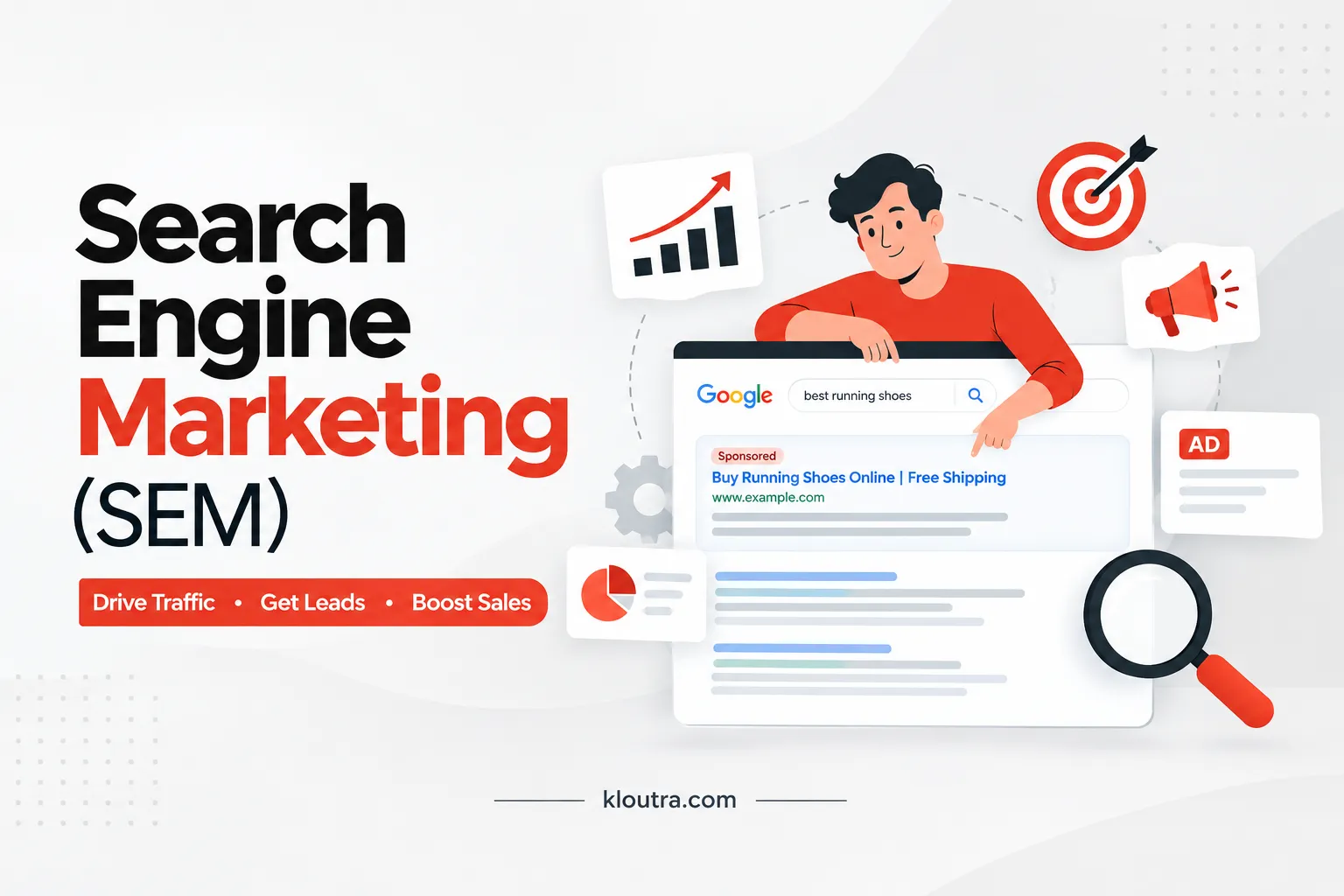
Search engine marketing (SEM) helps businesses promote their products or services through paid search ads. These ads appear on search engines when people look for relevant information.
For example, a shoe store can run ads for “buy running shoes online.” When people search for this phrase, the store’s ad may appear in the results.
Businesses use SEM to attract potential customers, generate leads, and increase sales. They set advertising budgets, choose keywords, and track clicks and conversions. Campaign performance depends on keyword relevance, ad quality, landing pages, and budget management.
How Does Search Engine Marketing Work?
Search engine marketing works through paid ads that target relevant searches. Businesses create campaigns on platforms like Google Ads and choose suitable keywords.
When someone searches for those terms, an ad auction takes place. The platform considers the bid, ad quality, and other factors. These factors help determine whether an ad appears and where it ranks.
Advertisers usually pay when someone clicks their search ad. They set budgets and track clicks, leads, and sales. This data helps them improve their keywords, ads, and landing pages.
SEM works best when ads match what people want. Relevant keywords and useful landing pages can help turn clicks into customers.
SEO vs. SEM: Key Differences
SEO and SEM help businesses reach people through search engines. However, they use different methods to attract visitors.
| Feature | SEO (Search Engine Optimization) | SEM (Search Engine Marketing) |
|---|---|---|
| Main approach | Improves organic search visibility | Commonly uses paid search ads |
| Cost | No payment for organic clicks, but work costs money | Advertisers usually pay for ad clicks |
| Results | Often takes time to build rankings | Ads can appear soon after campaign approval |
| Search placement | Organic search results | Sponsored search results |
| Control | Rankings depend on content, competition, and search algorithms | Advertisers control budgets, targeting, and campaign settings |
| Best for | Building long-term organic traffic | Reaching targeted searches and generating leads quickly |
| Traffic duration | Can continue without paying for each visit | Traffic usually stops when ads stop running |
| Performance tracking | Organic clicks, rankings, and conversions | Ad clicks, cost per click, and conversions |
Which one should you choose?
Choose SEO if you want to build organic visibility over time. Choose paid SEM if you need targeted traffic and can fund advertising. Many businesses use both to reach customers through organic and paid search results.
Note: SEM sometimes refers broadly to search marketing, including SEO. In this article, SEM means paid search advertising.
The Main Elements of a Successful SEM Campaign
A successful SEM campaign needs relevant keywords, clear ads, and useful landing pages. Each element helps businesses reach the right audience and manage ad spending.
Keyword Research and Search Intent
Keyword research helps you find the terms people use when searching online. Choose keywords that match your products, services, and customers’ needs.
Consider search intent before selecting keywords. Someone searching “buy running shoes” shows stronger buying intent than someone searching “types of running shoes.” Use relevant terms to reach people who are more likely to become customers.
Writing Ads That Match What People Search For
Your ads should answer what people want to find. Write clear headlines and descriptions that explain your offer. Include relevant keywords when they fit naturally.
Highlight useful details, such as product benefits, prices, or available services. Avoid promises your business cannot deliver. A clear message helps people decide whether to click your ad.
Choosing the Right Bidding Strategy
Your bidding strategy affects how Google Ads uses your budget. The right option depends on your campaign goals and available conversion data.
- Maximize Clicks: Aims to get as many clicks as possible within your budget.
- Maximize Conversions: Aims to generate more conversions within your budget.
- Target CPA: Aims to achieve conversions around your chosen average cost per acquisition.
- Target ROAS: Aims to achieve a selected return on ad spend.
Automated bidding uses auction-time signals to adjust bids. Choose a strategy that supports your goal, and review results regularly.
Creating Relevant Landing Pages
A landing page is where visitors arrive after clicking your ad. It should match the ad’s message and the visitor’s search intent.
Keep the page clear, useful, and easy to navigate. Show important details and provide a clear next step, such as buying a product or requesting a quote. Make sure the page works well on mobile devices and loads quickly.
How to Build an Effective SEM Campaign
A successful search engine marketing campaign needs clear goals, relevant keywords, and accurate tracking. Follow these steps to control spending and improve campaign performance.
1. Set Clear Marketing Goals
Decide what you want your ads to achieve before launching your campaign. Common goals include online sales, qualified leads, phone calls, or website traffic. Choose a main goal for each campaign and select a metric to measure success.
For example, an online store can track purchases and revenue. A service business can measure qualified leads and cost per lead.
2. Choose Keywords That Match Your Audience
Research the search terms your potential customers use. Focus on keywords that match your services, products, and customer intent. Google Keyword Planner helps you discover keyword ideas and estimated search volumes.
Google Ads offers three keyword match types: broad, phrase, and exact. Broad match can reach related searches, while exact match offers tighter targeting. Phrase match provides another level of control. Choose match types based on your goals and campaign results.
Review your search terms report regularly. Add irrelevant searches as negative keywords when appropriate. This helps reduce spending on clicks that are unlikely to bring useful results.
3. Organize Campaigns and Ad Groups
Create separate campaigns when your budgets, goals, or targeting needs differ. Within each campaign, group closely related keywords into ad groups. Each group should have relevant ads and a suitable landing page.
For example, a shoe store can create separate ad groups for running shoes and formal shoes.
4. Set a Realistic Budget
Set your budget according to your business goals and available funds. Use keyword estimates to understand potential click costs before launching. Actual costs vary with competition, demand, and other auction factors. Start with an affordable testing budget. Review spending and results before making major changes.
5. Track Conversions and Refine Your Ads
Set up conversion tracking before evaluating campaign performance. Track meaningful actions, such as purchases, qualified leads, or completed forms. For sales campaigns, measure revenue when reliable conversion values are available.
Monitor these important metrics:
- Click-through rate (CTR): The percentage of impressions that result in ad clicks.
- Conversion rate: The percentage of clicks that result in conversions.
- Cost per conversion: The average advertising cost for each recorded conversion.
- Return on ad spend (ROAS): The conversion value generated for each unit of advertising spend.
Use these metrics to identify weak keywords, ads, and landing pages. If you also run Amazon sponsored ads, you can connect Amazon Ads to Google Sheets to review your ad data in one place. Test different headlines and descriptions to compare their performance. Avoid changing several settings at once. Give tests enough data before deciding which changes work best.
Search Engine Marketing Strategies That Work in 2026
Successful SEM campaigns focus on relevant searches, useful ads, and measurable results. These four strategies help reduce wasted spending and improve campaign performance.
Use Negative Keywords to Reduce Wasted Spend
Negative keywords stop your ads from appearing for selected search terms. For example, a store selling new shoes might exclude “used shoes” if it doesn’t sell secondhand products. Check your list regularly to prevent excluding searches that could bring customers.
Improve Ad Relevance and Landing Page Experience
Match your ad message to the user’s search. Use clear headlines that explain your offer and benefits. Send visitors to a landing page that directly relates to the ad.
Use Conversion Data to Guide Bidding Decisions
Track valuable actions, such as purchases, qualified leads, or completed forms. This data helps you understand which keywords and campaigns deliver results. Check conversion tracking before relying on automated bidding. Review results regularly and adjust your strategy when performance changes.
Test Ad Copy and Landing Page Variations
Test different headlines and descriptions to find messages that attract relevant customers. Highlight useful benefits and include a clear call to action.
You can also test landing page headlines, layouts, and buttons. Compare conversion rates and cost per conversion to measure results. Test one major change at a time when possible. Keep the version that performs better after collecting enough data.
How Much Does Search Engine Marketing Cost?
Search engine marketing (SEM) has no fixed cost. Your spending depends on keyword competition, industry, and campaign goals.
With Google Ads, you set a budget and usually pay per click. Your actual cost per click varies with each ad auction.
To set a realistic budget, follow these steps:
- Research keywords: Use Google Keyword Planner to estimate click costs.
- Set a budget: Choose an amount your business can afford.
- Track conversions: Measure the cost of each lead or sale.
- Adjust spending: Invest more in campaigns that meet your goals.
Remember: More spending does not guarantee better results. Focus on relevant keywords, effective ads, and conversions that support your business goals.
Common Search Engine Marketing Mistakes to Avoid
Avoid these common mistakes to manage your SEM budget and improve results.
1. Choosing Irrelevant Keywords
Choose keywords that match your products and services. Irrelevant keywords can attract clicks from people who won’t become customers.
2. Sending Visitors to the Wrong Page
Your landing page should match your ad’s promise. Make it easy for visitors to find information and take action.
4. Tracking Clicks Instead of Conversions
Clicks don’t always lead to sales or leads. Set up conversion tracking to measure meaningful actions and campaign results.
5. Changing Campaign Settings Too Often
Frequent changes can make performance harder to evaluate. Give campaigns time to collect useful data before making major adjustments.
6. Ignoring Campaign Performance
Check your spending, search terms, and conversion results regularly. Use this data to improve weak ads and pause ineffective keywords when appropriate.
How AI Is Changing Search Engine Marketing
AI helps advertisers automate bidding, improve ad targeting, and create relevant ads. However, advertisers still need clear goals and regular performance checks.
Automated Bidding
Google Ads uses AI to adjust bids during ad auctions. Advertisers can choose strategies based on clicks, conversions, or conversion value. Accurate conversion tracking helps Google optimize campaigns toward the selected goal.
Smarter Ad Creation
Responsive search ads combine different headlines and descriptions. Advertisers provide multiple relevant options, and Google tests different combinations. Clear, accurate ad copy helps users understand the offer before clicking.
Improved Keyword Targeting
AI-powered features can help advertisers reach relevant searches beyond exact keyword matches. However, broader targeting may also attract unwanted traffic.
Better Campaign Optimization
AI can help identify patterns in campaign performance. They should still review results and avoid relying on automation alone.
The key point: AI can make SEM management more efficient, but results depend on good data, relevant ads, and ongoing monitoring.
Is SEM Worth It for Small Businesses?
Yes, search engine marketing (SEM) can help small businesses reach potential customers faster. Paid search ads can appear when people search for relevant products or services.
SEM also gives businesses control over their advertising budgets. They can choose keywords, set spending limits, and track results. This helps them understand which campaigns bring leads or sales.
However, SEM does not guarantee profits. Competitive keywords can cost more, and some clicks may not lead to sales. Businesses need relevant ads, useful landing pages, and accurate conversion tracking.
SEM is worth considering if you can measure results and afford the budget. Start with a manageable amount and focus on specific business goals. Review campaign performance regularly before increasing your spending.
Small businesses should also invest in SEO for long-term organic traffic. Combining SEO with SEM can support both immediate visibility and future growth.
Final Thoughts
Search engine marketing helps businesses reach people searching for their products or services. It can bring targeted traffic, leads, and sales when campaigns perform well.
Disclaimer: This article provides general information about search engine marketing. Advertising costs and results vary by industry, competition, budget, and campaign setup. Results are not guaranteed. Always review your campaign performance and make decisions based on your business goals.